
Let’s be honest about something. By the time a B2B buyer books a demo with you, they’ve already decided whether they like you. Not during the sales call — before it. They’ve been watching. Scrolling. Forming opinions based on clips that showed up in their feed on a Tuesday morning.
That’s the real story behind short-form video and B2B lead generation. It’s not about going viral. It’s about showing up consistently in the right feeds, with the right message, until your brand feels familiar to the exact buyers you want to close.
And the data isn’t soft anymore. HubSpot’s 2026 State of Marketing Report ranked short-form video as the #1 ROI-generating content format — for the third year running. Wyzowl backs that up: 85% of video marketers say video helped them generate leads, and 83% say it directly increased sales. This isn’t a trend. It’s settled.
So — which platforms are actually working for B2B? What content converts versus what just gets watched? How are the smart brands building distribution systems instead of just posting and hoping? That’s what this piece is about. If short-form video isn’t a real part of your lead gen stack yet, read this and then ask yourself why not.
The Numbers First: What B2B Short-Form Video Actually Looks Like in 2026
Before we get tactical, spend 60 seconds with this. These aren’t fluffy brand awareness stats — they’re pipeline and ROI numbers.
| Statistic | Data Point |
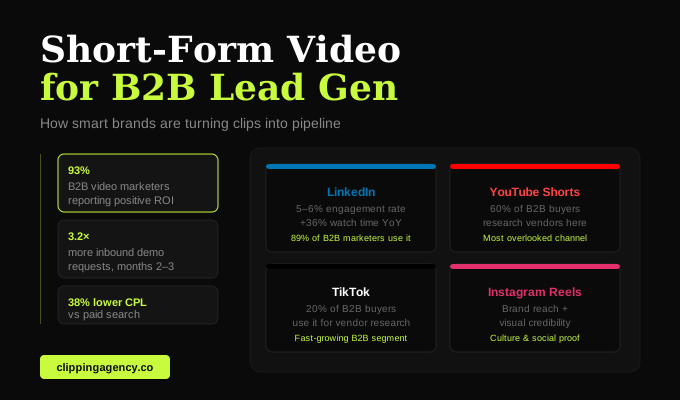
| B2B video marketers reporting positive ROI | 93% (Wyzowl, 2026) |
| Short-form video ROI rank across all content formats | #1 for 3 consecutive years (HubSpot, 2026) |
| B2B marketers using LinkedIn for lead generation | 89% (LinkedIn, 2025) |
| LinkedIn video watch time growth year over year | +36% (LinkedIn, 2025) |
| B2B buyers using YouTube during vendor research | 60% (Levitate Media, 2026) |
| Average lead generation lift from video marketing | +38% (Zebracat, 2025) |
| CPL reduction for B2B SaaS using clipping campaigns | 38% lower vs paid search (Clipping Agency data) |
| Inbound demo request increase, months 2–3 of campaign | 3.2x more (Clipping Agency data) |
| B2B buyers who prefer short video to learn about a product | 78% (Wyzowl, 2025) |
| Engagement per impression, videos under 60s vs other formats | 2.5x higher (Digital Applied, 2026) |
Why Short-Form Video Actually Works Differently in B2B
Every B2B marketer has heard some version of: “That’s a consumer play. Our buyers are on LinkedIn, not TikTok.” And look — two years ago, that was a defensible position. But it’s 2026, and the line between where people consume content and where they make buying decisions has basically disappeared.
Your buyer isn’t sitting at a desk waiting for a cold email. They’re on LinkedIn at 6:45am before the kids wake up. They’re catching a 60-second explainer on YouTube Shorts between two back-to-back calls. Some of the best-fit prospects you’ll ever sell to are on TikTok right now, consuming content from whoever showed up in their feed today.
And here’s what matters: short-form video earns attention in three ways that almost nothing else can match in B2B.
1. Your buyers already know you — before you speak to them
Picture a discovery call where the prospect opens with: ‘I’ve been following your content for a few months. I already agree with your take on X.’ That’s not luck. That’s what happens when someone has watched six or seven clips from your founder, absorbed your POV on the market, and decided they trust your perspective — all before a single sales touchpoint.
That pre-built trust is the conversion advantage nobody talks about enough. Wyzowl puts it plainly: 81% of B2B buyers say they trust video more than text-based content. That trust gap is your conversion rate gap. Close it with content, not with more sales sequences.
2. Complex products don’t need long videos — they need the right moment
Here’s a myth worth killing: complex B2B products need long-form content to be explained properly. Most of the time, the opposite is true. A buyer in the consideration stage doesn’t want a 10-minute walkaround. They want a 75-second clip that answers the one question that’s been nagging at them.
Why does implementation take less than two weeks? What does a realistic year-one ROI look like? How are you actually different from the market leader — in plain language, not marketing copy? One clip. One question. Answered directly. That’s what moves someone from ‘curious’ to ‘booked a call.’ HubSpot and Wistia’s research consistently shows the 60-to-90-second sweet spot — substantive enough to be credible, short enough to actually get watched all the way through.
3. Organic reach doesn’t have a budget cliff — it compounds
Every paid campaign ends. The budget runs out, the views drop to zero, and you’re rebuilding from scratch next quarter. Organic short-form clips don’t work that way. A clip your CEO posted eight months ago is still accumulating views today if it’s any good. A well-distributed piece of content doesn’t expire — it builds. And that compounding model changes the entire economics of B2B awareness and lead generation.
That’s not just a nice idea. It’s a fundamentally different financial relationship with your audience.
Which Platforms B2B Companies Are Using — and What’s Working
B2B audiences are concentrated, not spread evenly across every platform. Trying to be everywhere at once is a great way to be mediocre everywhere and excellent nowhere. Here’s where the actual lead volume is coming from in 2026 — and why.
| Platform | Primary B2B Use Case | Audience Fit | Best Content Type |
| Thought leadership + direct lead gen | Decision-makers, senior buyers | Founder takes, customer outcomes, data clips | |
| YouTube Shorts | Vendor research + SEO visibility | Active mid-funnel researchers | Product explainers, objection clips, how-tos |
| TikTok | Brand awareness + top-of-funnel reach | Younger buyers, SaaS and tech | Contrarian takes, behind-the-scenes, raw POV |
| Instagram Reels | Brand reach + visual credibility | Mixed B2B and B2C audiences | Culture clips, event recaps, team moments |
LinkedIn: the one platform you can’t skip
If your B2B brand only has bandwidth for one platform right now, it’s LinkedIn. No debate. 89% of B2B marketers use it for lead generation and 62% say it actually produces leads — not just impressions, leads. Native LinkedIn video pulls 5.1 to 6% engagement rates, which is roughly double what static posts deliver. Video watch time grew 36% year over year through Q4 2025.
But here’s what the data won’t tell you: what actually performs on LinkedIn isn’t polished. It’s a founder sharing a data point that genuinely surprised them. A team member pushing back on a conventional wisdom their buyers believe. A clip pulled from a webinar where a real customer described a result in real numbers. Authenticity doesn’t just outperform polish here — it’s the only thing that performs. The slick brand content gets scrolled past. The honest take gets shared.
YouTube Shorts: the most overlooked B2B lead gen channel right now
60% of B2B buyers use YouTube while researching vendors. More than half of the people who might eventually buy from you are on YouTube right now, actively looking at their options. And most B2B brands have zero presence on YouTube Shorts. That’s not a gap — that’s a wide open door.
The clips that perform here are search-adjacent. They answer the exact questions a buyer would Google mid-evaluation: How long does onboarding actually take? What does a typical client outcome look like at 90 days? What makes your approach different from the market leader? One question per clip. Under 90 seconds. The buyer will find it — and when they do, you become the brand that gave them a straight answer when everyone else gave them marketing copy.
TikTok: B2B brands are moving too slow on this one
The conventional wisdom — ‘TikTok has no B2B audience’ — was probably true in 2022. In 2026, it’s just wrong. SaaS brands, professional services firms, and marketing technology companies are building real pipelines on TikTok by reaching buyers who are increasingly senior, increasingly well-funded, and consuming content the same way they consume it on LinkedIn.
The number that settled this for me: by 2026, 20% of B2B buyers reported using TikTok during vendor research. That was in single digits two years ago. The brands that ignore this now will be scrambling to catch up in eighteen months, watching their competitors’ faces in every feed their buyers scroll through.
5 Short-Form Video Types That Actually Move B2B Buyers Into Your Pipeline
Not every clip earns its keep. Some rack up views and do nothing. Others quietly drive demo requests for months. The difference almost always comes down to whether the content answers a real question a real buyer is actually asking at a specific stage of their decision. Here are the five that consistently convert.
1. Webinar and event clips
Your last webinar was probably 60 minutes long. Inside it: 15 to 25 moments that could stand alone as a clip. A stat that made the room go quiet. A live product moment that caused someone to unmute and ask a question. A customer story told in passing that was more compelling than the deck. A challenge to a common assumption that people nodded at.
Most B2B brands run a webinar and extract one piece of content — maybe the recording link, maybe a recap post. The brands winning with short-form get 20 clips from that same session, distributed across LinkedIn and YouTube Shorts, keeping that webinar generating leads for the next four weeks. Same recording. Same hour of your time. Twenty times the reach.
2. Founder and executive thought-leadership clips
People don’t sign contracts with companies. They sign with the people inside them. A 60-second clip of your founder or CEO taking a clear, specific, defensible position on something their buyers actually wrestle with — backed by a real experience or a real number, not a platitude — does more for your pipeline than almost any other content format. It’s not about looking polished. It’s about saying something real.
Personal brand video from company leaders consistently outperforms branded content on LinkedIn. The gap isn’t small. The bar isn’t production quality or lighting or a ring light. The bar is: did they say something that a buyer will screenshot and send to their colleague?
3. Customer story micro-clips
Case studies are great. Buyers rarely read them. The format is broken — too long, too polished, too carefully worded to feel real. But a 60-second clip of an actual customer answering one honest question? That lands. What was broken before you started working with these guys? What changed in the first 90 days — specifically? What would you tell someone sitting on the fence?
That clip is watchable. It’s shareable. It doesn’t feel like marketing because it isn’t. And the data backs it: video testimonials generate 31% higher engagement than standard product videos, and 72% of B2B buyers say vendor video content influences their shortlist decisions. Those aren’t awareness metrics. Those are pipeline metrics.
4. Product and process explainer shorts
One clip, one objection, answered completely. That’s the format. A specific feature doing a specific thing. A common concern addressed in plain language. A comparison to the alternative that buyers are considering. When these clips live on your landing pages alongside text, the lift is real: pages with video convert at 86% higher rates than text-only equivalents. For B2B SaaS specifically, some A/B tests show conversion lifts above 100%. One clip, placed well, can change your conversion rate without touching anything else on the page.
5. Repurposed podcast and interview clips
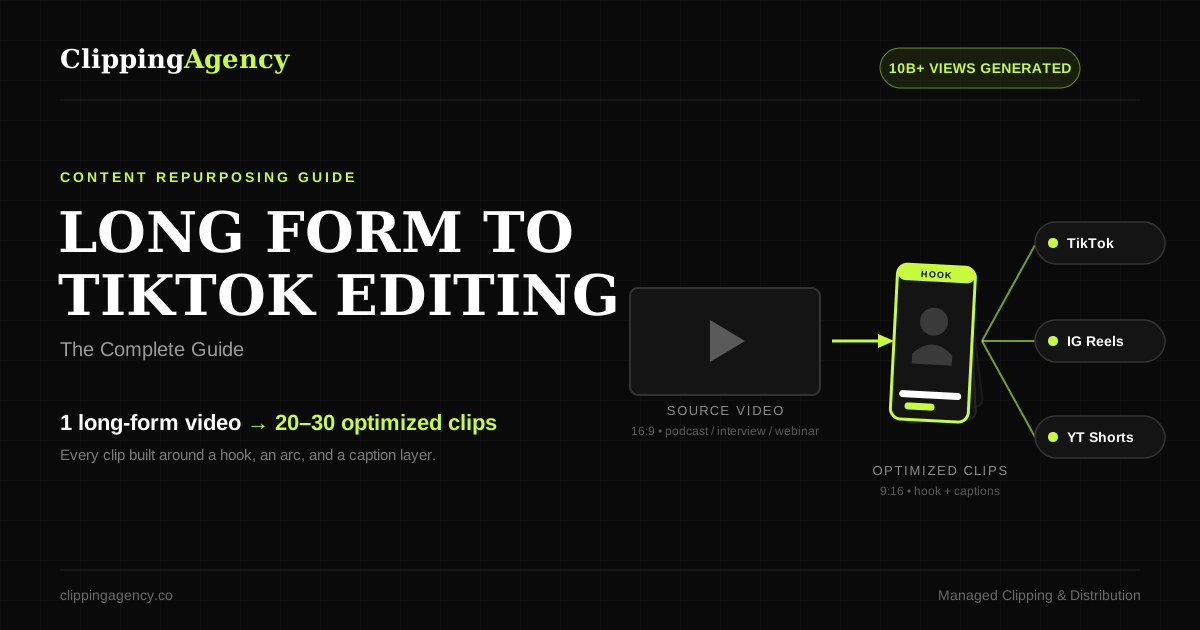
If you record a podcast, run expert interviews, or host any kind of long-form conversation, you’re sitting on a library that hasn’t been properly distributed. A single episode over 60 minutes typically yields 20 to 40 clips — each one targeting a different question, speaking to a different concern, reaching a different segment of your buyer audience. The content already exists. You’ve already done the hard work. The only thing missing is the system to extract it and get it in front of the right people.
The Distribution Problem Most B2B Brands Don’t Even Know They Have
Here’s what separates B2B brands generating real leads from short-form video from those generating pretty metrics and nothing else. It’s not the quality of the content. It’s distribution.
One brand account. One clip per day. Maybe two. That is not a distribution strategy. That is a content calendar. Those are not the same thing, and most teams are treating them like they are — then wondering why the views don’t convert.
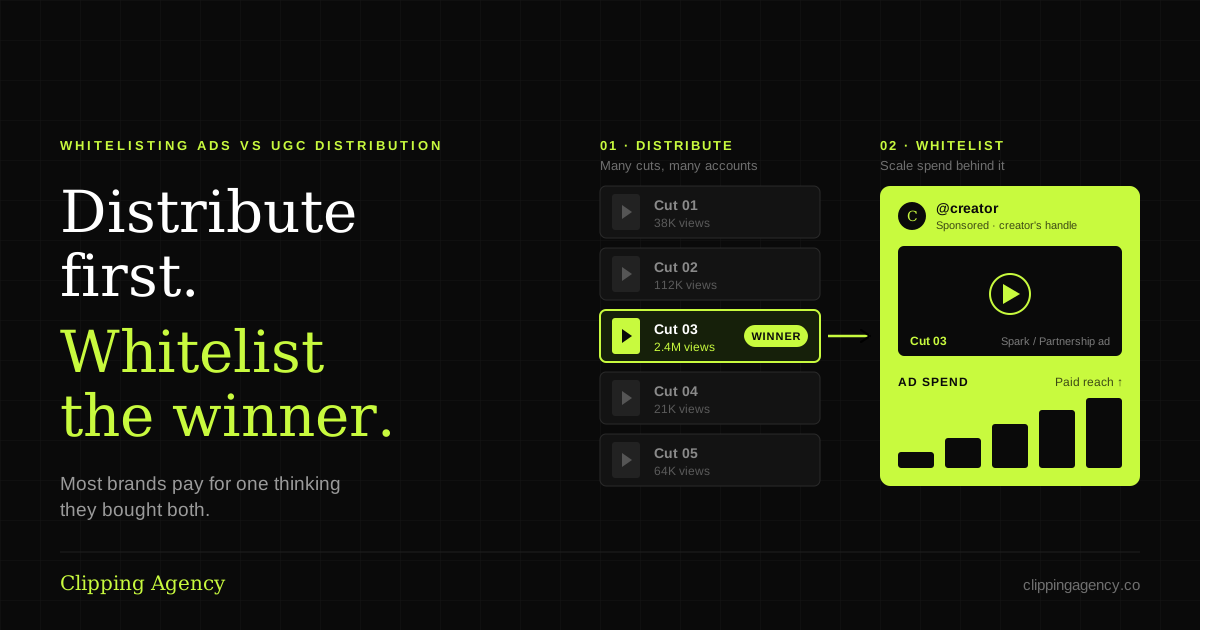
Platform algorithms don’t care how consistent you are on one account. They care about volume across many accounts. A clip from your brand LinkedIn page reaches your existing followers. That same clip distributed across 50 to 500 accounts simultaneously reaches 50 to 500 separate audience pools, on 50 to 500 separate algorithms, each generating independent engagement signals that compound on their own.
This is the model that clipping campaigns are built on. And the results are documented. B2B SaaS clients running managed clipping campaigns see 38% lower cost-per-lead than paid search and 3.2 times more inbound demo requests by months 2 and 3. Not estimates. Actual campaign data.
The cost comparison to paid media makes the case even cleaner. Meta and LinkedIn ads cost $10 to $30 CPM. A properly managed clipping campaign delivers views at $0.002 to $0.005 CPV — five to seven times cheaper per view. And unlike paid ads, those views don’t stop the day the budget runs out.
How B2B Companies Build Short-Form Video Systems That Actually Scale
The brands generating consistent lead volume from short-form video aren’t banking on a single post going viral. They’ve built a system. Here’s what that system looks like in practice — step by step.
Step 1: Audit what you already have before filming anything new
Most B2B companies have six to twelve months of video content sitting unused. Recorded webinars. Sales demos. Podcast episodes. Conference talks. Internal Q&As with your founding team. All of it is raw material for short-form clips — and most of it has never been properly distributed. Start here. You don’t need to film anything new. You need to build an extraction workflow around what already exists.
Step 2: Find the moments that convert — don’t just grab highlights
Not every moment in a long recording is worth clipping. The ones that perform in B2B have a pattern: a genuinely surprising data point, a direct answer to a common objection, a specific customer outcome in concrete numbers, a contrarian take the audience didn’t expect, or a moment of expertise that a buyer can’t easily find anywhere else. These moments need to be identified systematically — not by skimming through at 2x speed. That’s why a trained process matters here.
Step 3: Edit for the platform — not just the content
A clip built for LinkedIn and a clip built for YouTube Shorts are genuinely different assets. Hook placement, caption style, pacing, aspect ratio — all of it varies by platform and by what each algorithm rewards. Clips that perform are built natively for where they’ll live. Cut from a long video and uploaded unchanged, without any platform-specific editing, those clips will get half the reach they could.
Step 4: Distribute across many accounts at once — this is where most brands quit
One account is one algorithm with one audience. That’s the ceiling. Breaking through that ceiling means a real distribution system — multiple accounts posting your content simultaneously, each reaching a separate pool of people, each generating independent engagement signals that push the algorithm to show your content to more people. This is the step most B2B brands either skip or underestimate. It’s also the step that separates brands getting 10,000 views from brands getting 1 million.
Step 5: Track the metrics that actually tell you something about pipeline
Views are a vanity metric. Anyone building a serious B2B short-form operation tracks something different: website traffic from video referral sources, demo request volume in the weeks following a campaign ramp, inbound inquiry quality and ICP match rate, LinkedIn connection requests from buyer personas, and cost-per-qualified-lead against paid search baselines. If your weekly report ends at view counts, you have no idea what this channel is actually contributing to revenue.
3 Mistakes B2B Teams Make With Short-Form Video
Mistake 1: Spending more on production than distribution
The brands with the highest video production budgets are not necessarily the brands generating the most leads from video. A clip filmed on a founder’s phone, with a genuine perspective and a clear point, will outperform a $5,000 studio shoot on LinkedIn in most cases. Over-investing in how a clip looks and under-investing in how many people see it is the single most expensive mistake in B2B video. Polish doesn’t compound. Distribution does.
Mistake 2: Posting once and waiting
There’s no passive version of short-form video that generates leads. Posting one clip a week to your brand account and hoping the algorithm discovers it isn’t a strategy — it’s wishful thinking. The brands seeing real pipeline from video have systems running behind the posting: consistent volume, platform-native formats, distribution across multiple accounts. Algorithms reward momentum. A single weekly post doesn’t create momentum. It creates a presence — and presence alone doesn’t pay the bills.
Mistake 3: Waiting until you have ‘enough content’ to start
The most common reason B2B marketing teams delay getting started is the belief that they need polished, purpose-built content before they can do anything meaningful. Almost every B2B company with six months of recordings has more raw material than they could distribute in a full quarter. The content exists. The webinars happened. The conversations got recorded. What’s missing isn’t content — it’s the workflow to extract it and the system to distribute it.
The Bottom Line: Why B2B Brands Work With Clipping Agency
Most B2B marketing teams don’t have a video problem. They have a distribution problem. The content is there — or it’s close enough. What’s missing is the system to extract it, format it right, get it in front of hundreds of separate audiences, and track what’s actually converting.
Building that internally is a project, not a task. It takes months. It requires people you probably don’t have. And it has to be rebuilt every time a platform changes its algorithm — which is roughly every six months. That’s not a project most marketing teams can absorb while running everything else.
That’s why they come to us. Clipping Agency is not a video editing service. We’re a fully managed short-form distribution system — built for B2B brands and creators who want the lead generation results that short-form video delivers, without the operational overhead of running it themselves.
Here’s what actually happens when you work with us:
- We audit your existing long-form content library within 24 hours — before you spend a dollar — and tell you exactly how many clips it can support
- Our editors dig through the recordings and pull out what actually converts: data points, objection handlers, customer outcomes, founder takes that’ll stop the scroll
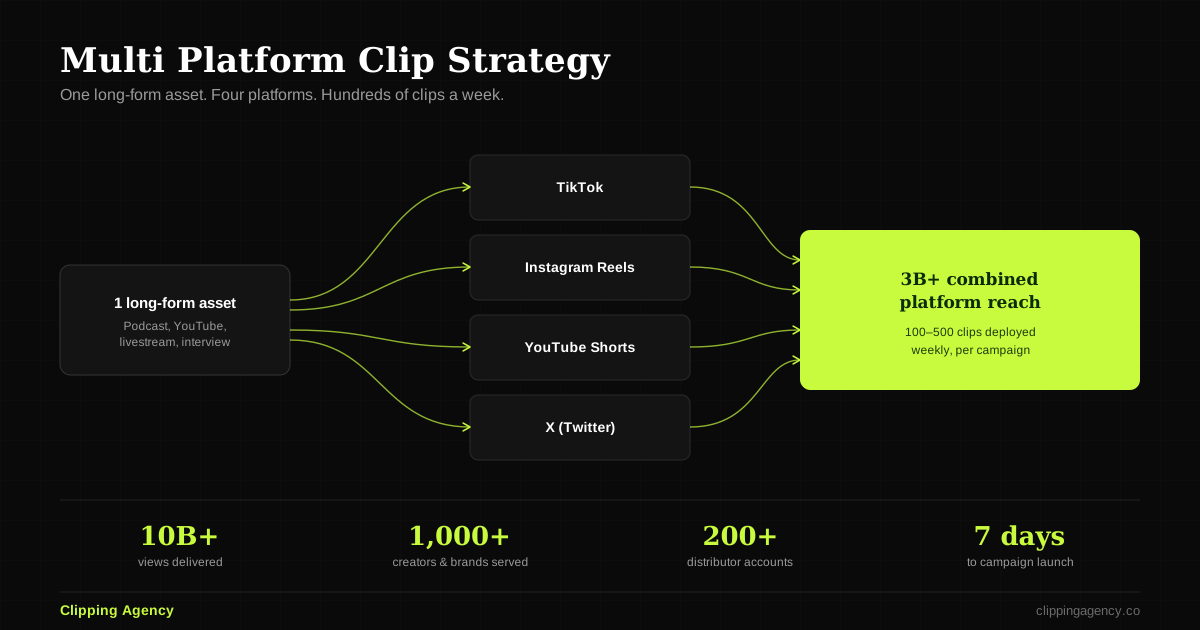
- Every clip is formatted natively for LinkedIn, YouTube Shorts, TikTok, Instagram Reels, and X — not cut and re-uploaded unchanged
- Your clips go live across 50 to 500 accounts simultaneously, hitting separate audiences on separate algorithms, every single day
- You get weekly reporting that goes beyond views: accounts active, clips approved, and where trackable, view-to-demo-request conversion
The results aren’t projections. Active B2B SaaS clients on our platform see 38% lower cost-per-lead versus paid search and 3.2 times more inbound demo requests by months 2 and 3. We’ve generated over 2 billion views for clients across every niche — founders, agencies, enterprise brands, and B2B companies who figured out that distribution is a system, not a budget line.
If your B2B brand is producing long-form content and not extracting full lead value from it, you’re leaving pipeline on the table. Book a free strategy call and we’ll show you exactly what a custom clipping system looks like for your content, your audience, and your revenue targets.
Frequently Asked Questions
How does short-form video generate leads for B2B companies?
It builds trust before your sales team enters the picture. A buyer who’s seen your founder explain a hard truth, watched a real customer describe a result, or caught your product handling a common objection in 60 seconds — that buyer arrives at a sales conversation already half-convinced. They’re not evaluating you from scratch; they’re confirming what they’ve already started to believe. Wyzowl puts the average B2B lead generation increase from video at 38%, and 85% of video marketers say it directly helped them generate leads. That’s not a marginal improvement — it’s a structural one.
Which platforms work best for B2B short-form video lead generation?
LinkedIn for direct lead gen — 89% of B2B marketers use it and 62% say it actually produces leads. YouTube Shorts for mid-funnel buyers who are actively researching: 60% of B2B buyers use YouTube during vendor evaluation, which makes it probably the most underutilised channel in B2B marketing right now. TikTok for top-of-funnel brand building, especially in SaaS and professional services where younger buyer cohorts are growing fast. The most effective strategies don’t pick one — they distribute across all of them simultaneously.
What short-form video content works best for B2B audiences?
The five that consistently drive leads: webinar and event highlight clips, founder thought-leadership takes, customer micro-testimonials, product explainer shorts, and repurposed podcast or interview clips. What they share is specificity. They answer a real question, address a real concern, or demonstrate a real outcome in concrete terms. Generic branded content gets ignored. Specific, authentic content from real people at your company — or real customers — gets shared.
How is short-form video different from paid ads for B2B lead generation?
The fundamental difference is what happens when you stop spending. Paid ads deliver views for exactly as long as you’re paying. Organic short-form clips keep accumulating views, engagement, and referral traffic for months — sometimes longer — after they’re posted. On cost: Meta and LinkedIn ads run $10 to $30 CPM. A managed clipping campaign delivers views at $0.002 to $0.005 CPV. That’s five to seven times cheaper per view, with compounding organic engagement rather than rented attention.
How do B2B companies distribute short-form video at scale without a large internal team?
The most scalable model is a managed clipping campaign — long-form content extracted into 10 to 30 clips per episode, distributed across 50 to 500 accounts simultaneously. This removes the single-account ceiling and builds algorithmic reach across many independent channels at once. Clipping Agency runs the full pipeline — clip selection, editing, platform formatting, distribution, and reporting — with no internal video team required from you.
How quickly can B2B companies expect results from short-form video?
Views start within the first 30 days of an active campaign. Meaningful pipeline signals — inbound demo requests, website traffic from video referral sources, cost-per-lead improvement — become measurable in months 2 and 3 as the distribution system matures and algorithmic signals compound. Unlike paid advertising, the ROI curve gets better over time, not worse. B2B SaaS clients on managed clipping campaigns consistently report 3.2 times more inbound demo requests by month 3 compared to their pre-campaign baseline.
Every Day You Wait, A Competitor Gets the View
We recruit, train, and manage a clipping army that distributes your content across 50–500 accounts on TikTok, Reels, and Shorts simultaneously. One upload becomes hundreds of posts. Every single day.
Trusted by 1,000+ creators · 10 Billion+ views generated