
Quick Answer: Startups reach 1M+ views without a video team by repurposing existing long-form content — founder interviews, demos, podcasts — into short-form clips distributed across TikTok, Instagram Reels, and YouTube Shorts simultaneously through a managed clipping system. The strategy replaces headcount with infrastructure.
Most startups assume getting millions of views requires a full in-house production team — a video editor, a social media manager, maybe a content strategist. So they wait. They wait until they have the budget, the headcount, or the time. And while they wait, their competitors are quietly racking up millions of views with none of those things.
The truth is a little uncomfortable: the startups getting 1M+ views per month aren’t out-producing you. They’re out-distributing you.
This guide breaks down how that works — and how you can replicate it without hiring a single person.
Why Startups Think They Need a Video Team (And Why That’s Wrong)
The assumption is understandable. You look at brands with massive short-form presence and assume there must be a team behind every clip. A production workflow. A content calendar with fourteen people attached to it.
But that’s the old model. The new model doesn’t start with production — it starts with distribution.
Here’s what the data actually shows:
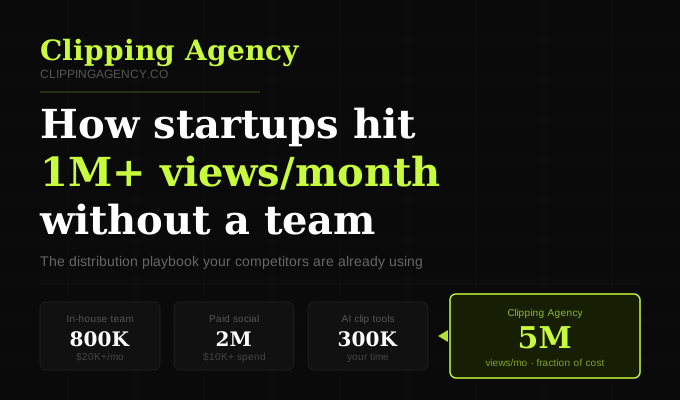
| Content Approach | Avg. Monthly Views | Team Required | Cost |
|---|---|---|---|
| In-house video team (3–5 people) | 200K–800K | Yes | $15K–40K/month |
| Paid social advertising | 500K–2M (paid) | Partial | $5K–20K/month ad spend |
| AI clip tools (DIY) | 50K–300K | Yes (your time) | $50–200/month |
| Managed clipping campaign | 1M–5M (organic) | No | Fraction of above |
The startups consistently crossing the 1M view mark aren’t doing more. They’ve built a system that multiplies what they already have.
The Real Reason Most Startups Never Hit 1M Views
It’s not the quality of your content. It’s the quantity of distribution.
Think about the typical startup video workflow: a founder records a 45-minute podcast or a product demo walkthrough. It goes up on YouTube. Maybe someone clips one or two moments and posts them manually. Then the content dies. It stops reaching new people the day after it’s posted.
That single piece of content had 30, 40, maybe 50 genuinely viral moments inside it. Moments that could have circulated on TikTok, surfaced in Instagram Reels feeds, and hit the YouTube Shorts homepage. They never got extracted. They never got distributed.
The gap isn’t content quality. It’s content velocity — the number of clips reaching new audiences simultaneously.
What “1M+ Views Without a Team” Actually Looks Like
Let’s be specific. Here’s the mechanism that makes it work:
Long-Form Content as Raw Material
Every piece of long-form content a startup already produces is a goldmine of short-form clips. Founder interviews, product walkthroughs, webinars, AMA sessions, investor pitches, podcast appearances — all of it contains moments that perform natively on short-form platforms.
A single 60-minute podcast episode contains, on average, 15–30 individually clippable moments that can stand alone without context.
The Clipping Infrastructure Layer
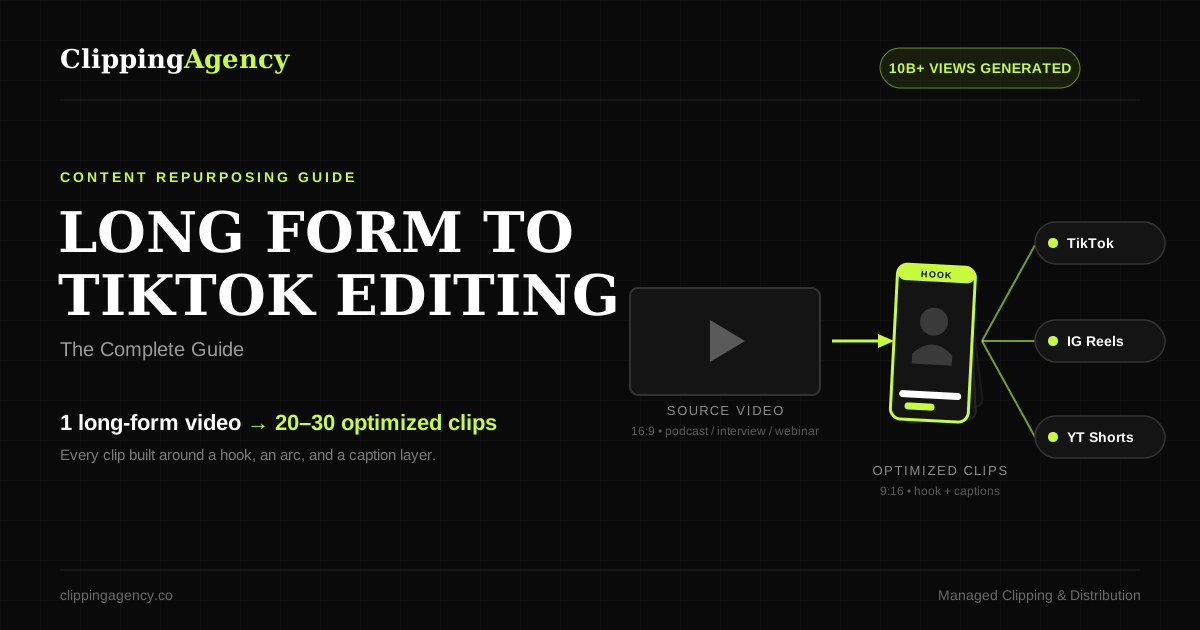
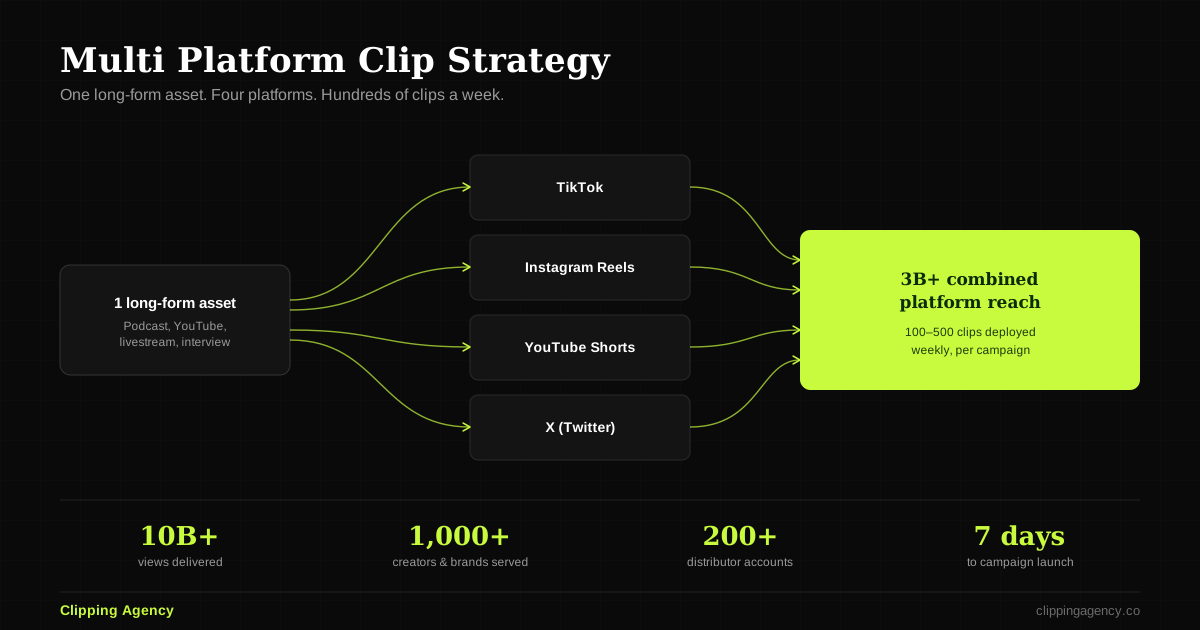
Rather than hiring editors to produce clips one at a time, high-growth startups use a clipping campaign model — a managed network of editors who simultaneously clip, format, and distribute content across hundreds of accounts on TikTok, Reels, and Shorts.
This is what separates 10,000 views from 1,000,000 views. Not the quality of the clip. The number of distribution points firing at the same time.
Community-Powered Distribution
The most powerful version of this system doesn’t rely on a brand account with limited reach. It taps into a community of editors — people who clip and post your content across their own accounts, dramatically expanding the surface area of distribution. This is the core of what a short-form video agency builds for you.
When 50 accounts post 3 clips each from a single piece of your content on the same day, the algorithm doesn’t see one piece of content. It sees 150 individual signals of relevance — and it responds accordingly.
The 5-Step Playbook Startups Use to Hit 1M+ Views
Step 1: Identify Your Highest-Value Long-Form Content
Not all content clips equally. The formats that produce the most viral short-form moments are:
- Founder stories and origin narratives
- Contrarian takes on your industry
- Behind-the-scenes product development moments
- Customer results and case study walkthroughs
- Live Q&A sessions and AMAs
- Podcast appearances where the founder speaks candidly
Start with the content you already have. Most early-stage startups have at least 5–10 hours of long-form content sitting underused on YouTube or a podcast feed. That’s enough to fuel weeks of short-form distribution.
Step 2: Extract Clips Built for Platform-Native Consumption
Short-form clips that reach 1M+ views share specific attributes regardless of niche. They open with a pattern interrupt — a statement, statistic, or question that stops the scroll in the first 2 seconds. They deliver one clear insight or emotional beat. They end before the viewer decides to leave.
Here’s what clip extraction looks like by platform:
| Platform | Ideal Length | Aspect Ratio | What Works |
|---|---|---|---|
| TikTok | 30–60 sec | 9:16 | Raw, opinionated, fast-paced |
| Instagram Reels | 15–45 sec | 9:16 | Visually clean, hook-driven |
| YouTube Shorts | 45–60 sec | 9:16 | Educational, search-friendly |
The key is not repurposing the same clip across all three. Each platform has its own content behavior, and the clips should be selected and trimmed to match the native expectations of each.
Step 3: Build Distribution Volume, Not Production Quality
This is the counterintuitive part. The startups winning at short-form aren’t optimizing for perfect production — they’re optimizing for distribution surface area.
A clip with mediocre lighting and great insight will outperform a perfectly produced clip with a weak hook every single time. The algorithm rewards engagement signals: watch time, shares, saves, comments. All of those are driven by the content of the clip, not the color grade.
What this means practically: it’s better to have 30 clips distributed across 100 accounts than 3 clips posted on one brand account, regardless of how polished they are.
Step 4: Use a Managed Clipping System Instead of Building In-House
This is where most startups get stuck. They understand the logic of high-volume distribution but assume they need to build the infrastructure themselves — hire editors, manage workflows, track performance.
A managed clipping service replaces that entire operation. The system handles:
- Clip selection and extraction from long-form content
- Platform-specific formatting (captions, aspect ratio, pacing)
- Multi-account distribution across TikTok, Reels, and Shorts
- Quality control and performance tracking
- Editor recruitment, management, and payouts
This is the same infrastructure that has generated over 2 billion views for creators and brands — without any of them needing a dedicated internal team.
Step 5: Let the Data Tell You What to Double Down On
After the first wave of distribution, you’ll have real performance data. Which clips drove the most watch time? Which topics triggered the most shares? Which hooks had the highest retention in the first 3 seconds?
That data is your content strategy. The clips that perform become the template for the next batch of content your founders or team produce. Over time, you’re not guessing what to record — you’re reverse-engineering what’s already working at scale.
How Much Content Do You Actually Need?
Less than you think. Here’s a realistic content volume map:
| Long-Form Content You Have | Potential Short-Form Clips | Monthly Views (Managed Distribution) |
|---|---|---|
| 4 podcast episodes/month | 60–120 clips | 500K–1.5M |
| 4 YouTube videos/month | 80–160 clips | 800K–2M |
| 2 founder interviews/month | 40–80 clips | 300K–900K |
| 1 webinar/month | 20–40 clips | 150K–500K |
Most early-stage startups are producing enough content to hit 1M views per month. They’re just not distributing it.
The Hidden Cost of Doing This In-House
Here’s what it actually costs to build an in-house short-form operation that generates 1M+ views per month:
- 1 video editor: $3,500–6,000/month
- 1 social media manager: $3,000–5,000/month
- Editing software and tools: $200–500/month
- Paid content distribution (boosting): $2,000–5,000/month
- Management overhead: 5–8 hours of founder/leadership time per week
Total: $9,000–17,000/month, plus your time
And that assumes it works — which it won’t, immediately. Building an in-house short-form team that reliably produces 1M+ organic views takes 6–12 months of iteration before it functions predictably.
A clipping campaign produces that output from month one, at a fraction of the cost.
The Platforms That Matter Most for Startups in 2026
Not all platforms are equal for startup content. Here’s where short-form video actually moves the needle for early-stage companies:
TikTok remains the highest-discovery platform on the planet. The algorithm distributes content based on interest signals, not follower count — which means a startup with zero followers can hit 500K views on a single clip if it hits the right hook at the right time.
Instagram Reels is where purchase-intent audiences spend time. For B2C startups and SaaS targeting SMBs, Reels drives more qualified traffic than TikTok. The audience skews slightly older and more commercial.
YouTube Shorts is the search-driven platform. Clips that answer specific questions — “how to,” “what is,” “why does” — compound in discovery over time because they surface in search results alongside regular YouTube videos. For startups in technical or educational niches, Shorts has the longest content half-life of the three.
For most startups, all three platforms matter. A managed clipping service distributes across all three simultaneously — which is what makes 1M+ views achievable in a single month.
What Startups Get Wrong About Short-Form Video
Mistake 1: Optimizing for production value instead of hook quality. The most viewed short-form content is often raw and unpolished. What stops the scroll isn’t a beautiful edit — it’s an arresting first sentence or a surprising claim. Startups that invest in expensive production before validating their hook strategy waste both time and money.
Mistake 2: Relying on a single brand account. One account, no matter how well it’s managed, has a ceiling on its distribution potential. The breakthrough happens when your content is distributed across dozens or hundreds of accounts simultaneously — each one acting as an independent discovery channel.
Mistake 3: Treating short-form as a top-of-funnel add-on. The startups getting the most ROI from short-form video aren’t treating it as an awareness play. They’re using it as a full customer acquisition channel — clips drive profile views, profile views drive link clicks, link clicks drive demos and sign-ups. The distribution strategy is the sales pipeline.
Mistake 4: Creating new content instead of repurposing existing content. Most startups already have more content than they need. The problem isn’t production — it’s extraction. A managed clipping system starts from what you already have, which means results start immediately rather than after a months-long content creation ramp.
Real Numbers: What 1M+ Views Actually Does for a Startup
Views are vanity if they don’t connect to business outcomes. Here’s what 1M+ monthly views typically generates for early-stage startups in practice:
- Inbound inquiry volume: 3–15x increase within 60 days of consistent distribution
- Brand search volume: Measurable increase in branded search terms within 30–45 days
- Investor visibility: Founders with high short-form presence report meaningfully faster warm introductions from investors who discovered them through content
- Hiring pipeline: Short-form presence generates inbound applications from candidates who specifically reference finding the company through content
- Partnership opportunities: Brands, agencies, and collaborators reach out proactively when content reaches critical distribution mass
Views are the mechanism. Trust, visibility, and authority are the outcomes.
Frequently Asked Questions
What does a startup need to start a clipping campaign?
A startup needs at least one existing source of long-form content — a YouTube channel, podcast, recorded interviews, webinars, or product demos. The minimum viable starting point is roughly 2–4 hours of long-form footage. From there, a managed clipping system can extract clips, format them for each platform, and begin distribution within days.
How many views can a startup realistically expect without a video team?
Most startups using a managed clipping distribution system reach 500K to 2M organic views per month within the first 30–60 days, depending on niche, content quality, and volume of source material available for clipping. Startups with strong founder storytelling content or clear product differentiation tend to see results faster.
Is short-form video effective for B2B startups, not just consumer brands?
Yes — and the results for B2B startups are often more commercially valuable than B2C, even at lower view volumes. A B2B short-form clip that generates 50,000 views in a highly specific niche can produce more demo requests than a consumer clip with 2 million views in a broad audience. Platform selection matters more for B2B: LinkedIn video, YouTube Shorts, and niche-specific TikTok communities tend to deliver the best qualified traffic.
What is a clipping campaign and how does it differ from hiring a video editor?
A clipping campaign is a fully managed content distribution system that uses a network of editors to simultaneously clip and distribute your long-form content across hundreds of accounts on short-form platforms. Unlike a single hired editor who produces content sequentially, a clipping campaign distributes content in parallel — dozens of clips going live across dozens of accounts on the same day. The result is a distribution surface area that no individual editor or internal team can replicate.
How long does it take to set up a clipping campaign for a startup?
A managed clipping campaign can typically be configured and launched within 5–10 business days. This includes system setup, onboarding the clipping network, defining content guidelines, and beginning the first round of clip extraction and distribution. Results in the form of views and engagement are usually visible within the first 2 weeks.
Do startups need to be active on social media themselves for clipping to work?
No. The clipping distribution model doesn’t rely on a startup’s own social accounts or existing follower base. Content is distributed through the clipping network’s accounts, which means reach is generated independent of the startup’s own social presence. That said, having an active brand account to funnel traffic toward increases conversion from views to follows and website visits.
What types of startup content perform best as short-form clips?
The highest-performing clip categories for startups are: founder origin stories, contrarian industry takes, product demo moments, customer testimonials with specific results, “mistake I made” confessional content, and data-backed insights delivered in under 45 seconds. Content that expresses a clear point of view even a polarizing one consistently outperforms neutral or educational-only content in distribution.
Every Day You Wait, A Competitor Gets the View
We recruit, train, and manage a clipping army that distributes your content across 50–500 accounts on TikTok, Reels, and Shorts simultaneously. One upload becomes hundreds of posts. Every single day.
Trusted by 1,000+ creators · 10 Billion+ views generated