
Quick Answer: Short form video drives higher reach, engagement, and top-of-funnel ROI — making it the #1 format for brands and creators who want views, visibility, and conversions at scale. Long form video builds trust, depth, and SEO authority. The highest-performing content strategies in 2026 use both — with short form as the distribution engine that feeds the long form.
Short Form Video vs Long Form: Which Drives More Business ROI?
Here’s the question every brand, creator, and founder is sitting with right now.
You’ve got limited time. Limited budget. And a million people telling you to “just post more content.” But more content isn’t the answer. The right format, deployed the right way, is.
So let’s stop guessing and look at the actual data — because in 2026, the short form vs long form debate has shifted from opinion to evidence.
What Is Short Form Video — and What Counts as Long Form?
Before we get into ROI, let’s define the playing field.
Short form video refers to clips typically between 15 seconds and 90 seconds, distributed across TikTok, Instagram Reels, and YouTube Shorts. YouTube extended its Shorts definition to up to 3 minutes in late 2024, but most high-performing clips still run under 90 seconds.
Long form video covers anything from 5-minute YouTube uploads to 2-hour podcast recordings, webinars, interviews, course content, and documentary-style brand videos.
Both serve real purposes. But they don’t serve the same purpose — and that distinction is where most businesses get the strategy wrong.
The Numbers That Actually Matter in 2026
Let’s not bury the lead.
| Metric | Short Form Video | Long Form Video |
|---|---|---|
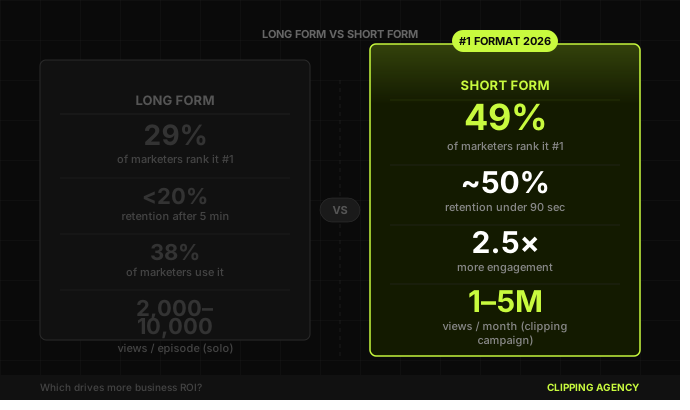
| Highest ROI format (marketers) | ✅ #1 — 49% of marketers | #2 — 29% of marketers |
| Average viewer retention | ~50% for videos under 90 seconds | Drops below 20% after 5 mins |
| Engagement rate vs other formats | 2.5× more than long form | Baseline |
| Global ad spend (2025) | $111 billion | — |
| Purchase decision influence | 46% of consumers | — |
| Completion rate (under 30 secs) | 72% average | — |
| Formats used by marketers | 60% use short form | 38% use long form |
| Weekly video consumption (Gen Z/Millennials) | 80+ minutes/day | — |
Sources: HubSpot State of Marketing 2026, Wyzowl 2026, Statista, Vidico Research
These numbers tell a clear story: short form video is the top ROI format for three consecutive years running — and the gap is widening.
Why Short Form Video Wins on ROI for Most Businesses
1. Reach Happens Fast — Without Ad Spend
This is the single most important ROI lever in 2026.
Short form video is the only content format where a brand with zero followers can reach hundreds of thousands of people organically within 48 hours. The algorithm on TikTok, Instagram Reels, and YouTube Shorts pushes content based on engagement signals, not follower count.
That changes the economics of content marketing completely.
Traditional paid advertising requires ongoing budget to maintain visibility. When you stop spending, the reach stops. Short form video, distributed through a clipping campaign, creates compounding reach — clips already published continue to gather views weeks after posting.
2. Short Form Video Has a Lower Cost Per View
When you factor in production cost against total views generated, short form video consistently produces the lowest CPV (cost per view) of any video format.
A 90-minute podcast episode, turned into 15–25 short clips through a managed clipping service, can generate millions of views across TikTok, Instagram Reels, and YouTube Shorts — without creating a single new piece of original content.
That’s not just efficient. That’s a completely different model for distribution.
3. The Conversion Path Is Shorter
Short form video compresses the buyer journey.
A viewer sees a 45-second clip. They feel something — curiosity, recognition, authority, entertainment. They click the profile. They follow. They book a call. Or they Google your brand name. The entire funnel can happen in under 4 minutes.
Long form video builds deeper conviction, but it requires the viewer to already be interested enough to invest 10–60 minutes. That’s a very different audience stage.
Short form captures the cold audience. Long form converts the warm one.
Where Long Form Video Still Wins
Long form isn’t dead — it just has a different job.
SEO and Search Discovery: A 15-minute YouTube video can rank for competitive keywords, build topical authority, and drive search traffic for years. Short form doesn’t rank in the same way.
Trust and Depth: Complex products, high-ticket services, and B2B sales cycles require more explanation. A founder interview or an in-depth tutorial builds credibility that a 60-second clip can’t replicate.
Audience Retention: Long form viewers who stick around are far more loyal. They have higher LTV (lifetime value) and convert better on email lists and community memberships.
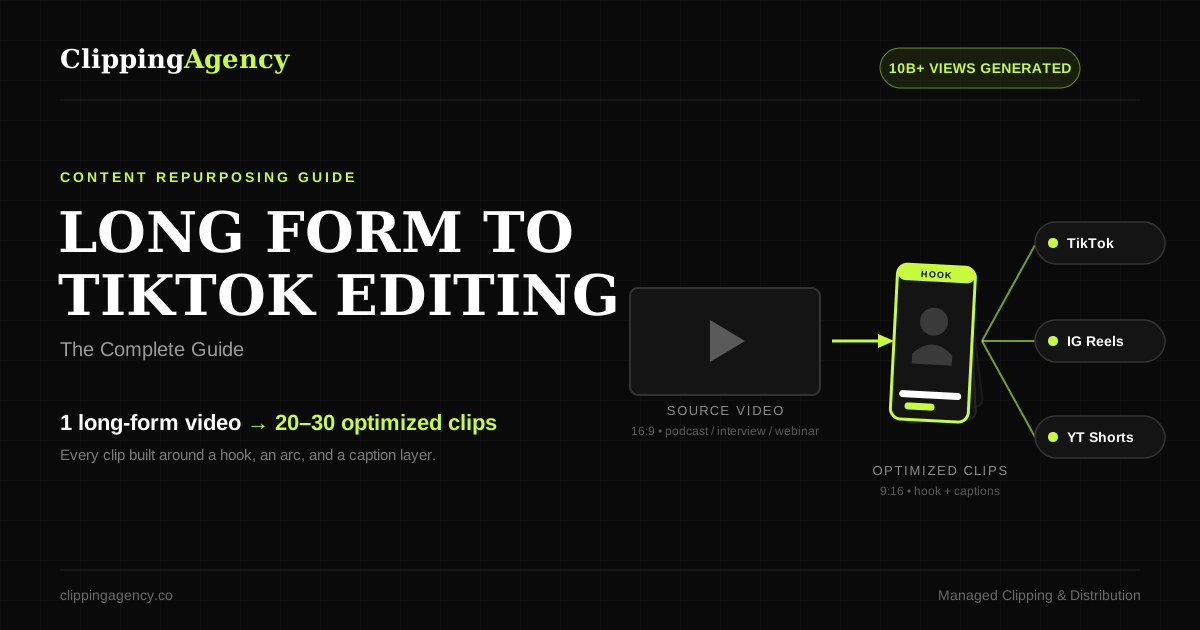
The Smart Play: Use long form as the source material — then clip it into short form for distribution. This is exactly what podcast clipping agencies do at scale.
Short Form Video vs Long Form: Head-to-Head by Goal
| Business Goal | Best Format | Why |
|---|---|---|
| Brand awareness at scale | ✅ Short Form | Algorithm-driven reach, no ad spend required |
| Driving website traffic fast | ✅ Short Form | High volume, high frequency, link in bio |
| SEO & search ranking | ✅ Long Form | Indexable, keyword-rankable, dwell time |
| Audience trust & loyalty | ✅ Long Form | Depth, authenticity, perceived authority |
| Product launch & virality | ✅ Short Form | Fast spread, UGC potential, shareable |
| Lead gen for high-ticket offers | Both | Short form for reach, long form to convert |
| Podcast / creator growth | ✅ Short Form (clipped from long) | Repurposing maximises existing content ROI |
| E-commerce conversions | ✅ Short Form | Purchase intent driven by quick demo clips |
The Format That Actually Wins: Neither — It’s the System
Here’s what the data actually shows when you zoom out:
The brands and creators generating the highest ROI in 2026 aren’t choosing between short form and long form. They’re using long form as the engine room and short form as the distribution network.
Record once. Clip continuously. Distribute everywhere.
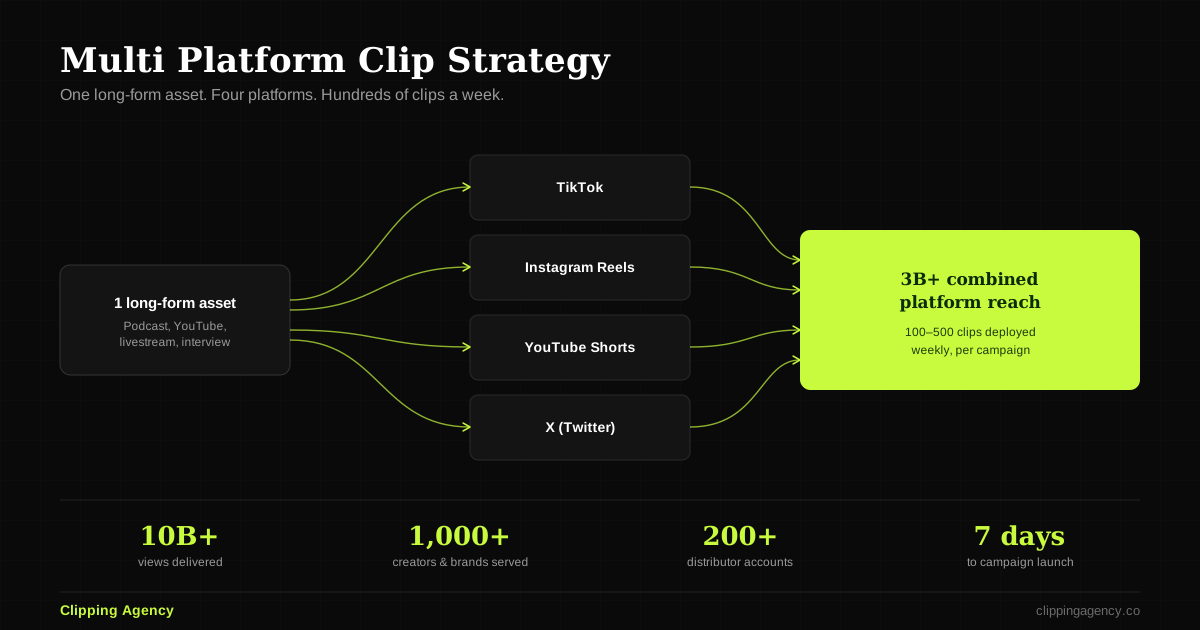
A single 60-minute podcast episode, processed through a short form video distribution system, can generate:
- 15–30 individual short clips
- Distribution across TikTok, Instagram Reels, and YouTube Shorts simultaneously
- Coverage across hundreds of accounts
- Millions of views from a single recording session
This is the model that clipping campaigns are built around — and why they consistently outperform traditional paid advertising on reach, engagement, and cost-per-acquisition.
Real Distribution Math: What “More ROI” Actually Looks Like
Let’s make this concrete.
Scenario A: Long Form Only
- 1 podcast episode published to YouTube
- Reaches existing subscribers: ~2,000–10,000 views
- Growth: slow organic compound through SEO
Scenario B: Short Form Only (Single Account)
- 3–5 short clips per week posted to TikTok
- Average reach: 5,000–50,000 views per clip (variable)
- Growth: algorithm-dependent, inconsistent
Scenario C: Long Form + Short Form Clipping Campaign
- 1 podcast episode → 20 clips
- Distributed across 100+ accounts simultaneously on TikTok, Reels, Shorts
- Projected reach: 1–5 million views per month
- Result: exponential reach from a single piece of content
The difference isn’t the format. It’s the distribution infrastructure behind it.
When you run the math against the cost of paid advertising at equivalent reach, clipping campaigns produce results that paid media simply can’t match at the same budget level.
Platform by Platform Short Form ROI Breakdown
| Platform | Daily Views / Users | Avg Engagement Rate | Best For |
|---|---|---|---|
| YouTube Shorts | 70 billion daily views | 5.91% | Existing YouTube audiences, SEO adjacency |
| TikTok | 45 min avg session time | 5.75% | Cold audience discovery, virality |
| Instagram Reels | 53 min avg session time | ~3–5% | Brand aesthetics, DM conversions |
Source: Statista, Vidico, AutoFaceless Research 2026
All three platforms reward consistency, high clip volume, and multi-account distribution — which is exactly why businesses working with a managed clipping agency consistently outperform solo creators running their own accounts.
The UGC Comparison: Is Short Form Better Than UGC Ads?
Many brands ask whether short form clipping is more effective than UGC (user-generated content) ads. We’ve addressed this directly in our UGC Ads vs Clipping breakdown — but the short answer is:
UGC ads cost money per impression. Clipping earns organic reach.
Both serve different stages of the funnel, but for pure ROI on content you’ve already created, short form clipping has no close competitor.
Common Mistakes Brands Make Choosing the Wrong Format
Mistake 1: Going all-in on long form because it “feels premium.” Long form without a distribution strategy is content that disappears. No one finds a 45-minute YouTube video unless they’re already looking for it.
Mistake 2: Posting short form inconsistently on a single account. Short form needs volume and consistency. One clip per week on one account won’t move the needle.
Mistake 3: Treating short form as a cut-down version of long form. A 90-second clip pulled from a long video needs to work as a standalone piece of content — with a hook in the first 3 seconds, clear value, and a reason to engage.
Mistake 4: Not measuring the right metrics. 43% of brands track engagement as their top ROI metric. But reach, follower growth, and inbound inquiry volume tell a more complete business story.
Every Day You Wait, A Competitor Gets the View
We recruit, train, and manage a clipping army that distributes your content across 50–500 accounts on TikTok, Reels, and Shorts simultaneously. One upload becomes hundreds of posts. Every single day.
Trusted by 1,000+ creators · 10 Billion+ views generated