
You’ve built the content. Now comes the real question: how do you make people actually see it? For most brands and creators in 2026, that question leads to a fork in the road — UGC ads on one side, clipping campaigns on the other. Both promise views. Both promise growth. But they work in fundamentally different ways, target different problems, and deliver very different results.
This isn’t a surface-level comparison. We’re going to break down what each strategy actually does, where it performs, where it fails, and which one deserves your budget — or both.
📊 Clipping Agency has generated over 2 billion views for clients using distribution-first content strategy. This guide is built on that data, combined with current industry benchmarks.
What Are UGC Ads? (And Why They’re Not What Most People Think)
UGC stands for user-generated content. But in 2026, the term has split into two very different things — and confusing them is one of the most expensive mistakes a brand can make.
1. Paid UGC Creatives (UGC Ads)
This is where a brand pays a creator — typically a micro-influencer or UGC specialist — to produce raw, authentic-looking video footage. That footage is then used as the creative for paid ads on Meta, TikTok, or YouTube.
Paid UGC ads are designed to look organic but function as paid placements. The brand controls the distribution through ad spend. The creator produces the asset. The platform charges you for every 1,000 views.
2. Organic UGC (User-Posted Content)
This is the original form — real customers, fans, or community members posting about your brand without being paid to run ads. It lives and dies on the account that posts it. One upload, one audience, one shot at the algorithm.
The key distinction: paid UGC ads give you control over distribution through budget. Organic UGC gives you authenticity without distribution scale. Neither gives you both — which is exactly where clipping campaigns enter the picture.
📉 96% of short-form videos never break 1,000 views on a single account. Distribution volume — not content quality — is the primary growth variable.
What Is a Clipping Campaign?
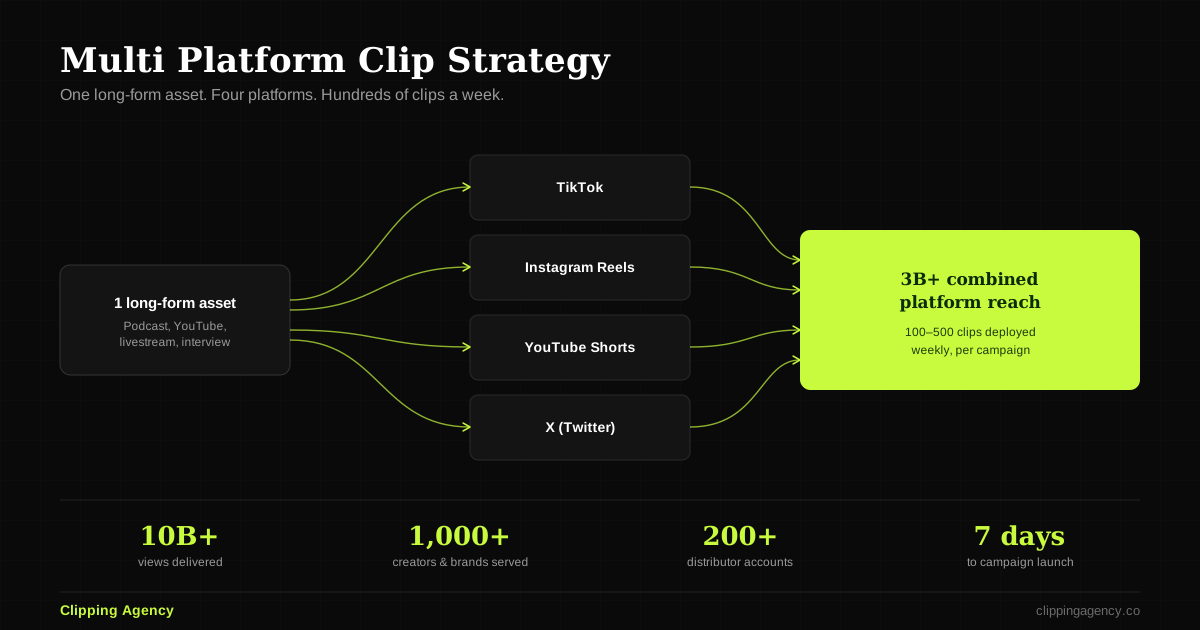
A clipping campaign is a fully managed content distribution system. Long-form video — a podcast, a YouTube video, a livestream — is broken into 10–30 short-form clips and then deployed simultaneously across hundreds of independent accounts on TikTok, Instagram Reels, YouTube Shorts, and X.
This is not a one-account-posting strategy. This is mass distribution engineering — a network of vetted clippers (editors and fan accounts) who post your content at volume and velocity, creating the kind of sustained algorithmic signal that a single account simply cannot generate.
At Clipping Agency, we build, manage, and optimise these systems end-to-end — from clipper recruitment and quality review to payout processing and campaign performance tracking. You create. We distribute. The algorithm does the rest.
💰 Our clients see an average CPV of $0.002–$0.005 — compared to $8–$30 CPM on paid platforms. That’s 5–7× more views for the same budget, with engagement that keeps compounding long after the campaign ends.
UGC Ads vs Clipping: Full Comparison at a Glance
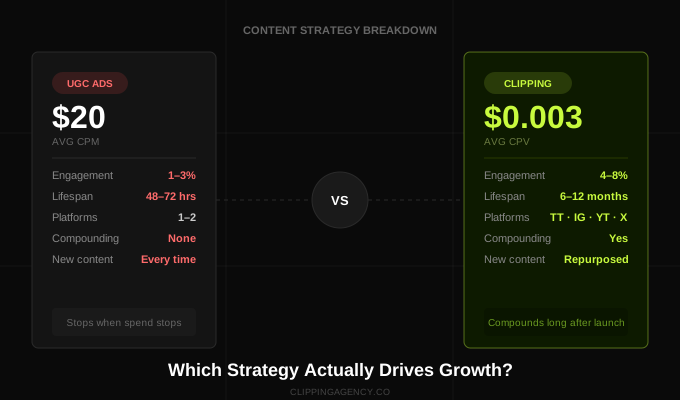
| Factor | Paid UGC Ads | Organic UGC | Clipping Campaigns |
|---|---|---|---|
| Cost per 1K Views | $8–$30 CPM | Unpredictable | $0.002–$0.005 CPV |
| Content Ownership | Contracted creator | Creator owns it | Brand/creator owns it |
| Distribution Reach | Ad budget limited | Single account | Hundreds of accounts |
| Longevity | Stops when budget stops | Fades in 48–72 hrs | Compounds over months |
| Platform Coverage | Meta, TikTok (paid) | 1–2 platforms | TikTok, Reels, Shorts, X |
| Engagement Rate | 1–3% (ad fatigue) | Variable | 4–8% (native feel) |
| Production Dependency | New content every time | New content every time | Repurposes existing content |
| Scalability | Scales with spend | Hard to scale | Scales with distribution |
| Setup Time | 3–7 days | Immediate | 1 day to campaign live |
| Best For | Conversion testing | Early brand awareness | Sustained organic growth |
The table above makes one thing clear: these aren’t competing strategies fighting for the same use case. They operate in different economic models. UGC ads are a paid acquisition channel. Clipping campaigns are a compounding distribution engine.
The Cost Reality: What You Actually Pay Per View
Let’s talk numbers — because this is where the decision often gets made.
| Channel | Avg. CPM / CPV | Engagement Rate | Longevity |
|---|---|---|---|
| Meta Paid Ads | $8–$20 CPM | 0.5–1.5% | Stops with budget |
| TikTok Paid Ads | $10–$30 CPM | 1–3% | Stops with budget |
| UGC Organic (single acct) | Unpredictable | 2–5% (early) | 48–72 hrs |
| Clipping Campaigns | $0.002–$0.005 CPV | 4–8% | Compounds 6–12+ months |
What does this mean practically? If you have a $5,000 monthly content budget and spend it on Meta ads at a $15 CPM, you get approximately 333,000 views — and zero of them the following month when the budget stops. Run the same $5,000 through a clipping campaign, and you’re looking at 1–5 million views, with those clips continuing to accumulate views for months afterward.
🔄 One piece of long-form content, distributed through a clipping campaign, becomes a 30-day distribution event — not a 48-hour post that dies in the algorithm.
Where UGC Ads Win
UGC ads have a genuine, specific use case — and it’s important to be honest about it.
- Conversion testing: UGC-style ad creatives consistently outperform polished branded video in A/B tests for direct response campaigns. The native, authentic feel reduces resistance at the point of conversion.
- Product launches with tight timelines: When you need controlled distribution on a specific date — a product drop, a course launch, an app release — paid UGC gives you predictable delivery windows.
- Retargeting audiences: Paid UGC works well for warm audience retargeting, where trust is already established and you need a final nudge to convert.
- Brand safety control: Every placement is approved and monitored. For highly regulated industries, that control matters.
Where Clipping Campaigns Win
Clipping campaigns aren’t a paid ad alternative — they’re a fundamentally different growth model.
- Sustained organic reach: Clipping campaigns generate views that compound. A clip published in week one is still accumulating views in month six. No paid ad can do that.
- Volume at scale: One piece of content becomes 200+ clips, posted across hundreds of accounts simultaneously. The algorithm rewards volume and velocity. This is how you engineer that signal.
- Authentic engagement: Native clips posted by real accounts outperform ads on engagement rate — consistently in the 4–8% range versus 1–3% for paid formats that trigger ad fatigue.
- No ongoing ad spend: The distribution infrastructure you build keeps working. Clips posted last month are still getting views today without any additional budget.
- Content repurposing efficiency: You’re not creating new content. Every existing long-form video becomes a month of distribution events. One podcast episode becomes 30 clips.
See how clipping marketing compares to traditional marketing models — including exactly how the compounding curve looks at months 1, 3, 6, and 12.
Who Should Use UGC Ads vs Clipping Campaigns?
Choose UGC Ads If:
- You have a dedicated paid media budget and a conversion-focused campaign
- You’re running a time-sensitive product launch with a specific conversion goal
- You need retargeting assets for warm audiences already in your funnel
- You’re in a regulated industry where placement control is mandatory
Choose Clipping Campaigns If:
- You want organic reach that compounds without ongoing ad spend
- You produce long-form content — podcast, YouTube, livestream — and want it to reach everywhere without creating more
- You’re a creator, founder, or brand who wants presence across TikTok, Reels, Shorts, and X simultaneously
- Your growth has plateaued on a single-account model and you need distribution volume to break through
- You want a short-form video distribution system that keeps working long after the campaign ends
Best Case: Use Both
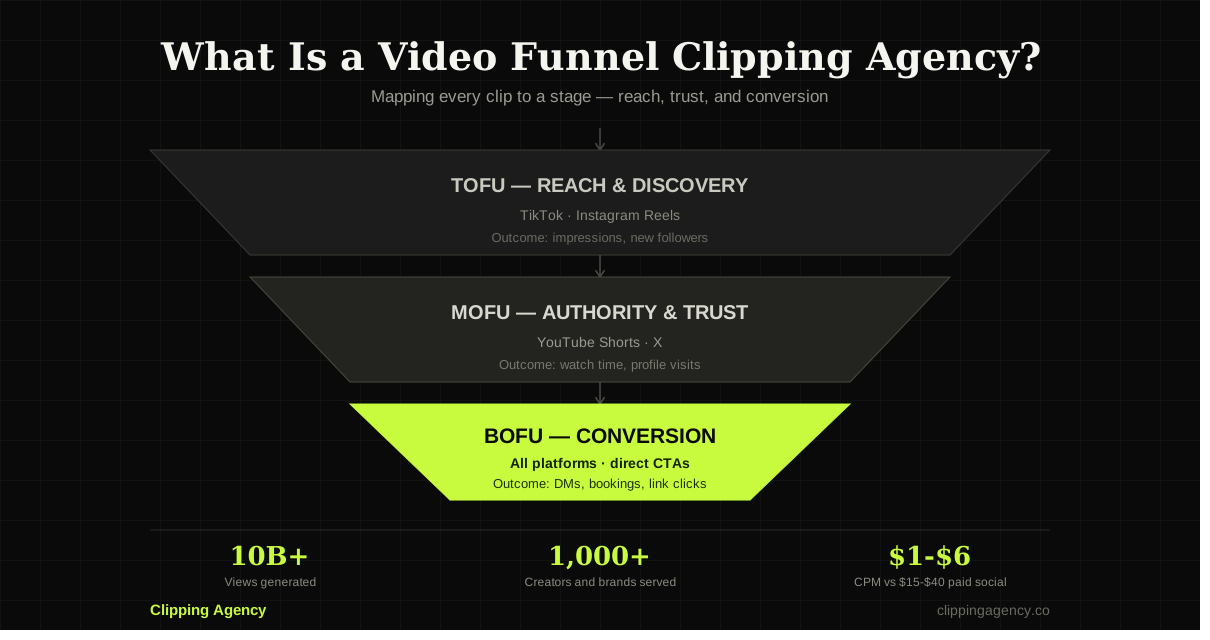
The smartest brands use UGC ads for conversion and retargeting — and clipping campaigns for discovery and sustained organic growth. They’re not competing. They fill different parts of the funnel.
🎯 Use UGC ads to convert. Use clipping campaigns to grow. The two work best together when each is doing its actual job.
The Distribution Problem That Neither UGC Type Solves Alone
Here’s the insight that most content strategy guides miss entirely.
Both paid UGC and organic UGC share a fundamental constraint: single-account distribution. Whether you’re posting a UGC ad from your brand account or a creator is posting organic content from their personal page, the reach ceiling is determined by one account’s audience and algorithmic fate.
Clipping campaigns remove that ceiling entirely. By distributing content across hundreds of independent accounts simultaneously, you’re not fighting for one algorithmic slot — you’re occupying hundreds of them at once. That’s not an incremental improvement in distribution. It’s a structural advantage.
This is why our clients consistently see 1–5 million additional monthly views within their first 30 days — not because the content suddenly became better, but because the distribution model changed.
Learn exactly how this system works in our guide: How Clipping Campaigns Work — The Complete Guide.
Key Facts & Figures Worth Knowing
- $0.002–$0.005 CPV: Average cost per view through a managed clipping campaign (vs $8–$30 CPM on paid platforms)
- 10 Billion+ views: Total views generated by Clipping Agency clients across TikTok, Reels, Shorts, and X
- 96%: Percentage of short-form videos that never break 1,000 views on a single-account model
- 10×: Average increase in short-form content output within 30 days of launching a clipping campaign
- 5–7×: How much cheaper a clipping campaign is compared to equivalent paid ad reach
- 48–72 hours: Average lifespan of a single organic post before the algorithm buries it — versus months for clipped content across hundreds of accounts
- 1 day: Time from strategy call to a live clipping campaign at Clipping Agency
A Note for Podcasters: The Clipping Advantage Is Even Bigger
If you’re a podcaster, the UGC vs clipping comparison looks even more extreme. A single podcast episode contains 10–30 distinct viral moments — sharp opinions, quotable lines, surprising statistics, emotional beats. Most podcasters upload once to YouTube and hope someone clips it for them.
Our podcast clipping service does this systematically — turning every episode into a month of distributed short-form content, posted across TikTok, Reels, and Shorts through our clipper network while you’re already recording the next one.
That’s not a UGC ad. That’s not organic hope. That’s a content engine.
Frequently Asked Questions: UGC Ads vs Clipping
Q: What is the main difference between UGC ads and clipping campaigns?
UGC ads are paid placements using authentic-looking creator content — you pay the platform for distribution. Clipping campaigns are organic distribution systems where your existing long-form content is broken into short clips and posted across hundreds of accounts simultaneously. UGC ads buy reach. Clipping campaigns build it.
Q: Are UGC ads or clipping campaigns better for brand awareness?
For sustained brand awareness that compounds over time, clipping campaigns outperform UGC ads significantly. Paid UGC delivers awareness only while the budget is running. Clipping campaigns generate clips that continue accumulating views for months — building organic brand recognition without ongoing ad spend.
Q: Can small creators benefit from clipping campaigns if they don’t have a big audience?
Yes. Clipping campaigns work regardless of your existing audience size because distribution happens across independent clipper accounts — not your own channel. The algorithm sees volume and velocity from multiple sources, which drives discovery for new audiences entirely separate from your current following.
Q: How much does a clipping campaign cost compared to running UGC ads?
A managed clipping campaign through Clipping Agency delivers views at $0.002–$0.005 CPV. Paid UGC ads on Meta or TikTok typically cost $8–$30 CPM. That’s a 5–7× cost advantage for clipping — and unlike paid ads, the views compound after the campaign ends rather than stopping the moment you stop spending.
Q: Do I need to create new content to run a clipping campaign?
No. Clipping campaigns repurpose your existing long-form content — podcasts, YouTube videos, livestreams, interviews — into short-form clips. If you have long-form content, you have everything you need. One piece of existing content becomes a full month of distribution events.
Q: Should I use UGC ads and clipping campaigns at the same time?
Yes — they serve different functions. Use UGC ads for conversion and retargeting of warm audiences. Use clipping campaigns for discovery, organic growth, and sustained brand presence. The two strategies are complementary, not competitive. The best-performing brands use both.
Q: What platforms do clipping campaigns cover?
Clipping campaigns distribute content across TikTok, Instagram Reels, YouTube Shorts, and X (Twitter). As short-form platforms evolve, distribution scope expands accordingly — giving you presence everywhere your audience spends time without managing multiple platform strategies independently.
Q: Is clipping the same as influencer marketing?
No. Influencer marketing involves paying creators to promote your brand to their existing audience. Clipping campaigns involve a network of editors and fan accounts distributing your own content at scale. The short-form video distribution model is built around your content — not around borrowing someone else’s audience.
The Bottom Line — Why Hire Clipping Agency?
Let’s be direct.
UGC ads are a tool. A useful one — for specific conversion goals, specific audiences, specific windows. But they don’t grow your brand organically. They don’t compound. And they don’t work the moment you stop paying for them. If your goal is sustainable visibility — the kind that builds over months, not just days — UGC ads alone will never get you there.
Clipping campaigns are a distribution infrastructure. And infrastructure compounds. Every clip we publish on your behalf keeps accumulating views. Every month, the library grows. Every week, the network expands. That’s not a content strategy — that’s a content engine.
At Clipping Agency, we’ve built and managed this system for 1,000+ creators and brands, generating over 2 billion views across TikTok, Reels, Shorts, and X. Our CPV sits at $0.002–$0.005 — not $30. Our clients see a 10× increase in short-form content output within 30 days. Our campaigns go live in 24 hours from your first call.
We don’t just clip content. We engineer distribution systems that turn what you’ve already built into reach you haven’t captured yet.
If you’re serious about growing on short-form — without the ad spend treadmill, without the single-account ceiling, without building a team from scratch — this is what we do.
Every Day You Wait, A Competitor Gets the View
We recruit, train, and manage a clipping army that distributes your content across 50–500 accounts on TikTok, Reels, and Shorts simultaneously. One upload becomes hundreds of posts. Every single day.
Trusted by 1,000+ creators · 10 Billion+ views generated