
Let’s be real for a second.
You’re recording podcasts, filming long YouTube videos, going live on Twitch for hours, doing interviews and webinars. You’re putting in serious work every single week. And then you post it, wait, and watch the views trickle in like it’s 2014 and the algorithm owes you nothing.
It’s frustrating because the content is genuinely good. You know it is. Your existing audience knows it. But the numbers? They tell a completely different story.
Here’s the thing though that gap you’re seeing between the quality of your content and the reach it actually gets has nothing to do with whether your content is good enough. It has everything to do with how it’s being distributed. Or more accurately, how it isn’t.
That’s the problem a clipping service for US content creators is specifically designed to fix. Not by making you create more, but by making everything you’ve already created work a whole lot harder.
What People Get Wrong About Clipping Services
When most creators hear “clipping service,” they picture someone sitting at a computer, trimming a video down, and sending it back over. Like a basic editing job, but for short clips.
That’s not even close to what a real clipping service does.
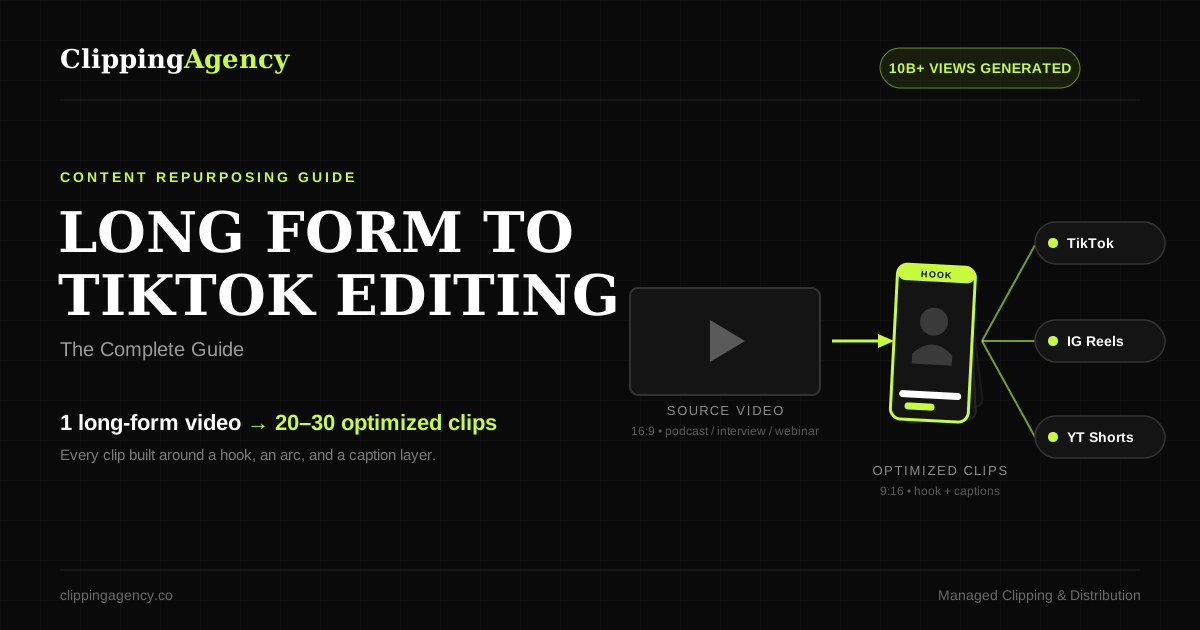
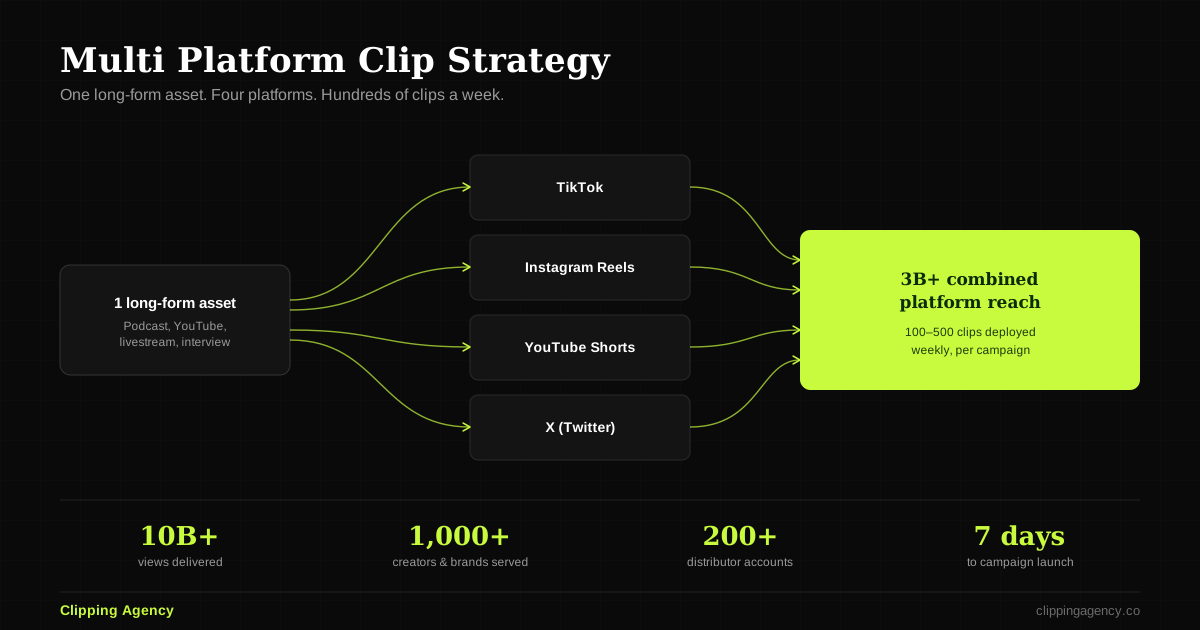
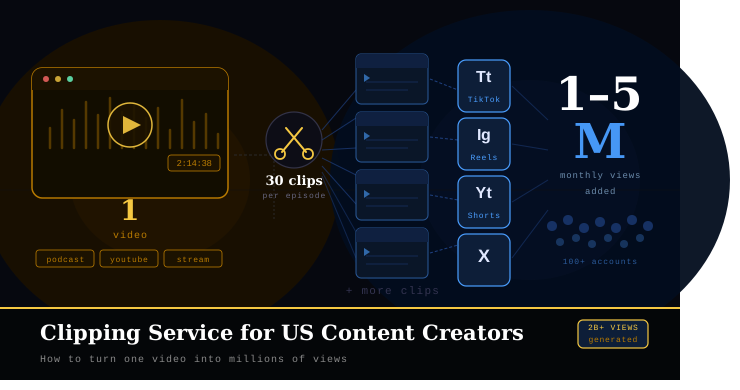
Content clipping at a professional level is a distribution system. You take your long-form content — a podcast, a YouTube video, a stream VOD, an interview and you break it into the best standalone moments. Then those moments go out across dozens of individual accounts on TikTok, Instagram Reels, YouTube Shorts, and X, all at the same time.
The part that actually moves the needle isn’t the editing. It’s the scale of distribution.
One freelance editor can make you great clips. But they’re still posting to your one account, reaching your existing audience. A proper clipping service sends your content through a network of hundreds of clipper accounts simultaneously. Same footage. Exponentially more reach.
And for US creators specifically, this matters more than anywhere else. TikTok, Instagram, and YouTube Shorts have turned attention into a numbers game. The algorithm doesn’t care how good your one weekly post is if it can’t build a pattern from it. Feed it 30 clips a week from your content and it starts learning what your audience looks like, where to find more of them, and how to surface your stuff to people who’ve never heard of you.
Who Actually Benefits From This (Every Creator Type, Honestly)
The clipping model isn’t built for one kind of creator. The mechanics look slightly different depending on your format, but the underlying problem is identical across the board too much good content sitting behind a distribution ceiling it can’t break through on its own.
YouTubers
Think about your last long-form video. Whatever length it was, it almost certainly had 15 to 25 moments inside it that could work as standalone short-form content. A strong opinion. A surprising stat. A story with a clear arc. A moment where you said something your audience will screenshot and share.
Most YouTubers publish the video and walk away from all of those moments. They sit in the footage, never extracted, never seen by anyone who didn’t already click the full video.
A short-form video agency pulls every one of those moments out and sends them into the short-form ecosystem as individual pieces of content. And when those clips find new viewers, where do those viewers go? Back to the channel. Back to the full video. That feedback loop is what compounds over time into actual channel growth.
Podcasters
Podcasts might be the single best content format to run through a clipping system. A one-hour episode — especially if it’s interview-based or debate-style can realistically produce 20 to 40 clips worth distributing. The conversations are natural, the emotions are genuine, and the moments that resonate tend to land hard on social platforms.
The problem is that most podcast listeners live inside podcast apps. They never see your show unless they’re already looking for it. Short clips on TikTok and Reels are how you reach the people who would love your podcast but have no idea it exists. A podcast clipping agency handles that bridge completely pulling the clips, formatting them for each platform, and getting them in front of audiences your show would never otherwise touch.
Streamers
Honestly, streamers might be leaving more on the table than any other creator type.
A two-hour stream is packed with raw material. The big moments, the reactions, the unexpected conversations, the clips your community would go crazy over. But most streamers either don’t clip their VODs at all or depend on random community members to do it when they feel like it.
A dedicated streamer clipping service goes through the VOD after every single stream and pulls the clips that actually perform. Those clips go to TikTok, Reels, and Shorts right away driving new viewers to your next stream before you’ve even started it. The more you stream, the more clips exist. The more clips exist, the more new people find you live. It’s a genuinely self-sustaining loop when it’s running properly.
Founders, Educators, and Brand Creators
Not everyone creating long-form content is a full-time creator or influencer. A lot of people building businesses have recorded hours of webinars, interviews, course content, keynote talks, and podcast appearances that are just sitting in a Google Drive folder doing nothing.
That archive is a goldmine. A content distribution agency can systematically turn that library into a rolling content presence across every major US platform without you having to film a single new thing or hire an entire internal video team to manage it.
The Actual Process Inside a Managed Clipping Service
If you’ve worked with freelancers before and been let down, it’s probably because what you hired wasn’t a system. It was a person. And a person, no matter how talented, has a ceiling. Here’s what a real managed clipping operation actually looks like end to end.
Building the Infrastructure First
Nothing goes live until the foundation is properly built. Your Whop dashboard gets configured, the submission pipeline is set up, your brand brief gets written, and quality standards are established before a single clipper touches your content.
Most cheaper services skip this entirely. They have a template, they slot you into it, and they hope it works well enough that you don’t notice. A real clipping service builds the system around your specific content, your niche, and your audience because what clips well for a finance podcast looks completely different from what clips well for a gaming streamer.
Finding the Right Moments
This part is more art than science, and it’s where experienced clippers earn their value.
Not every minute of your content is worth clipping. Not every funny moment will translate outside of the full stream’s context. Not every insight is punchy enough to work as a standalone 60-second video.
What experienced clippers look for are the moments that contain a complete idea, a clear emotional beat, or a genuinely surprising turn something a viewer can watch without any context from the larger recording and still feel like they got something from it. Podcast clips get selected for how quotable they are and whether the emotional arc lands quickly. YouTube clips get selected for whether they teach or entertain completely on their own. Stream clips get selected for peak energy and reaction moments that don’t need any setup to hit.
Formatting for Each Platform Specifically
Here’s something a lot of creators don’t realize: a clip that’s perfect for TikTok will perform mediocrely on Reels if you don’t reformat it. A clip that crushes on YouTube Shorts needs a different hook structure than the same clip on X. These platforms have different audiences, different viewing behaviors, and different norms around captions, pacing, and context.
Every clip gets reformatted natively for wherever it’s going. That means vertical 9:16 with fast captions for TikTok and Reels. Square or 16:9 for X. The opening two or three seconds get sharpened specifically because that’s when the viewer decides whether to keep watching or swipe. Caption style gets matched to the platform. Nothing gets copy-pasted from one platform to another and called done.
Review Before Anything Goes Live
Every single clip goes through a review layer before it touches any platform. Caption accuracy, audio quality, hook strength, how it reflects your brand, whether it aligns with your content guidelines — all of it gets checked. Anything that doesn’t pass gets sent back, not published.
When you’re running clips across hundreds of accounts at the same time, one off-brand clip doing the rounds can genuinely damage your reputation. The review process isn’t bureaucracy it’s brand protection at scale. It’s why any serious clipping campaign agency makes this non-negotiable.
Distribution Through the Clipper Network
This is the part that makes a clipping service fundamentally different from anything a single editor offers.
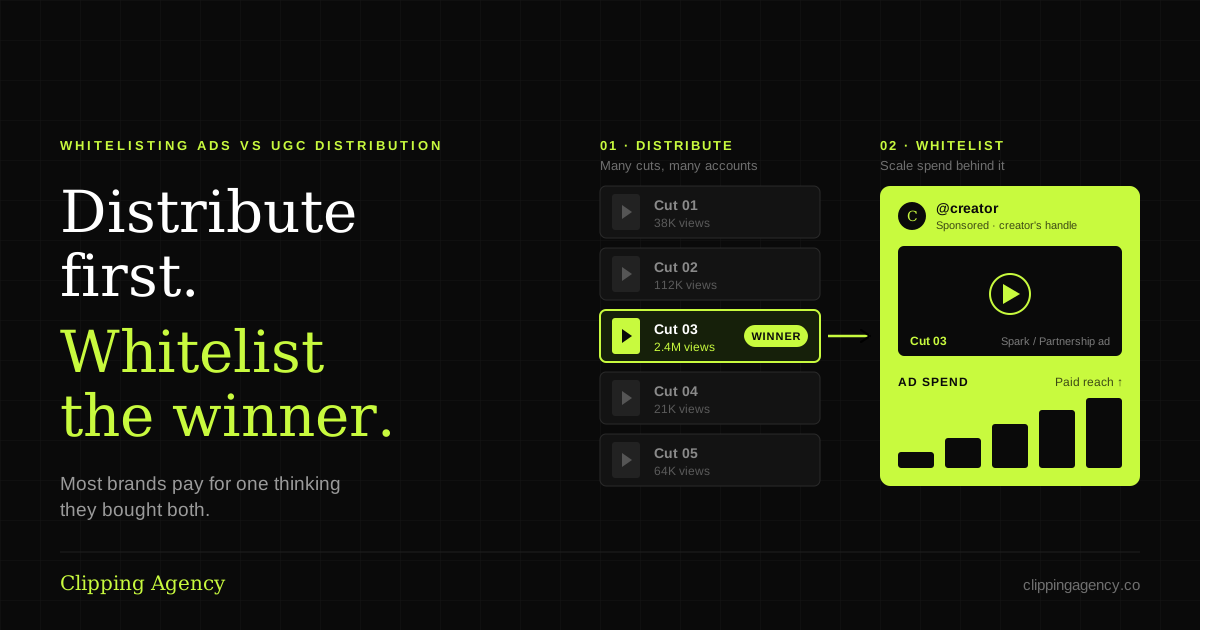
Clips don’t just go to your channel. They go out through a network of individual clipper accounts — real people posting to their own TikTok, Instagram, and YouTube pages. Hundreds of accounts, all pushing your content simultaneously. The reach this creates is categorically different from what one account posting to its existing followers can achieve.
This is also why clipping campaigns consistently outperform paid advertising when it comes to organic audience growth. An ad campaign stops generating results the second you stop funding it. A well-placed clip on TikTok can pull in views for weeks after it’s posted, with no additional spend required.
Monthly Optimization
The system doesn’t just run — it learns. Every month, performance data shows what clip styles are generating real reach, which hooks are keeping viewers watching, and which platforms are driving the most actual growth back to your main channel.
That data feeds directly back into how the next month’s clips get selected and formatted. The system gets sharper over time, and your results compound instead of flattening out.
The Volume Problem (And Why You Can’t Solve It Alone)
This is the part most creators genuinely underestimate until they see the numbers.
YouTube Shorts gets 70 billion views every single day. TikTok’s algorithm ranks content, not accounts — meaning a great clip from a channel with 400 subscribers can outperform a mediocre clip from a channel with 400,000. Instagram Reels regularly surfaces posts to people who’ve never interacted with your account before.
The platforms are actively trying to distribute good content to new audiences. But to do that, they need enough volume to identify patterns — what your content is, who it resonates with, where to find more people like them.
Seven clips a month gives the algorithm seven chances to figure that out. 150 clips a month gives it 150. The math isn’t complicated, but the implications are significant. More data means faster learning. Faster learning means faster surfacing. Faster surfacing means faster growth.
The reason most creators can’t solve this themselves is capacity. You can’t manually post 30 clips a week across multiple platforms without it becoming a full-time job on top of the full-time job you already have making the content. A professional video clipping service for US creators provides the infrastructure that makes that volume possible without any of it falling on you.
What the Results Actually Look Like
To give you something concrete Clipping Agency has driven over 2 billion views across clients in the creator ecosystem. For US content creators specifically, what that tends to look like in practice is a 10x increase in short-form content output in the first 30 days, a jump of 1 to 5 million additional monthly views across TikTok, Reels, and YouTube Shorts, and 20 to 40 clips coming out of a single one-hour podcast episode.
None of it requires filming anything new. Your existing library everything you’ve already recorded is the raw material. If you’ve been creating for any length of time, there’s a genuine goldmine in there that’s never been properly distributed.
In-House Editor vs. Clipping Service
It’s a question that comes up a lot: why not just hire one solid video editor in-house instead?
And it’s a fair one. A dedicated in-house editor gives you consistency, brand alignment, and direct control over quality. Those are real advantages.
But here’s what you don’t get: scale. One editor posts to your account. A clipping service runs a network. One editor manages your one channel’s output. A managed clipping service puts your content across hundreds of accounts simultaneously. The difference in distribution reach isn’t small it’s the difference between a single megaphone and a stadium sound system.
If you’re looking to increase channel reach, build brand awareness in new audiences, and generate consistent inbound without hiring an internal ops team to manage the whole operation, the clipping service model is simply the better structure for that goal.
Questions Worth Asking Before You Commit to Any Service
Not every clipping service is built the same way. If you’re evaluating options in the US market, push on these things before you sign anything.
Ask what the review process looks like before clips go live. “We trust our editors” is not an acceptable answer. Ask exactly how many accounts distribute your content, because a service running through one or two accounts isn’t really a distribution network. Find out what the brand brief process looks like if they can’t tell you how your tone, boundaries, and visual standards get communicated to clippers, that’s a problem. Ask how they respond when content isn’t performing and how they use performance data to improve over time. And get a realistic clip yield estimate per hour of your content vague answers here almost always mean lower output than you’re expecting.
The Bottom Line: Why We’re the Right Call for US Creators
We’re going to be straight with you.
There are plenty of places to get clips made. Freelancers on Fiverr, automation tools that auto-generate short clips, agencies that talk a big game and deliver something generic. The options exist.
What Clipping Agency builds is different in a way that actually matters. We don’t edit your clips and hand them back — we build the infrastructure that runs your content distribution month after month, getting smarter and more effective as it goes.
Over 2 billion views generated. Hundreds of creators and brands across every major niche in the US market. YouTubers, podcasters, streamers, founders, educators we’ve built systems around all of them. The approach isn’t guesswork. It’s grounded in how short-form platforms actually work and what makes content surface to new audiences at scale.
When you hire Clipping Agency, a few things happen that don’t happen anywhere else.
Your infrastructure gets built properly from day one the dashboard, the pipeline, the clipper recruitment, the brand brief, the review process. Our team runs all of it. None of that operational weight lands on you.
Every clipper working with your content is vetted, briefed, and held to a specific quality standard. Clips that don’t pass get rejected. Clippers who perform well get more work. The incentive structure inside the network is built specifically to keep quality high.
The system doesn’t plateau. We use performance data every month to keep improving shifting what’s being clipped, how it’s being formatted, and where it’s being pushed based on what’s actually driving growth.
We’re not the cheapest option. We’ve never tried to be. We’re the option that delivers real distribution for content that deserves to be seen by a lot more people than it currently is.
If you’re a US creator putting out long-form content week after week and the numbers still aren’t reflecting the work you’re putting in you don’t need a better camera, a better thumbnail, or a better posting schedule.
You need your content in front of more people. That’s it.
And that’s exactly what we do.
Frequently Asked Questions
What kinds of content work best with a clipping service? Podcasts, YouTube long-form videos, live streams, interviews, webinars, and course content all work well. Interview and debate-format podcasts tend to yield the most clips per hour since the conversation naturally produces punchy, standalone moments.
How many clips should I realistically expect per month? It depends on your output. One hour of podcast content typically yields 20 to 40 clips. A two-hour stream produces around 10 to 30. Most clients with a consistent content schedule see somewhere between 100 and 300 distributed clips per month once the system is running.
Does my current audience size matter? Not really, no. The whole point of the clipper network model is that your content goes out through hundreds of individual accounts — not just your own page. So your starting follower count doesn’t put a ceiling on the reach you can generate.
How long until I see actual results? Short-form output increases significantly within the first 30 days. View growth tends to compound over 60 to 90 days as the clipper network learns what works for your specific content and the algorithms have enough data to start surfacing your clips more broadly.
How is this different from hiring someone on Fiverr or Upwork? A freelance editor gives you clips. A clipping service gives you a distribution system. One posts to your account. The other distributes through a network of hundreds of accounts simultaneously. The gap in reach between those two things is not small.
Which platforms do you cover? TikTok, Instagram Reels, YouTube Shorts, and X are the core platforms. Priorities can be adjusted based on where your specific audience spends time and which platforms are driving the most growth back to your main channel.
Every Day You Wait, A Competitor Gets the View
We recruit, train, and manage a clipping army that distributes your content across 50–500 accounts on TikTok, Reels, and Shorts simultaneously. One upload becomes hundreds of posts. Every single day.
Trusted by 1,000+ creators · 10 Billion+ views generated