
Most people think content clipping is just trimming videos down. It’s not. It’s a distribution model — and the creators who figured that out early are the ones racking up millions of views without running a single ad.
Updated June 2026 · 9 min read · For creators, brands, podcasters & agencies
Okay, but what actually is content clipping?
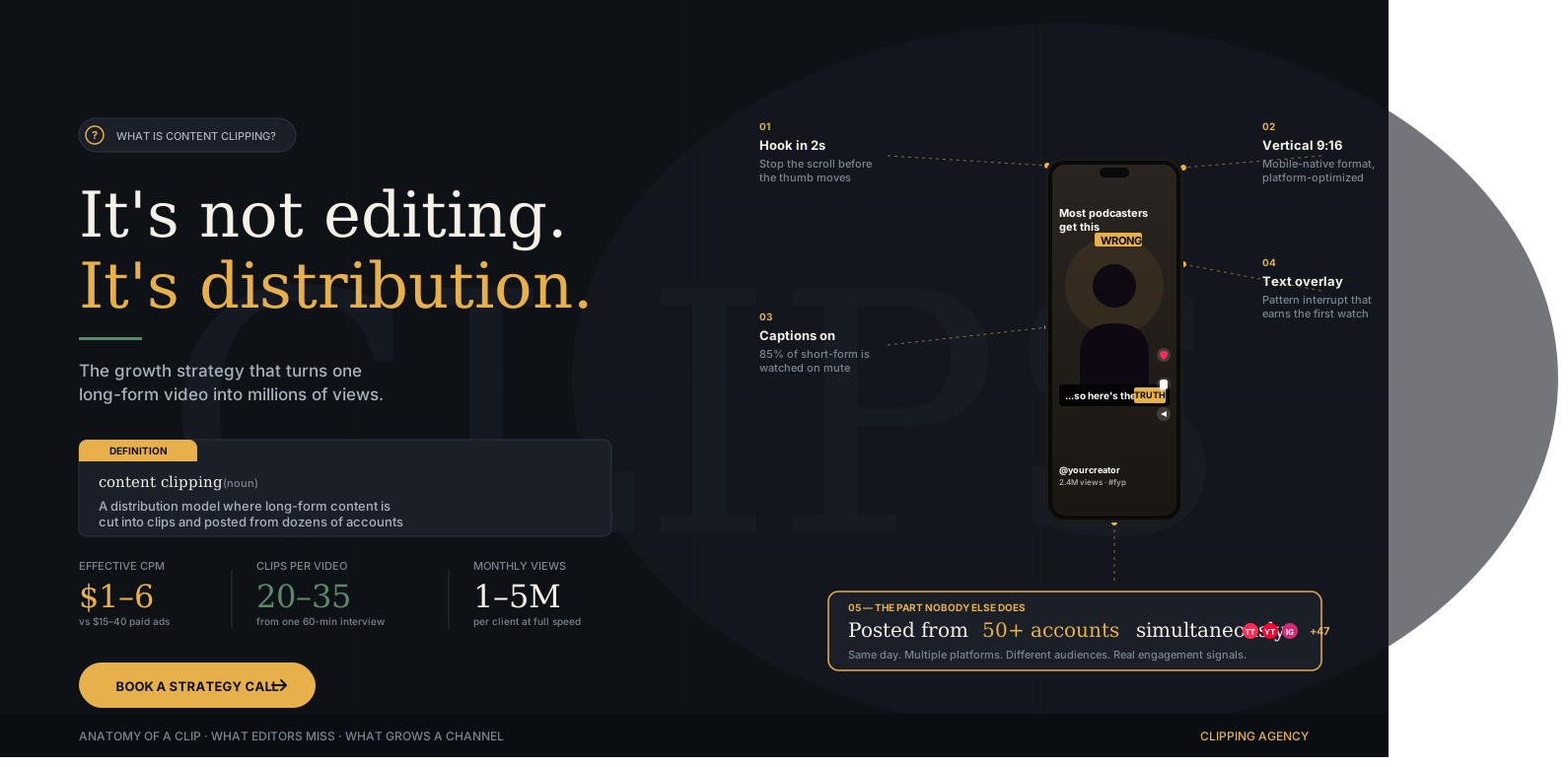
Short answer: you take a long video, find the best moments inside it, turn those moments into short vertical clips, and push them out across TikTok, Reels, and Shorts — through a network of editors posting from multiple accounts at the same time.
That’s it at its core.
The longer answer is that “content clipping” has two very different versions, and most people are only familiar with the basic one. The basic version is what freelancers and part-time editors do — they watch your video, cut a few clips, hand them back to you, and you post them. Fine. Useful. Doesn’t change your numbers in any meaningful way.
The other version — the one that actually matters — is less about editing and more about flooding the internet with your content simultaneously from dozens of different accounts. Not one clip on your channel. Thirty clips across thirty accounts dropping on the same day, all driving views back to you from audiences who had no idea you existed.
That second version is what people mean when they talk about content clipping as a growth strategy. And that’s what this article is about.
Why is this even a thing now?
Because short-form video broke the old discovery model completely.
Not that long ago, you could build an audience by posting consistently on YouTube, growing your podcast organically, or getting lucky with a few viral posts. The platforms rewarded patience and consistency. That still works — but it’s slow, and it’s getting slower.
What’s fast right now is short-form. TikTok, Instagram Reels, YouTube Shorts — these platforms push content to people who’ve never heard of you, based entirely on whether your video earns engagement in the first few hours. No subscribers needed. No existing following required. A clip from a nobody can hit a million views if the hook is right and the algorithm picks it up.
Creators figured out quickly that the long-form content they were already making was basically a goldmine of those hooks. A two-hour podcast has 20 or 30 moments inside it that would stop someone mid-scroll if they came across it on TikTok. A 45-minute YouTube video has angles, takes, and soundbites that would perform brilliantly as 60-second clips.
The problem was that most creators didn’t have the time, systems, or editing bandwidth to extract all of that and get it out across platforms consistently. So agencies started doing it for them. That’s where content clipping as an industry came from.
What actually happens inside a clipping operation
Walk through a real campaign and it looks something like this.
Someone — either on the agency side or a trained clipper — goes through your long-form content and marks the timestamps worth clipping. They’re not just cutting randomly. They’re looking for moments with a natural hook at the start, some kind of payoff before the 60-second mark, and enough standalone value that someone who’s never heard of you would still find it interesting. The surprising stat you threw out casually. The hot take your guest disagreed with. The story that went somewhere unexpected. The advice that’s counterintuitive enough to make someone pause.
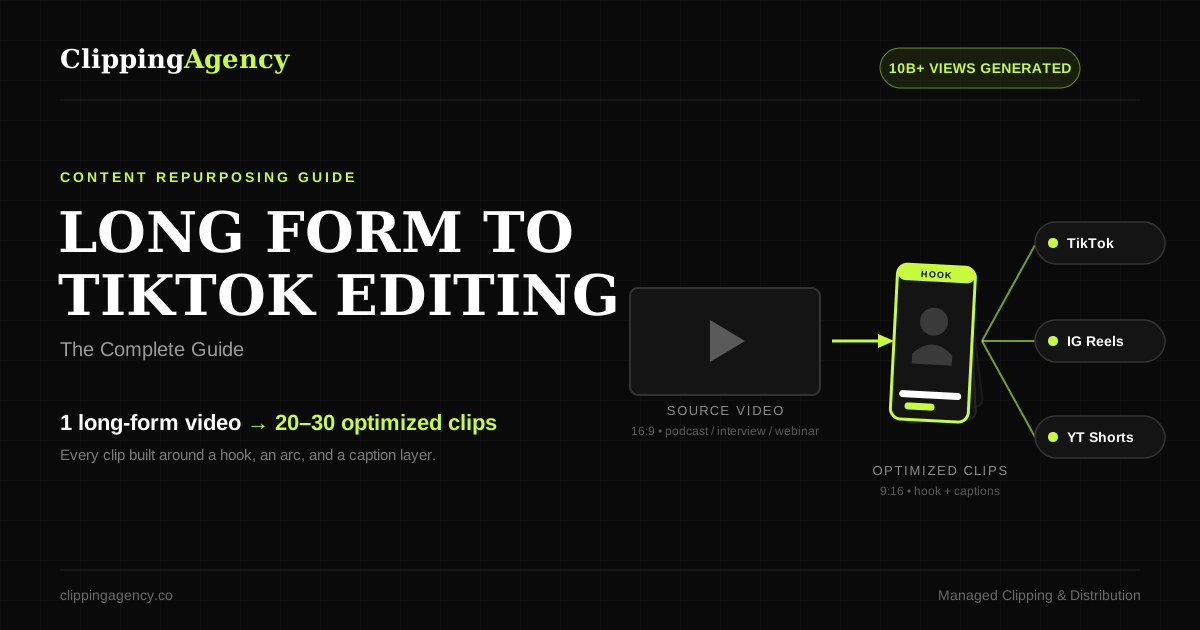
Once those moments are identified, editors clip them, put them into the right format for each platform (vertical, 9:16, captioned, sometimes with text overlays or b-roll depending on the clip), and optimize the opening two seconds so the hook hits before the viewer can swipe away.
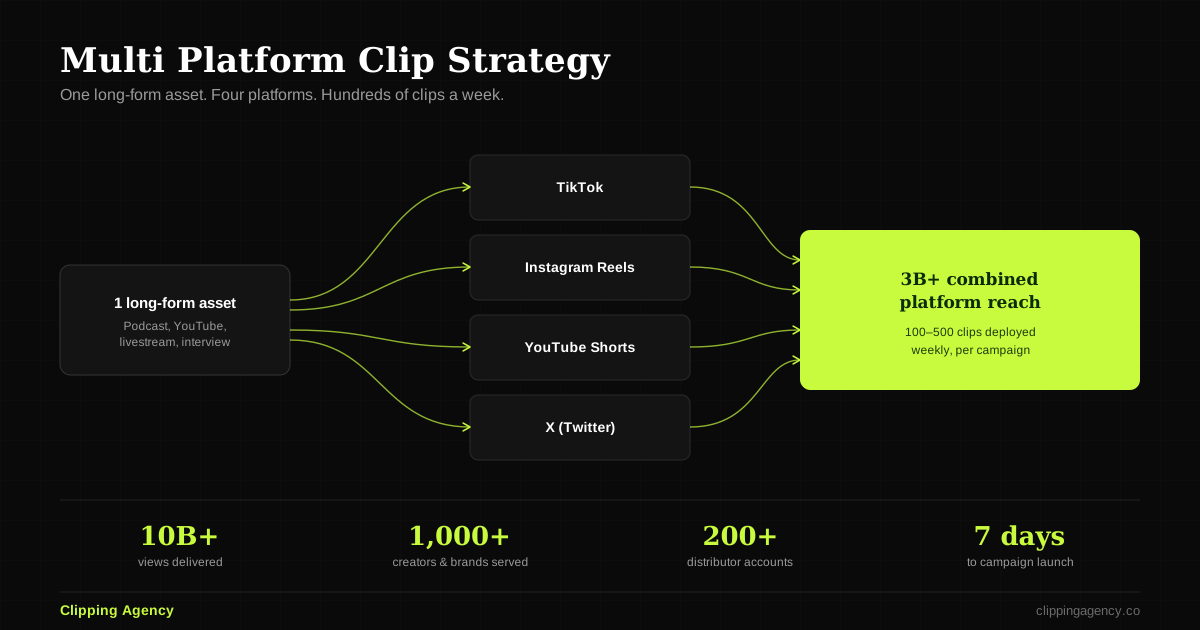
Then those clips go out — not from one account, not from just your channel, but from a network. Multiple editors posting to multiple accounts across TikTok, Reels, and Shorts on the same day or across the same week. Every clip has its own shot at the algorithm. Some of them do nothing. A few of them hit. Occasionally one of them absolutely takes off. And when it does, it brings a wave of new viewers back to you.
Meanwhile, everything is being tracked. Views, watch time, profile visits, follower conversions, saves, shares — the data rolls in and the team figures out which content angles are working, which hooks are driving clicks, which platforms are performing best for your specific niche. That shapes the next batch of clips, which shapes the next campaign, and over time the whole thing gets sharper.
Content clipping versus video repurposing — people mix these up constantly
They’re related but genuinely different things.
Video repurposing is the process of taking content you already made and presenting it in a different format. You turn a blog post into a video. You take a podcast episode and pull a clip for your own Instagram. You break a long YouTube video into a few shorter ones for your channel. You’re the one posting it, it’s going to your existing audience, and it’s largely about getting more mileage out of content you already spent time making.
Content clipping is about reaching people who don’t know you yet. The distribution doesn’t rely on your existing following at all. The clips go out through a network — other people’s accounts, other editors posting on your behalf — and they land in front of cold audiences who are discovering you for the first time through the algorithm. The goal isn’t to give your current followers another format to enjoy. The goal is to find people who’ve never heard of you and give them a reason to care.
One is an efficiency play. The other is a growth strategy.
If you’ve ever wondered why some creators seem to explode out of nowhere while others with great content just quietly plateau — this is usually why. The plateau people are repurposing. The ones who explode are clipping.
How does this stack up against just running ads?
Paid advertising is a perfectly legitimate growth tool. Nobody’s saying it doesn’t work. But it has a ceiling that content clipping doesn’t.
When you run ads, you pay for impressions. You set a budget, the platform shows your content to people within your targeting parameters, and when the budget runs out, so does the reach. The growth doesn’t compound. The moment you stop paying, everything stops. You’ve bought attention for a window of time, not built anything that continues working after you’re done.
Content clipping, when it’s running properly, generates reach that doesn’t stop when the campaign does. A clip that went up three months ago is still accumulating views today. A clip that resonated with a specific audience keeps getting shared and resurfaced. The platform algorithm doesn’t care that the clip is old — if people are still watching it, it keeps showing it to more people.
There’s also the question of trust. When a brand account runs an ad, everyone knows it’s an ad. When three different accounts that look like regular people post clips of the same creator on the same day, it doesn’t read as advertising — it reads as “this person is everywhere right now and apparently worth paying attention to.” That perception difference has a real impact on how people engage with the content.
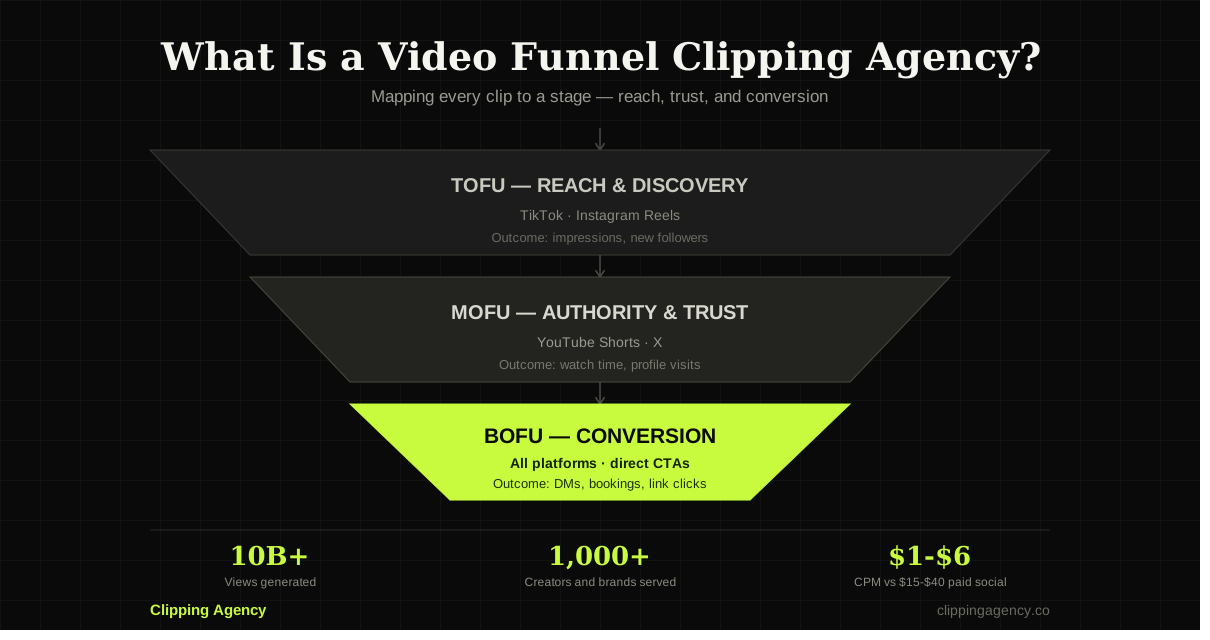
And the cost comparison is genuinely uncomfortable for ad buyers. Clipping campaigns typically run at effective CPMs somewhere between $1 and $6. Paid social on TikTok or Meta is running $15 to $40 for the same thousand impressions, often to audiences that are less engaged to begin with. The math isn’t close.
Who actually uses content clipping
The honest answer is that anyone producing long-form content can use it. But some niches lean on it harder than others.
Podcasters were early adopters because the value proposition is obvious. Record a conversation for an hour, get 25 clips out of it, have those clips posted across platforms the same week the episode drops. The episode itself might get 10,000 downloads. The clips, distributed properly, might bring in 500,000 views from people who wouldn’t have found the podcast otherwise. Some of those people become listeners. Some become customers. The math works in a way it never did when podcasters were just posting audiograms.
A proper podcast clipping agency workflow makes this almost automatic — the episode goes out, the clips follow within a day or two, no extra work required from the host.
Streamers have the opposite problem from podcasters. They have massive amounts of raw footage but almost none of it reaches beyond their live audience. Someone who streams for six hours has six hours of content that their existing viewers watched and nobody else will ever see. Clipping services for streamers fix that — the highlight moments, the reactions, the clip-worthy plays or exchanges get pulled out and distributed to audiences who would have loved the content if they’d ever encountered it.
YouTubers use clipping to extend the discovery window on their videos. A new video gets pushed to subscribers, maybe picks up some algorithmic traffic for a few weeks, then largely stops being seen. Clips from that same video, posted on TikTok and Reels over the following months, keep pulling new viewers toward the channel long after the algorithm has moved on.
Brands and founders building personal brands use it because it’s far more cost-effective than any advertising alternative and because community-driven reach reads differently than paid reach. When a founder’s clips are circulating across social platforms and it feels like everyone’s talking about them — that perception of omnipresence is hard to manufacture any other way.
What you’re actually building when you run a content clipping campaign
This isn’t a project. It’s infrastructure.
The best way we know how to explain it is to compare it to a content distribution engine. You feed long-form content into one end. The engine extracts, formats, and distributes that content across every major short-form platform through a network of editors. Views, followers, and inbound discovery come out the other end.
Once it’s running, it runs on its own. The creators who have this in place don’t think about their short-form presence as something they manage. It’s something that happens while they focus on making content. They record a podcast, the clips appear on TikTok that week, people find the podcast, the podcast audience grows, which makes future episodes better, which produces better clips. The loop feeds itself.
Without the distribution side of this, even great content just sits there. Long-form content in 2026 has a discovery problem that clipping solves. New audiences don’t find you through a 90-minute video — they find you through a 60-second clip, get interested, and go find the longer stuff on their own. Clipping is what creates that first touchpoint at scale.
Where most people go wrong when they try to DIY this
A lot of creators figure they can handle content clipping themselves or piece together a cheap version of it with a freelancer or two. Sometimes that works fine. Often it doesn’t, and here’s why.
The editing is actually the easy part. What’s genuinely hard is the distribution network — finding, vetting, onboarding, and managing a reliable network of editors who post consistently and know how to maintain brand standards while doing it. Building that from scratch takes months. Keeping it running takes ongoing attention. Most creators underestimate this part significantly and end up with a handful of clips going out inconsistently from a few accounts, which doesn’t generate the kind of reach that makes clipping worth the effort.
Quality control is the other thing that falls apart. When you’re managing 10 or 15 clippers, something off-brand will eventually go out if you don’t have review systems in place. One clip taken out of context, one caption that reads wrong, one video that doesn’t match the brand’s tone — that stuff matters more than people think.
Platform formatting is also more nuanced than it looks. TikTok, Reels, and Shorts aren’t the same. The hooks that work on TikTok don’t always land the same way on Shorts. The pacing that performs on Reels isn’t always right for TikTok. Treating all three platforms as identical and posting the same clip everywhere without adaptation is leaving a significant amount of performance on the table.
And the data — most people set up tracking but don’t actually use what it tells them. The whole point of knowing which clips are working is to make the next batch of clips better. Skipping that step means you’re running the same campaign forever without ever figuring out what actually resonates with your audience.
The Bottom Line: Why Hire Clipping Agency
We’ve watched a lot of creators sit on great content for way too long, wondering why it isn’t reaching the people it should be reaching. The content isn’t the problem. The distribution is.
Content clipping — real content clipping, not the basic version — fixes the distribution problem. It takes the content you’re already making and gets it in front of audiences who’ve never heard of you, across every major short-form platform, without you having to learn a new skill, hire an internal team, or spend anything on ads.
We’ve run clipping campaigns that have driven over 2 billion views for our clients. We’ve worked with podcasters, YouTubers, streamers, founders, and brand teams. We set up the whole system — the Whop workspace, the clipper network, the review workflows, the payout structure, the analytics dashboard. We recruit and onboard the editors. We review every clip before it goes live. We send you the performance data and tell you what it means.
You focus on recording. We handle everything after that.
Most clients see their short-form output go up 10x in the first 30 days. Monthly views from short-form typically land somewhere between 1 and 5 million within the first month of a campaign running at full capacity. No ad spend. No new hires.
If that sounds like something your content needs, book a strategy call and we’ll walk you through exactly what a clipping system built around your content would look like. Not a generic sales call — an actual look at your content, your audience, and what the numbers could realistically be.
Stuff people ask us all the time
Is content clipping the same as just cutting up my videos?
Cutting up your videos is one step in the process. Content clipping as a growth strategy also involves deciding which moments are worth distributing, formatting clips specifically for each platform, and getting them out through a network of accounts simultaneously. Without the distribution side, you’re just editing — which is useful, but it’s not what drives the numbers people associate with clipping.
How many clips does one video produce?
Depends heavily on the content. A dense 60-minute interview usually yields 20 to 35 clips worth posting. A casual conversational video might produce 10. The better question is how many clips will perform — and that comes down to clip selection, not volume. Thirty clips from a great interview will outperform 60 clips from a mediocre one every single time.
Do I need a following already for this to work?
No, and this is genuinely one of the more liberating things about clipping. The distribution network pushes your content to people who have never heard of you, through the algorithm, based entirely on whether the content is good enough to keep them watching. Audience size on your main channel is almost irrelevant. Some of our fastest-growing clients started with very small followings.
Which platforms do clips go out on?
TikTok, Instagram Reels, YouTube Shorts, and X are the main ones in 2026. Each gets formatted differently because what the algorithm rewards varies from platform to platform. A clip that’s set up correctly for TikTok might need a slightly different hook or pacing adjustment for Shorts.
How quickly do results actually show up?
Within the first two weeks you’ll usually see increased reach and some follower growth. The bigger shift — where you can see consistent month-over-month audience growth — typically becomes clear around the 30-day mark when the campaign is running at full capacity. Some campaigns have clips go viral within the first week. Others build more gradually. The clipping campaigns that compound the most are the ones that use the performance data from early weeks to optimize what goes out in later weeks.
Every Day You Wait, A Competitor Gets the View
We recruit, train, and manage a clipping army that distributes your content across 50–500 accounts on TikTok, Reels, and Shorts simultaneously. One upload becomes hundreds of posts. Every single day.
Trusted by 1,000+ creators · 10 Billion+ views generated