
You’ve got clients asking for short-form video. The problem is you don’t have a system to deliver it.
It happens in every agency eventually.
A client you’ve been working with for a year — brand strategy, maybe paid media, maybe SEO, asks at the end of a call: “Can you handle our TikTok clips too? We’ve got podcast episodes and YouTube stuff. We just want clips from all of it.”
And you pause.
Because you know what that question actually means. It means build an editorial pipeline, find editors, manage submissions, quality check every clip, figure out distribution, handle the posting, track the results and do all of that on top of the retainer work you’re already running.
If you said yes and wung it, you know how that usually ends. Five clips a week from one editor, inconsistent quality, a client who expected momentum and got a Google Drive folder.
If you said no, they took that budget somewhere else.
Neither outcome is where you want to be.
That’s the problem a white label clipping service is built to solve.
What White Label Clipping Actually Means
White label means you sell it, someone else runs it, and your client never knows the difference.
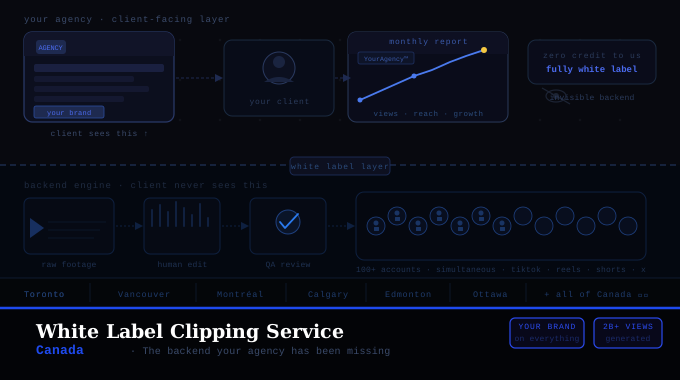
Your name on the deliverables. Your name on the reports. Your invoice. The production and distribution happen behind the scenes under your brand and nobody on the client side ever needs to look past the results.
In practice, here’s what that looks like.
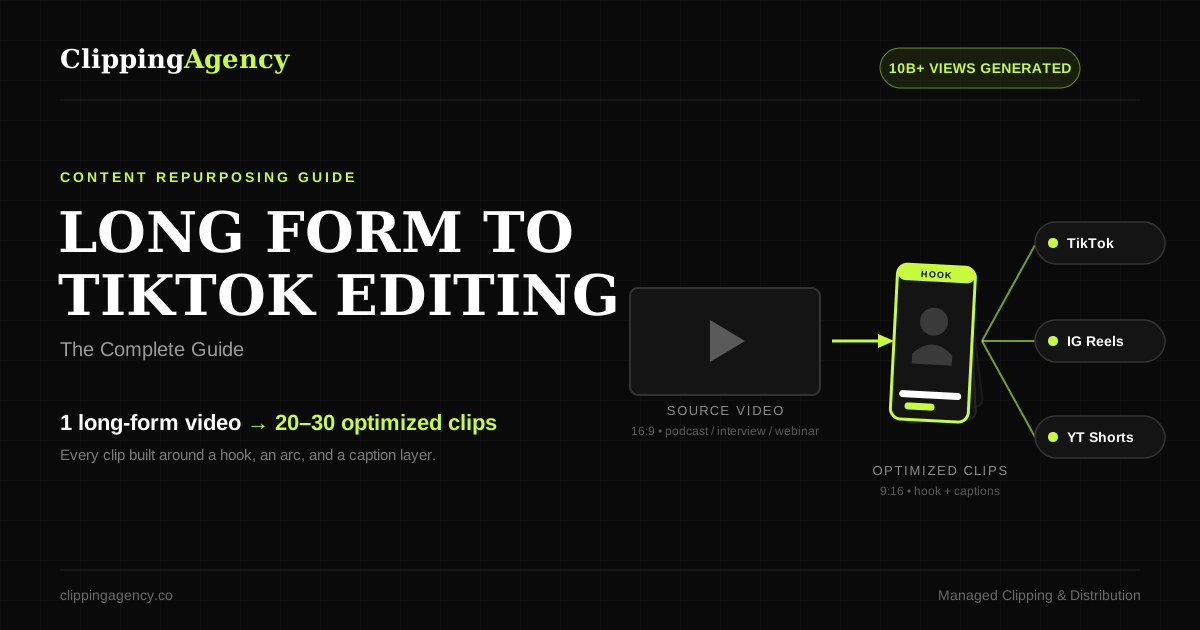
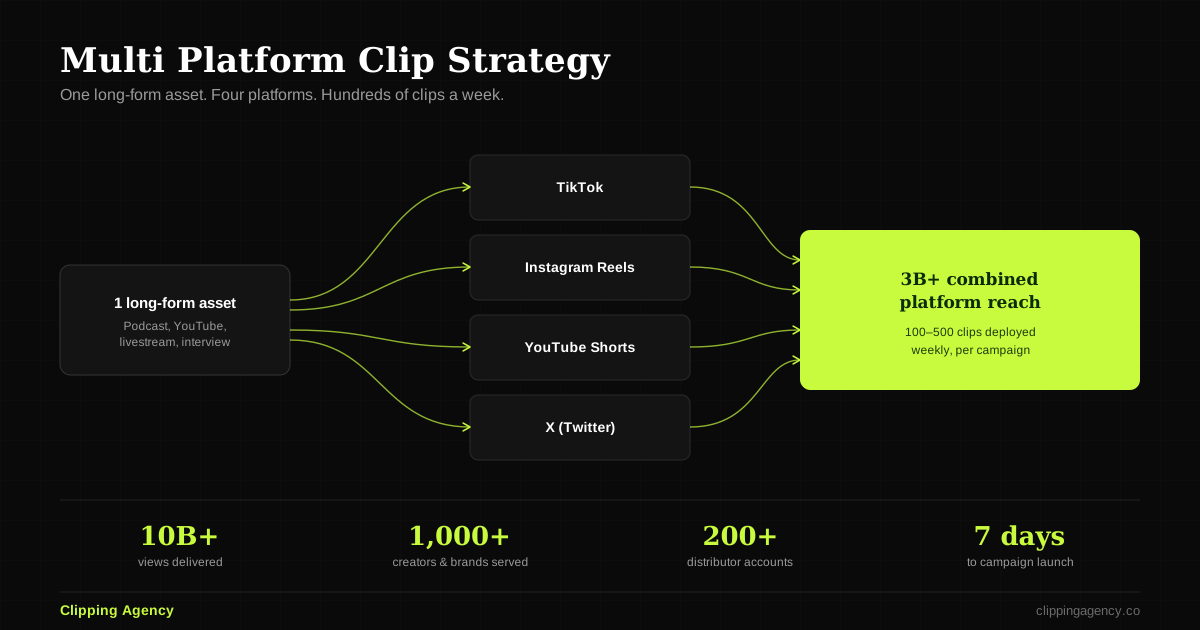
Your client uploads their long-form content: a podcast episode, a YouTube video, a stream recording. That content goes into a managed clipping pipeline. Real editors watch it, pull the best moments, format them for vertical video, write captions, sharpen the hooks, run everything through quality review. Then those clips push out across TikTok, Instagram Reels, YouTube Shorts, and X not from one account, but through a network of hundreds of independent accounts posting simultaneously.
Your client sees views climbing. Clips showing up on platforms. Numbers in a report with your agency’s branding on it. They think you’ve built something impressive.
You have. You just didn’t have to build it from scratch.
Who This Is Actually For in Canada
The short answer: more people than you’d expect. Across more industries than most people think about when they hear “clipping.”
Marketing and social media agencies in Toronto, Vancouver, Ottawa, and Calgary are adding short-form video as a service line without a single new hire. They plug into a white label clipping system, price it at agency rates, and add it to the proposal. The client gets what they asked for. The agency gets a revenue stream with predictable production costs and strong margin.
Podcasters and creators who just want the clipping side handled entirely. They record. They upload. They see clips live on their Reels and TikTok three days later without touching an edit. That’s white label in the direct sense: your brand, your accounts, your audience with someone else’s infrastructure making it happen. Our podcast clipping agency service runs on exactly this model. You record the episode. We handle everything after.
Canadian brands doing content marketing: A Calgary B2B company recording thought leadership videos, a Montreal SaaS startup with founder interviews on YouTube, an Edmonton fitness brand sitting on three years of content and 8,000 subscribers. These aren’t agencies. They just have content that should be reaching more people and a team that has zero bandwidth to make it happen. White label clipping runs as a background operation brand-consistent, distributed, invisible to manage. Our short-form video service is built for exactly this type of client.
Founders building personal brands alongside their businesses. Toronto tech operators, Vancouver startup founders, Calgary executives, smart, articulate people producing long-form content that has real value and getting almost no traction because they don’t have a distribution system. White label clipping gives them one.
Why Not Just Hire a Video Editor?
Canada has great editors. It’s a fair question.
Here’s the honest answer.
A mid-level video editor in Toronto or Vancouver costs you north of $55,000 a year once salary and software are factored in. That’s before you’ve touched the distribution side because an editor produces clips. They don’t run a distribution network. You’d still need to figure out who posts them, from how many accounts, how often, and how to track what’s actually working.
Editing and distribution are two separate problems. Hiring one editor solves one of them.
And here’s what most agencies find out the hard way: the distribution side is the one that actually drives reach. Posting 10 clips a week from one account is not the same as pushing 30 clips simultaneously across a network of hundreds of accounts on TikTok, Reels, and Shorts. The math isn’t close.
A white label clipping service covers both sides at once. Editorial production. Coordinated distribution. Quality review. Performance tracking. All of it, running under your brand, without you managing any of it.
The Freelancer Problem
Most agencies, when they first get pushed into short-form video, do the same thing.
They find someone on Upwork. Pay them $500–$800 a month. Hope for the best.
It works fine at first. One client, low volume, manageable expectations. But the moment you have three clients who all want clipping delivered at the same time, the model collapses. Timelines slip. Quality becomes inconsistent. You spend more time chasing revisions than you save by not doing it yourself.
Freelancers aren’t designed for agency-level volume. They have other clients. They get busy. They deliver five clips when the brief says fifteen and you’re the one explaining that to your client.
A properly run clipping campaign infrastructure doesn’t have these problems. Volume is consistent because the system is built for volume. Quality gets reviewed before anything goes live. Distribution runs on a network not from one tired editor’s posting schedule.
Freelancers are fine for low-stakes one-offs. For delivery you can put your name on, you need something that holds up at scale.
How It Works End to End
You don’t need to know the mechanics of what happens behind the scenes. But it helps to understand the flow especially if you’re walking a client through it or building it into a proposal.
You scope and sell it. You present the service to your client under your agency’s brand. You set the deliverables, the pricing, the timeline. Your client signs your contract. Your invoice. They never interact with anyone other than you.
Content comes in. Your client uploads their long-form footage. You pass it through to the pipeline with a brief: brand voice, style preferences, platform priorities, anything that’s off-limits.
Editorial runs. Human editors, not an AI export tool — watch the content. They find the moments worth clipping. They write the hooks. They format for vertical. Everything goes through review before it gets near a platform.
Distribution goes out. Approved clips push simultaneously across the network. TikTok, Instagram Reels, YouTube Shorts, X all at once, every day, across hundreds of accounts. Not your client’s single account hoping the algorithm cooperates. A coordinated push across an actual distribution network.
You report the results. Performance data comes from platform APIs. Real numbers. You put your branding on the report, send it to your client, and look like the agency that delivers. Because you did.
What’s Happening in These Canadian Cities Right Now
The Canadian short-form market isn’t saturated. This is still early.
Toronto is the obvious anchor. Most content, most agencies, most brands and most of it under-distributed. Podcasts with 400 listeners that should have 40,000. YouTube channels with genuinely good content and modest subscriber counts. The competition for short-form attention in most Toronto niches is a fraction of what you’d face in New York. The window is open.
Vancouver has a lifestyle, wellness, and tech content culture that maps directly onto what works on Reels and TikTok. Visual, personality-forward, niche-specific. Vancouver creators are making this content already. Most of them aren’t distributing it properly.
Montreal has something almost nobody is systematically using: a bilingual content opportunity. English content from Montreal reaches audiences across Canada and into the US. French-language short-form content has far less competition than English. The number of quality French-language accounts doing clip-based distribution on TikTok right now is tiny. Agencies in Montreal who figure this out first will own that lane.
Calgary and Edmonton have a growing B2B and founder content scene. Energy sector executives, consultants & coaches. People recording real insight in long-form and getting almost nothing back on distribution. The content is there. The reach isn’t. That’s fixable.
Ottawa has a professional audience, policy, tech, & public sector that responds well to educational and commentary-style short-form. A format that clips extremely well from podcasts and recorded panels. Not the flashiest market, but a real one.
One clipping infrastructure. All of these markets. That’s the leverage.
Agency or Brand: Which One Are You?
Two ways to use white label clipping. Worth being clear about which fits you.
You’re an agency if you have clients you’re selling short-form video services to and you need a production and distribution backend that runs under your name. You sell it. We build and run it. Your clients interact entirely with your brand. The white label is complete.
You’re a direct client if you’re a brand, creator, or founder who wants a fully managed system delivering clips under your name across your platforms. You’re not reselling to anyone — you just want the entire editorial and distribution layer handled without your involvement. Everything goes out under your brand, to your audience. You don’t touch any of it.
Both are fully managed. The difference is just whether there’s a client sitting between you and the output.
If you’re thinking about this at the strategy level how short-form clipping functions as a full marketing channel and not just a production service. Our clipping marketing breakdown covers that in more depth.
Questions Worth Asking Any White Label Partner
Not everyone offering white label clipping in Canada is running the same thing. Some are reselling freelancer work. Some are running AI clip generators and calling it a managed service. Worth knowing what to ask before you commit.
How many accounts does your distribution actually reach? If the answer is “we post from your accounts,” that’s not distribution. Real distribution is a network of independent accounts pushing content simultaneously not one account hoping the algorithm cooperates.
Are your editors human or is this AI-generated? AI tools produce clips fast. They don’t produce editorially reviewed, brand-aligned clips with good hooks and platform-appropriate formatting. Know what you’re actually buying.
What does your quality review process look like? There should be a defined approval gate. If clips go live without review, that’s a liability especially when your agency’s name is on the deliverable.
Where does your reporting data come from? Platform API data is verifiable. “We counted the views” is not.
What happens when your volume doubles? A freelancer-dependent model cracks here. A built-for-scale clipping system doesn’t.
Why Hire Us?
There are other options. Some of them are decent.
Most of them are editors with a landing page calling themselves an agency.
We’ve generated over 2 billion views across our clipping systems. That number comes from platform-verified data not inflated impression counts, not self-reported clipper numbers. The network we run has tens of thousands of active editors posting your content simultaneously across TikTok, Reels, Shorts, and X. Every clip goes through review before it touches a platform. Every campaign runs on real performance data pulled directly from platform APIs.
For Canadian agencies: we are the backend that makes your short-form service real. You say yes to the client. We make sure you can actually deliver. Your brand gets the credit. Nobody on the client side ever knows we exist.
For Canadian brands & creators: we build your clipping infrastructure from the ground up, system setup, clipper recruitment, editorial review, distribution, performance tracking and run it under your name without you managing any of it. You upload your content. We handle everything after.
The Canadian short-form market is not saturated. The agencies and brands that move now are the ones that’ll own those spaces. The ones that wait will be playing catch-up to someone who didn’t.
Thirty minutes. No obligation. We’ll look at your content, your clients, and your goals and tell you exactly what a campaign looks like for your situation.
FAQ
What’s actually included in a white label clipping service?
Editorial clip selection by human editors, caption writing, vertical formatting, quality review, and distribution across a network of accounts on TikTok, Instagram Reels, YouTube Shorts, and X — all delivered under your brand name. The production and distribution infrastructure is invisible to your client or audience.
Can a Canadian marketing agency resell this under their own brand?
Yes. You set the price, own the client relationship, and present everything under your agency name. We handle the operational side. That’s the whole point.
Does Clipping Agency work with businesses across all of Canada?
Yes — Toronto, Vancouver, Montreal, Calgary, Edmonton, Ottawa, and beyond. Distribution is platform-level, so your content reaches audiences everywhere regardless of where your business is based.
How is this different from just hiring a Canadian video editor?
An editor solves the production problem. A managed clipping service solves both the production problem and the distribution problem. Clips go through editorial review and then push out across a coordinated network of accounts — not from one account hoping the algorithm picks them up. That’s the difference between content that exists and content that reaches people.
Every Day You Wait, A Competitor Gets the View
We recruit, train, and manage a clipping army that distributes your content across 50–500 accounts on TikTok, Reels, and Shorts simultaneously. One upload becomes hundreds of posts. Every single day.
Trusted by 1,000+ creators · 10 Billion+ views generated