
Here’s something nobody in the creator space wants to admit out loud: most of the content being made in the US right now is good. Actually good. Well-edited, thought-provoking, genuinely worth watching.
And almost none of it gets seen.
Not because the algorithm is broken. Not because the creator did anything wrong. But because making great content and distributing great content are two completely different jobs — and most people are only doing one of them.
That’s the gap a content distribution agency fills. And in the US market specifically, where over 50 million creators are competing for the same eyeballs across TikTok, Reels, and Shorts every single day, that gap is the difference between building a brand and burning out while posting into a void.
This isn’t a generic “here’s what content distribution means” article. We’re going to get specific — about what the US market actually demands, what a real distribution engine looks like, who it works for, and why Clipping Agency has been able to generate over 2 billion views for clients when everyone else is still talking about posting schedules.
What a Content Distribution Agency Actually Does (And What It Doesn’t)
Let’s start with what it’s not.
A content distribution agency is not someone who schedules your posts. It’s not a freelancer who cuts three clips a week from your podcast and uploads them to your Instagram. It’s not an AI tool that auto-generates captions and calls it repurposing. Those things exist and they have their place but they’re not distribution.
Distribution is about reach. Specifically, reaching people who don’t know you exist yet.
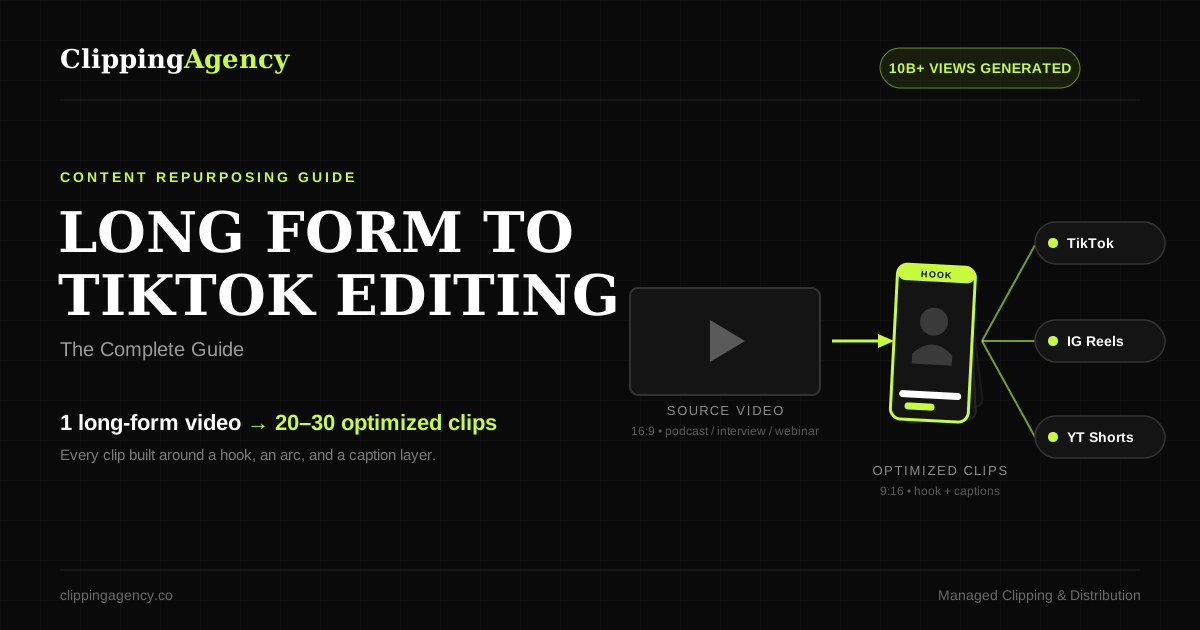
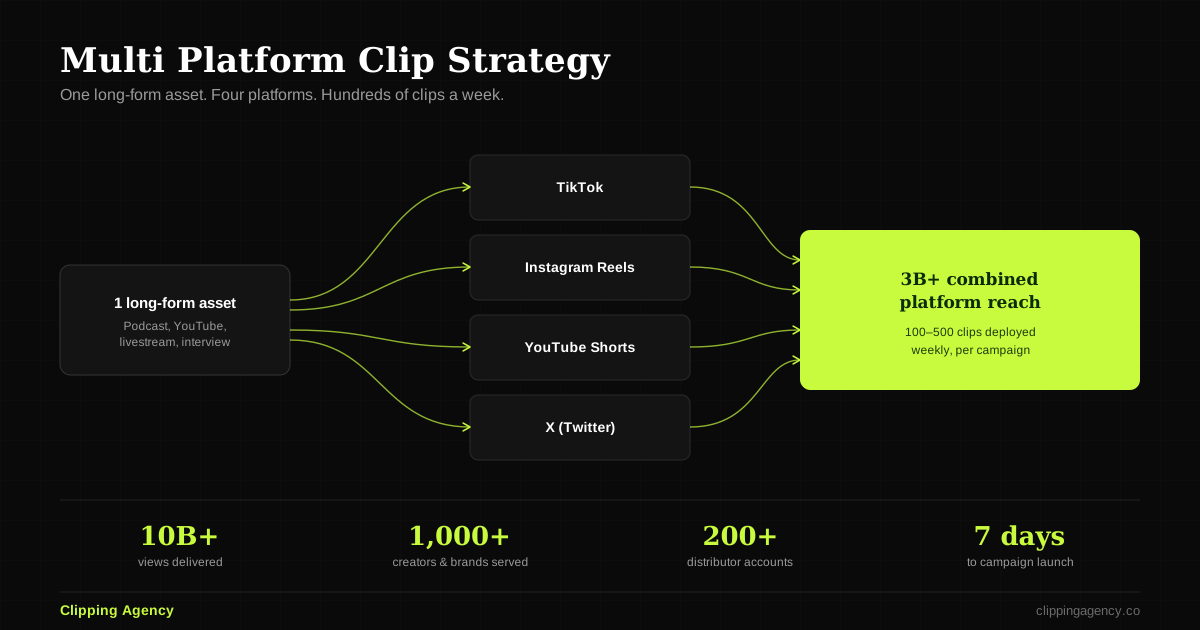
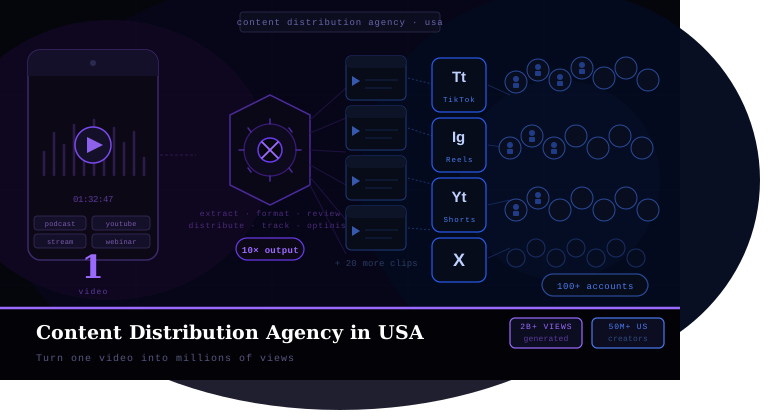
A real content distribution agency builds the infrastructure to make that happen at scale. It takes your existing long-form content, YouTube videos, podcast episodes, Twitch streams, webinars, interviews, whatever you’ve been sitting on and turns it into short-form clips that get pushed across TikTok, Instagram Reels, and YouTube Shorts through a network of accounts, simultaneously, every single day.
The operative word there is “network.” One account posting one clip once is not distribution. A hundred accounts posting your clips across the same 48-hour window that’s a distribution engine. That’s what the algorithm actually responds to. That’s the volume and velocity that triggers the For You Page, the Reels algorithm, the Shorts shelf.
That’s what Clipping Agency operates. And it’s a fundamentally different thing from everything else being sold under the “content distribution” label right now.
Why the US Market Is Different — And Why That Matters for Your Strategy
You could argue that content distribution matters everywhere. And you’d be right. But the US creator economy has a specific set of dynamics that make distribution not just important, but genuinely urgent.
The US has the highest concentration of content creators in the world. More than 50 million active creators. Hundreds of millions of daily users consuming short-form video on platforms that are specifically designed to surface new content to new audiences. The For You Page doesn’t care about your follower count. The Reels algorithm doesn’t owe your existing audience anything. YouTube Shorts is actively trying to find new content to push to people who’ve never heard of you.
This is actually good news if you have a distribution system. If you don’t, it’s just noise.
There’s also the trust problem unique to US audiences. Americans have seen more advertising than any other audience on earth. They know what a sponsored post looks like. They know when something feels organic versus when it feels placed. A clip posted by a real editor who genuinely liked the moment they clipped carries a completely different weight than a paid impression. It converts differently. It builds differently. In a market where authenticity is the scarcest currency, community-powered distribution has a structural edge that no ad budget can replicate.
And then there’s the saturation problem. In a market with 50 million creators, quality alone isn’t a differentiator anymore. Distribution frequency is. The creators who show up consistently across multiple platforms, at volume, with content that’s been formatted correctly for each context, are the ones the algorithm learns to trust and amplify. Showing up once a week on one platform, even with exceptional content, is not a distribution strategy. It’s a prayer.
What Good Content Distribution Actually Looks Like, Service by Service
Turning Long-Form Into Short-Form That Actually Works
This sounds simpler than it is. Taking a 90-minute podcast and cutting three clips is not the same as building a real short-form library from it.
A proper video clipping service watches the full piece with an eye for what’s going to stop a scroll not what summarizes the episode, not what the host thinks was the best part, but what’s going to land in three seconds with someone who’s never heard of you before. That requires different instincts than content creation. It requires knowing TikTok’s culture, knowing what Reels is rewarding this week, knowing how YouTube Shorts handles watch time differently from the main feed.
A 12-minute YouTube video typically yields 6 to 10 clips when this is done well. A 90-minute podcast episode turns into 15 to 25. A two-hour stream — one that most creators let disappear into the VOD archive becomes a week of short-form content across three platforms. The content already exists. Most of it is just sitting there unlocked.
Platform Distribution That’s Actually Platform-Specific
TikTok and Instagram Reels might look similar from the outside. They’re both vertical video. They’re both short-form. They both have algorithmic feeds.
But they operate completely differently. TikTok rewards novelty and hook strength in the first second or two. Reels tends to give more initial reach to accounts with engagement history. YouTube Shorts weights average view duration more heavily than the other two. The caption conventions are different. The optimal posting times are different. The audience expectations around production quality are different.
An agency that just cross-posts the same clip to all three platforms is leaving results on the table. A real content distribution agency formats, times, and optimizes differently for each one — because the same clip can perform wildly differently depending on how it’s presented and when it goes out.
Community-Powered Clipper Networks: The Part Most People Miss
This is the thing that separates what Clipping Agency does from literally everything else in this space.
The most powerful distribution model right now isn’t a small team of editors. It’s not an AI tool. It’s a network of real people fans, editors, creators who clip and distribute your content because they’re incentivized to do it well.
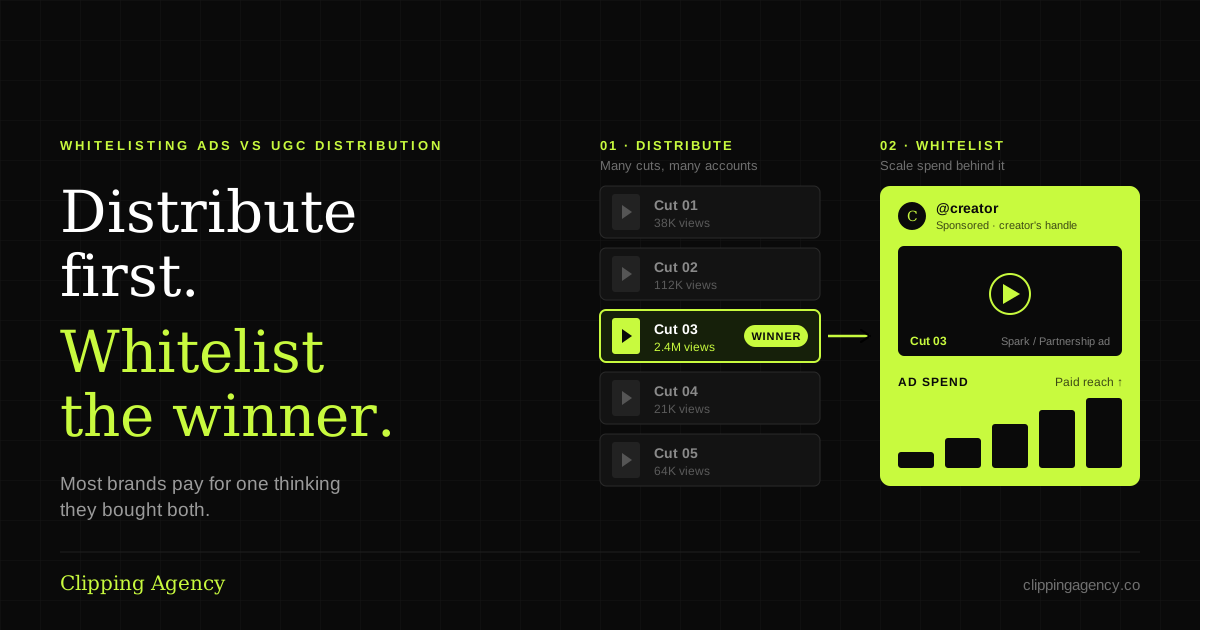
This is the clipping campaign model. Instead of paying for ad impressions that stop the moment your budget runs out, you’re building an organic distribution infrastructure powered by people who have a stake in your content’s performance. They earn when their clips do well. So they look for the actually good moments. They format things properly. They post at the right time on the right platform.
And because it’s dozens or hundreds of accounts distributing the same content simultaneously, the aggregate signal to the algorithm is fundamentally different from anything a single-account strategy can produce. Volume and velocity together. That’s what triggers the For You Page at scale.
Clipping Agency manages this entire ecosystem, recruiting clippers, setting quality standards, reviewing submissions, approving content, handling payouts. You don’t manage any of it. The operation runs without your involvement.
Campaign Management That Tracks Real Outcomes
Views are not a business outcome. Neither are impressions. Follower growth is an outcome. Inbound leads are an outcome. Brand discovery by people who become customers is an outcome.
A serious content distribution agency tracks the things that connect to your actual goals, not just the vanity metrics that look good in a monthly report. Clip performance across platforms, follower conversion rates from distributed clips, which content formats are driving the most net-new reach these are the signals that tell you whether the distribution system is working and what to do more of.
Without this, you’re just posting and hoping. With it, the system actually gets smarter over time.
Content Distribution as a Full Marketing Channel
The furthest end of this is treating clipping as a marketing strategy — not just a distribution tool, but the primary channel for audience growth and customer acquisition.
US brands spending tens of thousands per month on paid social often get equivalent or better reach through a well-run content distribution engine, without the CPM inflation that’s been climbing steadily on Meta and TikTok ads, without the creative fatigue that kills paid campaigns after a few weeks, and without the performance cliff when the budget runs out.
Community-powered organic distribution doesn’t have a performance cliff. It compounds.
Who This Actually Works For
Podcasters
The US podcast market is massive with over 100 million monthly listeners and most podcasters are wildly underutilizing their content. They publish an episode, send it to their existing subscribers, maybe post a couple of clips, and move on to recording the next one.
Meanwhile, every episode contains moments that would genuinely stop a scroll on TikTok or Reels. Moments that would make someone who’s never heard of the show immediately hit follow. But they’re buried in a 90-minute audio file that nobody outside the existing audience is ever going to find.
A dedicated podcast clipping agency changes that. Every episode becomes a full distribution campaign 10 to 30 clips across TikTok, Reels, and Shorts, pushed simultaneously, reaching people who had no idea the show existed before this week. The difference in audience growth isn’t incremental. It’s a completely different trajectory.
YouTubers
Here’s a counterintuitive truth about YouTube: having a great long-form channel doesn’t automatically help you crack Shorts. They’re essentially different algorithms. A long-form video with 500,000 views doesn’t give your Shorts any special treatment.
What does help is volume and engagement signals. When clips from your content are being distributed across multiple accounts simultaneously, the algorithm sees a pattern a lot of people are engaging with this content, across a lot of entry points, in a short period of time. That’s the signal it’s looking for. A single account posting Shorts once a day can’t generate that signal. A clipper network can.
Streamers
Streamers have one of the most acute distribution problems in the creator economy. They produce hours of content every week some of the most authentic, engaging, high-energy content on the internet and most of it disappears when the stream ends.
The people who were watching it live saw it. Everyone else missed it forever. A content distribution agency changes that math completely. Highlights, funny moments, arguments, insight-heavy segments these get pulled, formatted for short-form, and distributed in a way that keeps the stream generating views and followers for months after the session ends.
Founders and Personal Brands
US founders doing podcast tours, speaking on panels, or producing thought-leadership content have a distribution problem that a social media manager can’t realistically solve. One person managing your LinkedIn and Twitter is not getting your content in front of new audiences at any meaningful scale.
Distribution infrastructure does. A single interview becomes a week of presence across TikTok, Reels, Shorts, & X. Done consistently, this is how founders build genuine brand recognition without spending on ads, and why the ones who do it look like they’re everywhere.
Brands That Are Done Burning Budget on Ads
US brands spending $10,000, $30,000, $50,000 a month on paid social and not seeing the returns they expected five years ago — this is who community-powered content distribution was built for. The economics are fundamentally different. Organic reach compounds. Paid reach stops the moment you stop paying. And in a market where audiences have been conditioned to scroll past ads, the authenticity of a real person posting content they actually liked is worth more per impression than any targeted creative.
How Clipping Agency Actually Builds Your Distribution Engine
No vague “we handle everything.” Here’s what the three phases actually involve.
Phase One is system setup. Before a single clip goes out, Clipping Agency builds the infrastructure dashboards, automation workflows, submission rules, platform strategy, payout systems. This is the unglamorous part that most people want to skip. It’s also the part that determines whether the whole thing scales or plateaus. A distribution operation without a proper backend isn’t a system. It’s a hustle that breaks when it gets bigger.
Phase Two is clipper community onboarding. This is where the real leverage comes from. Clipping Agency recruits, vets, and onboards editors who are aligned with your content’s performance — meaning they earn when their clips do well. These aren’t random contractors filling a quota. They’re people who are genuinely looking for the moments that will perform, because their outcome depends on it.
The community model also means scale isn’t capped by headcount. You’re not hiring five editors and hoping that’s enough forever. You’re activating a network that can grow with your content needs.
Phase Three is ongoing operations. Once the system is running, the Clipping Agency handles every moving part — clip submissions, quality review, approvals, payouts, performance tracking. You don’t manage editors. You don’t chase submissions. You create long-form content and the distribution happens. That’s the deal.
Organic Distribution vs. Paid Ads: An Honest Comparison
Paid ads work. Let’s be fair about that. For certain goals, in certain markets, with the right creative — they work.
But the economics have shifted. CPMs on Meta and TikTok have climbed significantly over the past few years as more advertisers compete for the same inventory. Creative fatigue is faster than it used to be. Ad fatigue among US audiences who have seen more digital advertising than any market in the world — is real and measurable. And the fundamental structural problem with paid reach is that it stops the moment you stop paying. There’s no compounding. There’s no asset being built.
Organic content distribution compounds by nature. A clip distributed six months ago can still be driving views, followers, and inbound leads today. Every clip that performs creates more signal for the algorithm to push future clips further. The audience built through distributed organic content tends to be higher quality, more engaged, more trusting, more likely to convert than audiences built through paid targeting.
Clipping campaigns consistently outperform paid ads on engagement rate and cost-per-acquisition, particularly for creators and personal brands where authenticity isn’t just nice to have — it’s the whole thing.
This isn’t a knock on paid ads. It’s an honest assessment of what builds durable growth versus what rents attention for as long as you’re willing to pay.
What Nobody Tells You About Picking a Content Distribution Agency
The space is full of people claiming to offer distribution who are actually offering repurposing. The difference matters enormously.
Repurposing is taking your content and posting it to your own accounts. Your existing followers might see it. Your reach ceiling is your existing following.
Distribution is taking your content and pushing it to audiences who don’t know you exist yet. The ceiling is effectively unlimited — and it grows as the network grows.
A few other things to watch for when evaluating agencies:
There’s a headcount problem that a lot of agencies hide behind vague language. “Our team handles everything” can mean three people manually posting clips and hoping for the best. Ask specifically: how many clippers are in the network? How are they recruited? How is quality controlled? How do payouts work? If the answers are vague, the operation is probably smaller and less systematic than the pitch implies.
Watch out for agencies optimizing for vanity metrics. Views and impressions look good in a monthly PDF. What you actually want is follower growth, brand discovery by net-new audiences, and downstream conversions you can trace back to specific clips. If an agency can’t connect their distribution work to those outcomes, they’re measuring the wrong things — and probably hiding behind the ones that are easier to inflate.
And if an agency doesn’t have a community distribution model — if they’re relying on a small internal team to post clips — the scale is artificially capped from the start. The model itself has a ceiling.
What Happens in the First 30 Days
When the system is running properly, here’s what US clients typically see in the first month:
Short-form content output increases by roughly 10x without any additional recording on your end. You’re not creating more — the system is extracting more from what you’ve already made.
Monthly views across TikTok and Reels climb into the 1 to 5 million range for most clients, depending on niche and content volume. Some clients see significantly more.
Brand discovery picks up in a way that’s qualitatively different from what paid reach produces. People start finding the brand through clips they discovered organically — which means they’re warmer, more engaged, and more likely to stay.
The viral moments stop feeling like lucky accidents and start feeling like a repeatable outcome. Because with a proper distribution system, they are.
And the team stays lean. No editors to hire, no social media managers to manage, no distribution coordinators to coordinate.
These aren’t projections. They’re what Clipping Agency clients across the US see when the system is operating at capacity.
The Bottom Line: Why Hire Clipping Agency as Your Content Distribution Partner in the USA
We’re going to be straight with you here, because you’ve made it this far and you deserve a direct answer.
There are a lot of agencies in the US that will manage your social media presence. There are freelancers who will cut clips. There are AI tools that will auto-repurpose your content and call it distribution. None of them are building you a distribution engine. They’re either managing your existing audience or automating the easy parts of a process that requires real infrastructure to work at scale.
Here’s what makes Clipping Agency different — and why it actually matters:
The 2 billion views are not a tagline. They’re the cumulative result of distribution systems built and managed across hundreds of creators and brands. Not a single viral moment. Not one lucky clip. Systems, built deliberately, running consistently, compounding over time. That’s what 2 billion views actually means.
We don’t manage your social media. We build distribution infrastructure. There’s a meaningful difference. Social media management is a maintenance service. Distribution infrastructure is a growth asset. One keeps things running. The other builds reach you didn’t have before.
The clipper community is the real moat. We’ve built a network of motivated, vetted editors who are aligned with your content’s performance because they earn when it works. That’s not something you can replicate with a small internal team or an AI tool. It took time to build, it operates at a scale that creates genuine algorithmic advantages, and it’s why the reach we generate feels authentic — because it is.
You don’t have to manage any of it. System setup, clipper recruitment, quality control, approvals, payouts, performance tracking the whole operation runs without your involvement. You create long-form content. We distribute it. That’s the division of labor that works.
Our clients grow without running ads. They grow because their content is everywhere TikTok, Reels, Shorts, posted by real people who genuinely found value in what they clipped. That’s a trust signal that paid advertising has never been able to buy. And in a US market where audiences have become exceptionally good at detecting inauthenticity, that signal converts in ways that ad impressions simply don’t.
The US content market is not going to get less competitive. The cost of organic reach is not going to get cheaper. The algorithms are not going to start rewarding creators who show up inconsistently with low volume. The window to build a distribution system before everyone else figures this out is narrowing.
If your content isn’t reaching the audience it deserves, the answer isn’t making more of it. It’s building the infrastructure that makes what you’ve already made actually move.
Book a strategy call with Clipping Agency and find out what a distribution engine built specifically for your content, your audience, and your goals looks like in practice.
Frequently Asked Questions
What’s the actual difference between a content distribution agency and a social media agency?
A social media agency manages your existing accounts and keeps your current audience engaged. That’s a maintenance function. A content distribution agency is focused entirely on reaching people who don’t follow you yet — building net-new reach through infrastructure and networks rather than managing what’s already there. Completely different objectives.
How many clips can Clipping Agency actually distribute per week?
It scales with your content library and the size of your clipper network. Most US clients see their short-form output increase by roughly 10x within the first 30 days. A single 60-minute podcast episode typically produces 15 to 30 clips distributed across TikTok, Reels, and Shorts. A two-hour stream can fuel a full week of short-form content across all three platforms.
Do I need an existing audience for this to work?
No — and this is actually one of the most common misconceptions about distribution. The model works specifically because it doesn’t rely on your existing following. Clips reach new audiences through the For You Page, the Reels algorithm, and the Shorts feed. Distribution is how you build an audience, not something you need an audience to justify.
How is Clipping Agency different from AI clip tools like OpusClip or Descript?
AI tools automate clip selection and can speed up the editing process. They don’t build clipper communities, they don’t operate multi-account distribution networks, and they can’t replicate the organic authenticity that comes from real editors distributing content they actually found valuable. Clipping Agency is a fully managed distribution system. The AI tools are software products that help individual creators do more themselves.
Which platforms does Clipping Agency distribute to?
TikTok, Instagram Reels, and YouTube Shorts are the primary channels for US clients. Distribution to additional platforms — X, LinkedIn, Facebook Reels — can be built into the system depending on where your specific audience lives.
What kinds of long-form content work best?
Anything with substance — podcasts, YouTube videos, Twitch and Kick streams, webinars, interviews, keynotes, educational series. The more substantive the long-form content, the more high-performing clips can be extracted from it. Content that’s rich with opinions, stories, arguments, and specific moments tends to yield the strongest clips.
How long until I see real results?
Most Clipping Agency clients see measurable growth — view increases, follower acquisition, brand discovery from net-new audiences — within the first 30 days of the system going live. The compounding effect builds from there.
Ready to stop leaving views on the table? Explore our clipping services, see how clipping campaigns work, or reach out directly if you want to talk through what this looks like for your specific content.
Every Day You Wait, A Competitor Gets the View
We recruit, train, and manage a clipping army that distributes your content across 50–500 accounts on TikTok, Reels, and Shorts simultaneously. One upload becomes hundreds of posts. Every single day.
Trusted by 1,000+ creators · 10 Billion+ views generated