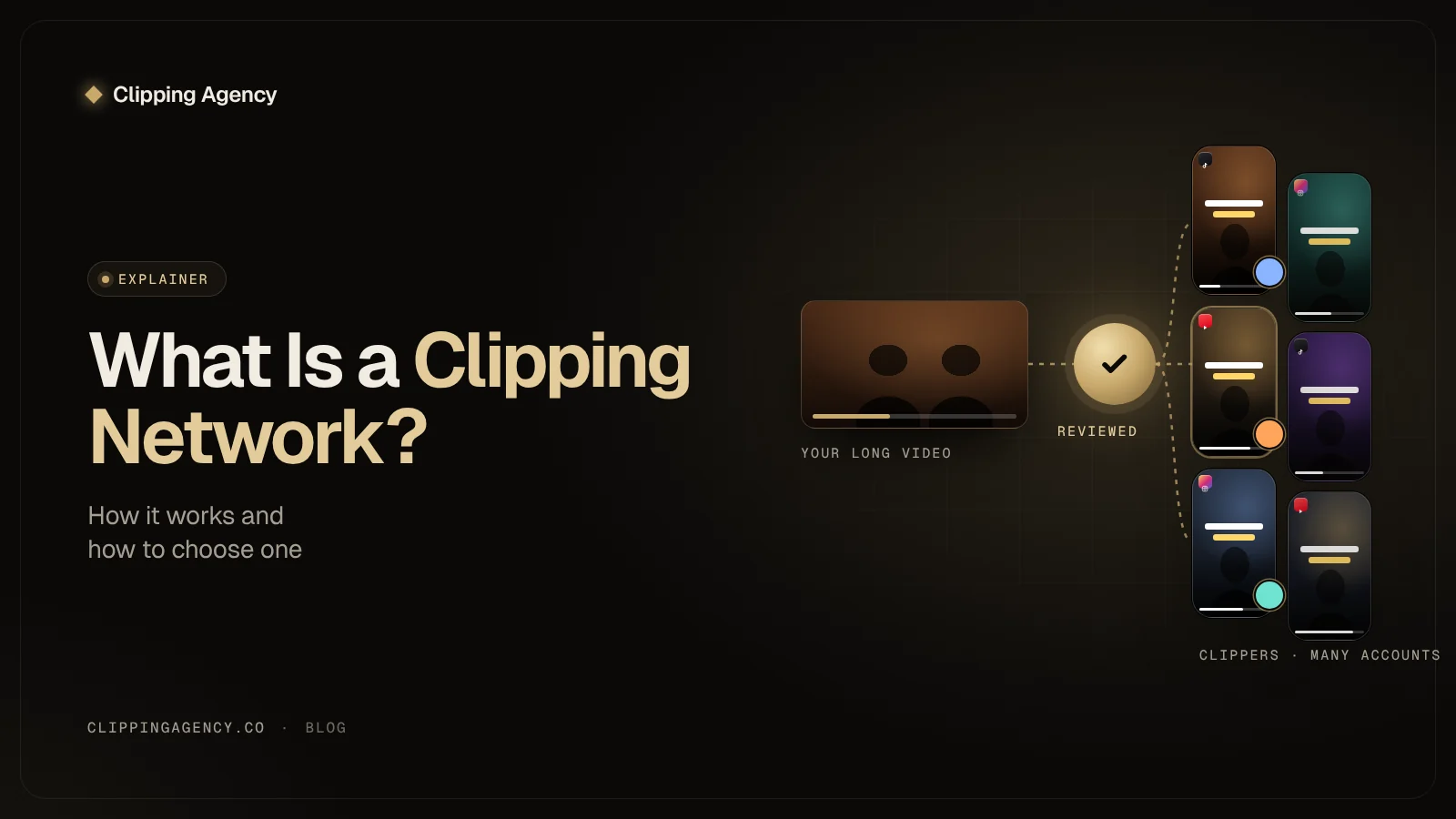
⚡ QUICK ANSWER A clipping network is a group of vetted clippers who cut a creator’s or brand’s long videos into short clips and post them across many TikTok, Instagram Reels and YouTube Shorts accounts at the same time. The person or company behind the content supplies the source videos and the brief, and the network runs the clippers, the accounts and the posting schedule. Brands use clipping networks to get one podcast, stream or launch video in front of far more people than a single account could reach.
We run clipping campaigns for creators, streamers, founders and brands. The steps, checks and questions below are the ones we use with our own clients.
The three parties in a clipping network
Clipping means taking the strongest moments from long videos and turning them into short, vertical clips. If you are new to the idea, our guide to what clipping is covers the basics. A clipping network is the organized version of it: instead of one editor posting a few clips a week, dozens or hundreds of clippers post from many accounts at once.
Every clipping network has three parties:
- The content owner, a creator or a brand, who provides long videos such as podcast episodes, streams, interviews, webinars or product demos.
- The clippers, who find moments worth sharing, edit them into short clips with captions and hooks, and post them.
- The network operator, who recruits and vets the clippers, writes the brief, checks the clips and reports on results.
A podcast that publishes one 90-minute episode a week is a typical example. Inside a network, that episode can become 30 or more short clips, each posted on accounts built around the podcast’s topic. A viewer who would never sit through 90 minutes finds a 40-second clip, then goes looking for the full episode.
How a clipping network works, step by step
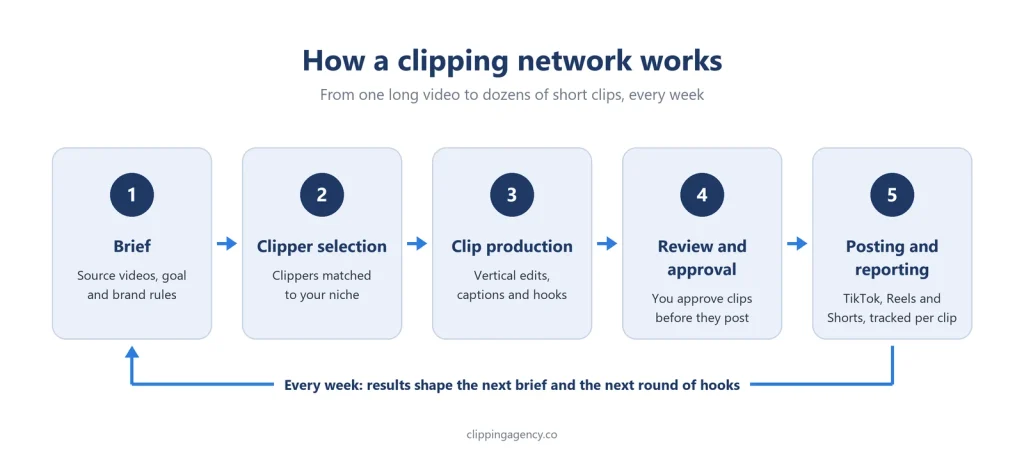
Most networks follow the same five steps. The details below are how we run them; the order is common across the industry.
- Brief. The content owner shares the source videos, the goal (more followers, more sign-ups, more streams of a song) and the rules: topics to avoid, words that must not appear, and how the brand should be shown.
- Clipper selection. The operator picks clippers who already know the niche. A gaming clip and a finance clip need different hooks, so a clipping network sorted by niche produces better clips than an open pool.
- Clip production. Clippers cut the moments, reframe them to vertical, add captions and write the first line of on-screen text. Each clipper usually tests several hooks on the same moment.
- Review and approval. Clips are checked against the brief before they go live. In a managed setup the operator’s team reviews every clip. On dedicated accounts built for the content owner, the owner can also approve clips first and have any clip taken down. On clippers’ own accounts, takedown requests go through the operator, who asks the clipper to remove the clip.
- Posting and reporting. Approved clips go out across TikTok, Reels and Shorts on a schedule. The operator tracks views, follows and clicks per account and per clip, then moves effort to the hooks and formats that work.
The whole loop repeats every week. If you want to see the same process from the campaign side, read how clipping campaigns work. Our explainer on the clipping engine covers the systems that sit behind the network: content intake, quality checks and tracking.
Clipping network vs clipping agency vs self-serve clipping platform
People use these three terms loosely. Before you spend money, it helps to know who finds the clippers, who owns the accounts, and how much of the work stays with you.
| Self-serve clipping platform | Open clipping network | Managed clipping network (agency) | |
|---|---|---|---|
| Who finds the clippers | Clippers sign up and choose campaigns themselves | The network recruits them | The agency recruits and vets them for your niche |
| Who owns the accounts | Each clipper owns their own accounts | Usually the clippers or the network | Depends on the package: dedicated accounts built for you are handed over with logins, while network campaigns post on clippers’ own accounts |
| Clip approval | Rare; clips go live first | Sometimes | The agency reviews every clip before it posts; on dedicated accounts you can also approve clips and have any clip removed |
| Strategy and hooks | You write the brief and judge results | Light guidance | The agency plans hooks and angles and tests them each week |
| Your time | High | Medium | Low |
A self-serve platform suits someone who wants to manage clippers directly and has the time to do it. A managed clipping network suits brands that care about where their content appears and want someone accountable for results. That second model is what a clipping agency provides. If you are weighing the two, our guide to what a clipping agency does goes into the role in more detail.
Who uses clipping networks
Clipping networks work best for anyone who already produces long video and wants it seen by more people.
- Podcasters and YouTubers, whose long episodes hide many short moments that can travel on their own.
- Streamers, who create hours of live footage each week. See our clipping agency for streamers guide.
- Brands and startups launching a product, who want the launch video and founder interviews to reach a wide audience in the first weeks. A brand clipping campaign is built for this.
- Coaches, founders and educators, whose talks and webinars contain advice that works well as short clips.
A clipping network is a poor fit when there is no long video to work from, or when every post has to go through a slow legal review. Clipping needs a steady supply of source material and room to test. Our guide to whether clipping is worth it for brands covers when to go ahead and when to wait.
What makes a good clipping network, and the red flags
The quality of a network comes down to the clippers, the accounts and the honesty of the reporting. A good network can show you:
- How clippers are vetted, and examples of their past clips in your niche.
- Which accounts your clips will post on, and whether those accounts have real audiences.
- How you approve clips and how fast a clip can be taken down.
- Reports at the clip and account level, so you can see what is working.
Be careful with a network that promises a fixed number of views. Nobody controls the TikTok or YouTube algorithm, so ask any network that guarantees views how it verifies them and whether paid promotion or ad spend counts toward the guarantee. Other warning signs are accounts with large followings but almost no comments, traffic that comes mostly from countries you do not sell to, and a refusal to share account names.
Some operations call themselves networks but work like a clip farm: high volume, little review and no say for the content owner. Our explainer on clip farms covers how they work and why brands should be cautious with them.
When a brand pays clippers to post its content, that payment is a material connection. In the US, the FTC expects material connections in endorsements to be clearly disclosed (see its Disclosures 101 for social media influencers), so ask how the network handles disclosure on paid clips.
What affects the cost of a clipping network
Pricing varies a lot between networks, so it helps to know what drives it. The main factors are:
- How many clips are produced and posted each month.
- How many accounts the clips go out on, and whether new accounts have to be created and warmed up.
- Which platforms are covered.
- How much strategy, editing quality and reporting is included.
- How long the campaign runs. Clipping builds momentum over months, so most serious campaigns run for at least a quarter.
When you compare quotes, ask what is included at each price and who owns the accounts when the contract ends. Two quotes that look similar can cover very different amounts of work.
How to choose a clipping network: 7 questions to ask
- Who are your clippers, and how do you vet them?
- Which accounts will post my clips, and who owns them during and after the campaign?
- Can I approve clips before they post, and how quickly can a clip be removed?
- What do you report on, and how often?
- How do you check that views come from real people in the markets I care about?
- Can you show results from a campaign in my niche?
- What do you need from me each week to keep the campaign running?
A good brief makes every network perform better. Include your goal, your audience, three to five topics you want clips about, any topics that are off limits, how your brand name and logo should appear, and links to your best long videos.
What working with a managed network looks like
A campaign with us starts with a written strategy within two to three days, covering the accounts, angles and posting plan. Clips usually start going out in the second week. Our guide to clipping campaign metrics covers the full timeline and what to measure at each stage.
Account ownership depends on the setup. Dedicated accounts we build for you are yours, and you receive the logins when the contract ends. On network campaigns, clips post on clippers’ own accounts; you can see which accounts post your clips, and we handle any takedown request with the clipper.
How clippers join a clipping network
Most people who search for a clipping website or a clipping program are clippers looking for paid work. Networks recruit clippers who can edit quickly, write strong hooks and understand a niche. Many start by building their own clip accounts, then join a clipping community or clip network once they can show results.
If you are on the clipper side, start with our guides on how clippers get paid and how to start clipping on TikTok.
Frequently asked questions
What is a clipping network?
A clipping network is a group of vetted clippers who turn a creator’s or brand’s long videos into short clips and post them across many TikTok, Reels and Shorts accounts. A network operator manages the clippers, checks the clips and reports on results.
What is the purpose of clipping?
Clipping puts the best moments of long videos in front of people who would never watch the full version. Each clip works as an entry point that sends viewers back to the creator, the brand or the product.
Is clipping on YouTube illegal?
Clipping is legal when the content owner gives permission, which is how a clipping network works: the creator or brand hires the network to clip their own videos. Clipping someone else’s videos without permission can break copyright rules and lead to takedowns. Monetization is a separate question. Even with permission to use the footage, a channel may not earn money from clips if YouTube treats them as reused content without enough original commentary or editing; see its channel monetization policies. This is general information, not legal advice.
What is the difference between a clipping network and a clipping agency?
A clipping network is the group of clippers and accounts that post the clips. A clipping agency manages a network for you: it plans the strategy, vets the clippers, approves the clips and reports on results. Some networks are self-serve and leave that work to you.
How is a clipping network different from a clip farm?
A clip farm posts high volumes of clips with little review, often on accounts the content owner never sees. A well-run clipping network vets its clippers, reviews every clip before it posts and shows you which accounts post them. Read more in our guide to clip farms.
How do clipping networks check that views are real?
Good networks track results per account and per clip and look at signals beyond views: comments, follows, watch time and where the audience is based. Ask any network you are considering to show this data before you sign.
Can I join a clipping network as a clipper?
Yes. Most networks recruit clippers who can show past clips with real engagement in a niche. Building a few of your own clip accounts first is the most common way in.
Get a clipping network working for your content
If you have long videos and want them seen by more of the right people, we can plan a campaign around your goals, with every clip reviewed against your brief before it posts. Book a strategy call to talk it through.
Every Day You Wait, A Competitor Gets the View
We recruit, train, and manage a clipping army that distributes your content across 50–500 accounts on TikTok, Reels, and Shorts simultaneously. One upload becomes hundreds of posts. Every single day.
Trusted by 1,000+ creators · 10 Billion+ views generated