
You’ve probably seen it happen and not known what it was.
A creator posts a long podcast on YouTube. Within days, 30 different versions of that same conversation are flooding TikTok, Reels, and Shorts — different accounts, different hooks, all pointing back to the same person. The creator’s follower count jumps. Their name starts appearing everywhere. People start talking.
That’s not luck. That’s a clipping campaign doing exactly what it was built to do.
If you’re a creator, brand, or founder trying to understand what a clipping campaign actually is — how it’s structured, what makes it move, and whether it’s the right growth model for you — this guide walks through the whole thing. No fluff. No vague promises. Just the mechanics.
What Is a Clipping Campaign?
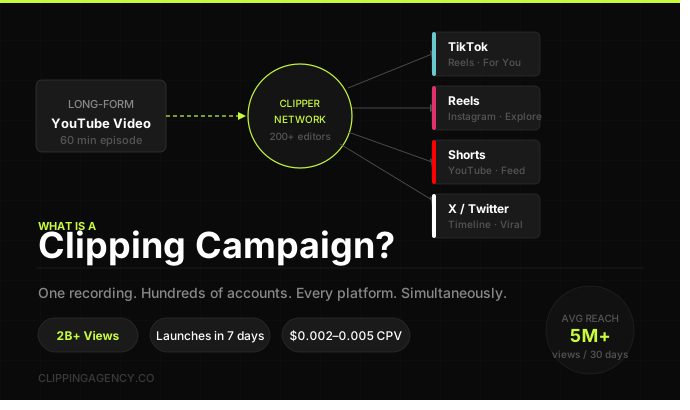
A clipping campaign is an organized, performance-based content distribution system where a network of editors — called clippers — take your long-form video content and repurpose it into short-form clips that they post across platforms like TikTok, Instagram Reels, and YouTube Shorts.
The key word there is network. One editor posting one clip to one account isn’t a campaign. A campaign is when 50, 100, or 200 independent accounts are simultaneously distributing your content every single day — each clipper motivated by performance-based payouts tied to the views they generate.
Think of it as converting your content into a distribution engine. You record once. The system distributes endlessly.
This is fundamentally different from hiring a video editor. An editor produces clips. A clipping campaign deploys them — at scale, across platforms, through real independent accounts that the algorithm treats as organic content.
The Core Entities Inside a Clipping Campaign
To understand how clipping campaigns work, you need to understand the four components that every campaign is built around:
1. The Content Source This is your long-form video — a podcast episode, YouTube video, interview, stream, or webinar. The longer and more content-rich, the more clips it yields. A 60-minute podcast can generate 15–30 high-retention short-form clips.
2. The Clipper Network Clippers are independent editors who apply to join your campaign. They’re not employees. They’re motivated contributors who earn performance-based payouts for every clip that hits a verified view threshold. The best campaigns run with 50–200 active clippers simultaneously.
3. The Campaign Infrastructure This is the operational backbone — the dashboard, submission rules, quality review system, payout structure, and brand guidelines that govern how every clip is created and distributed. Without this, a clipper network is chaos.
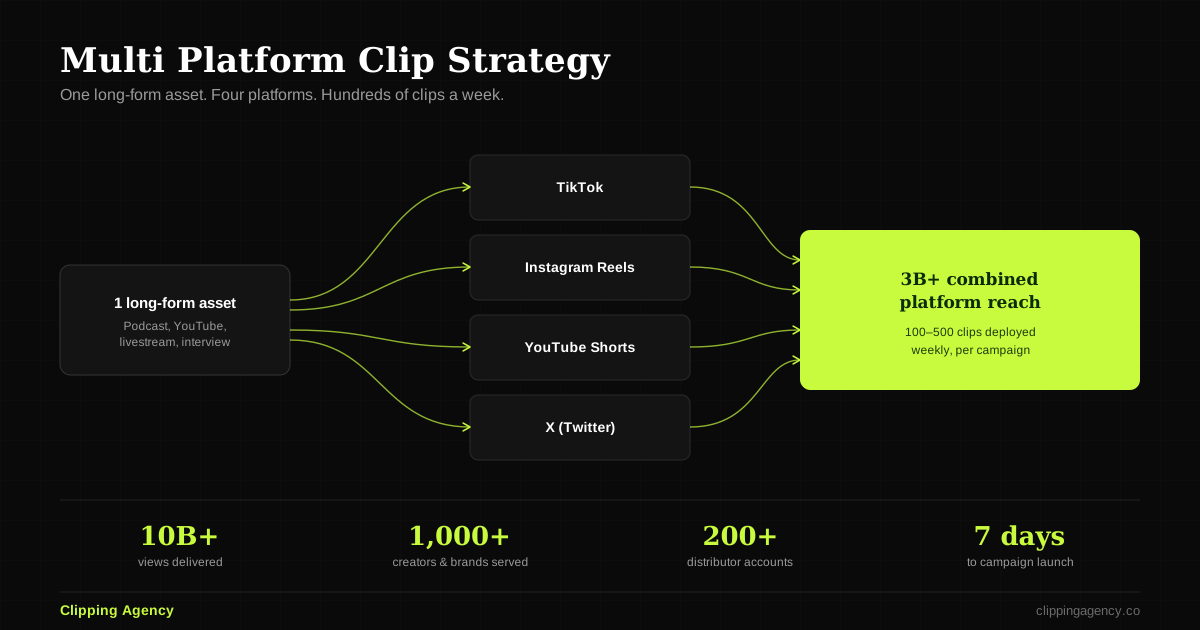
4. The Distribution Platforms TikTok, Instagram Reels, YouTube Shorts, and X (Twitter) are the primary platforms. Each has different optimal clip lengths, hook styles, and algorithmic behaviour. A well-run campaign optimizes for all four independently — not just reposting the same clip everywhere.
How a Clipping Campaign Actually Works — Step by Step
Here’s the operational flow of a managed clipping campaign from start to first views:
Step 1: Campaign Architecture & Setup
Before a single clip gets made, the campaign infrastructure needs to be built. This includes configuring the submission dashboard (typically on a platform like Whop), writing clip guidelines, setting hook requirements, defining quality standards, and structuring the payout model.
This setup phase typically takes 5–7 days when handled by a professional team like Clipping Agency. Done poorly, this is where most self-run campaigns fall apart — not because the content is bad, but because the operational layer isn’t tight enough to scale.
Step 2: Clipper Recruitment & Vetting
Clippers are sourced, screened, and onboarded. This isn’t just finding anyone with a TikTok account. Good clipper recruitment involves checking content niche alignment, reviewing channel analytics for genuine engagement, and briefing clippers on your brand voice and content guidelines.
The quality of your clipper network determines the quality of your distribution. Low-quality accounts with fake engagement don’t move the algorithm. Vetted, niche-aligned clippers do.
Step 3: Content Submission & Review
Once your campaign is live, clippers pull your long-form content, create clips, and submit them through the campaign dashboard for review. Every submission goes through a quality check — brand safety, visual quality, caption accuracy, hook strength, and format compliance.
Nothing goes live without approval. This is what separates a managed clipping campaign from an unmanaged free-for-all.
Step 4: Multi-Platform Distribution
Approved clips are posted by clippers across their accounts on TikTok, Reels, Shorts, and X. Because hundreds of independent accounts are posting simultaneously — not a single branded account — the content appears organically in users’ feeds. Viewers don’t see an ad. They see content.
This is why clipping campaigns consistently outperform paid advertising on engagement metrics. The content is native. The algorithm promotes it accordingly.
Step 5: Performance Tracking & Payout
Views are tracked per clip, per platform, per clipper. Once clips hit the verified view threshold, payouts are calculated and processed automatically. Clippers are paid for results — which keeps them motivated to post the best clips they can, not just the fastest ones.
This performance-based incentive model is the engine that makes clipping campaigns self-sustaining. The better the clips perform, the more motivated the clippers are, the more distribution the content gets.
Step 6: Monthly Iteration & Optimization
The campaign doesn’t stay static. Every 30 days, performance data is analyzed: which hooks outperformed, which platforms drove the most reach, which clip formats converted. The campaign evolves based on real data — not guesswork.
Clipping Campaign Performance — What the Numbers Actually Look Like
People ask us all the time: does this really work? Here’s what the data looks like across campaigns:
| Metric | Clipping Campaign | Meta / TikTok Paid Ads |
|---|---|---|
| Average Cost Per View (CPV) | $0.002 – $0.005 | $0.010 – $0.014 |
| Content Engagement Rate | High (native feel) | Low (ad-skipping behavior) |
| Reach After Campaign Ends | Compounds over time | Stops when budget stops |
| Short-form output per episode | 10–30 clips | N/A |
| Time to launch (managed) | 7 days | 1–2 days (ad setup only) |
| Views in first 30 days | 1–5 million (varies by niche) | Depends entirely on spend |
The cost efficiency alone tells most of the story. But the compounding effect is what makes clipping campaigns different from any paid channel — content keeps circulating after the campaign ends. Ads don’t.
A few industry figures worth knowing:
- 96% of short-form videos on TikTok never break 1,000 views — because they’re posted by a single account, once
- Short-form video drives 3x higher engagement than long-form video on average (HubSpot, 2025)
- The average TikTok user spends 58 minutes per day on the platform — making it the highest-attention short-form channel available
- Clipping Agency has generated over 2 billion views for clients using this exact distribution model
The Four Types of Clipping Campaigns
Not every creator or brand runs the same kind of campaign. There are four models, each built around a different content type and growth goal:
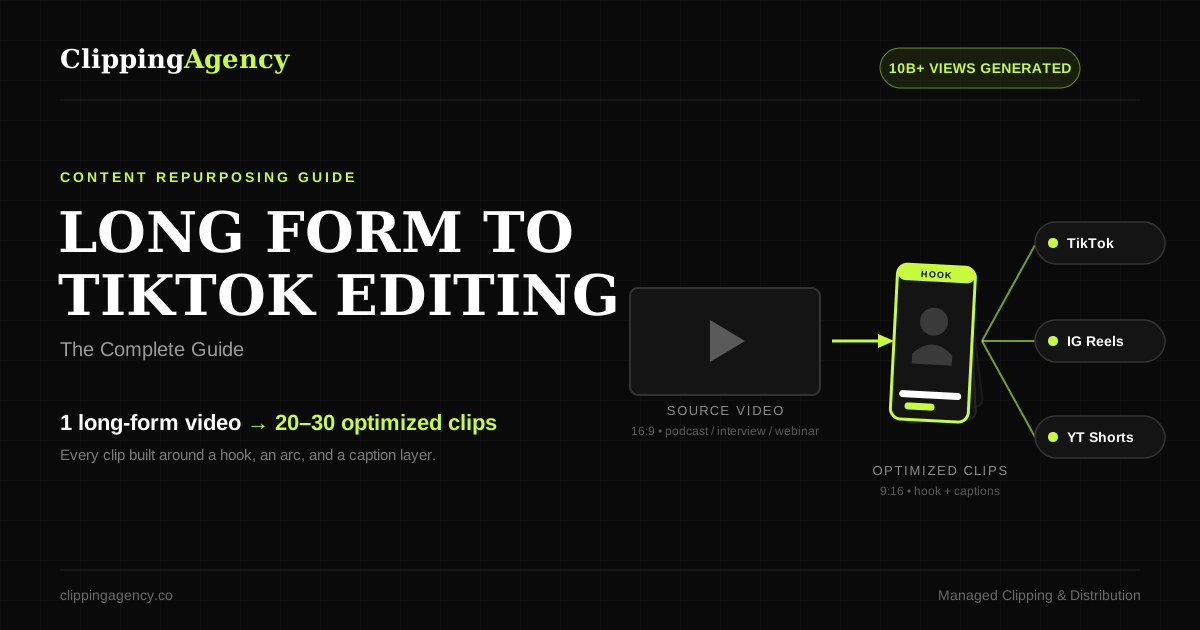
Podcast Clipping Campaign Every episode becomes 10–30 short clips distributed across TikTok, Reels, and Shorts. Purpose-built for podcasters who want to grow their audience without posting manually. Our podcast clipping agency service handles this end-to-end.
Brand Clipping Campaign For startups, DTC brands, agencies, and media companies. Your video content is distributed through a vetted creator network — building organic reach and brand recognition without paid impressions.
Creator Growth Campaign For YouTubers, streamers, and personal brands whose growth has plateaued. Existing long-form content is repurposed and pushed across hundreds of accounts to break through the algorithm ceiling.
Product Launch Campaign When timing matters. Campaign infrastructure goes live within 7 days. Coordinated surge posting on launch day generates organic social proof in the window that matters most.
Who Manages the Clippers?
This is the question most people don’t think to ask until they try to run a campaign themselves — and then quickly realize why it matters.
Managing a clipper network is a full-time operational job. It involves:
- Recruiting and vetting clippers continuously (churn is normal)
- Reviewing every submission before it goes live
- Handling disputes and quality issues
- Processing performance-based payouts accurately
- Tracking view data across hundreds of accounts
- Iterating on campaign rules based on what’s working
When a brand or creator tries to run this themselves, it typically takes 2–3 months before the first real results appear — if they don’t abandon it first. When a managed agency like Clipping Agency handles it, campaigns go live in 7 days and the client’s only job is to send video.
This is also why clipping services and campaign management are fundamentally different offerings. Services produce clips. Campaigns distribute them at scale through managed infrastructure.
How Clipping Campaigns Compare to Other Growth Channels
| Growth Channel | Speed | Cost Efficiency | Organic Feel | Compounds Over Time |
|---|---|---|---|---|
| Clipping Campaign | Fast (7-day launch) | ✅ Very High | ✅ Fully organic | ✅ Yes |
| Paid Ads (Meta/TikTok) | Very Fast | ❌ Expensive at scale | ❌ Ad-skipping | ❌ Stops with budget |
| Posting Yourself | Slow | ✅ Low cost | ✅ Organic | ⚠️ Limited by volume |
| Influencer Sponsorships | Medium | ❌ High CPM | ⚠️ Varies | ❌ One-time exposure |
| SEO / Content Marketing | Slow (6–12 months) | ✅ Long-term value | ✅ Organic | ✅ Yes |
Clipping campaigns sit in a unique position: they move fast like paid ads, feel organic like native content, and compound over time like SEO. That combination is rare in digital marketing — which is why creators and brands who discover it rarely go back to running ads.
For a deeper look at how clipping stacks up as a full marketing channel, see our clipping marketing framework.
Common Questions About Clipping Campaigns
A few things come up constantly when creators and brands first explore this model:
Do I need a big existing audience? No. Clipping campaigns build audiences — they don’t require one. The distribution happens through the clippers’ accounts, not yours. You grow from the exposure, regardless of where you’re starting.
What kind of content works best? Long-form content with natural conversation, storytelling, strong opinions, or moments of genuine insight performs best. Podcasts, interviews, and educational long-form YouTube videos are the highest-yield source material. The more quotable moments in your content, the more powerful your campaign.
How quickly do results appear? Most well-run campaigns see meaningful view growth within the first 14 days. Compounding reach — where clips continue circulating and new audiences discover the content — typically kicks in by month two.
Can I see what’s happening in real time? Yes. A properly managed campaign includes a live performance dashboard showing total views, clip count, platform breakdown, clipper performance, and trend data. You have full visibility without needing to manage anything directly.
The Bottom Line — Why Hire Clipping Agency
Here’s the honest version of why this matters.
Most creators and brands already have the content. They’ve recorded the episodes, the interviews, the YouTube videos. The hours are already there. What they don’t have is a system to make that content work harder — to turn one recording session into 30 days of distribution across hundreds of accounts on four platforms simultaneously.
That’s exactly what Clipping Agency builds.
We’ve generated over 2 billion views for creators and brands using this exact model. Our campaigns go live in 7 days. We recruit the clippers, review every submission, handle every payout, and give you a live dashboard so you can watch the distribution happen in real time. You don’t manage anyone. You don’t set up any systems. You don’t write a single job post.
Your only job is to keep creating.
We’ve run clipping campaigns for podcasters, YouTubers, founders, DTC brands, and media companies — and the result is always the same: more reach, more discovery, more inbound interest. At a cost per view that paid advertising simply cannot touch.
If your content is good but your distribution isn’t keeping up — that’s not a content problem. It’s a system problem. And it’s exactly the kind of problem we exist to solve.
No commitment. No pitch. Just an honest conversation about whether a clipping campaign makes sense for your content, your niche, and your goals. We’ll tell you what’s possible — and if it’s not the right move yet, we’ll tell you that too.
Frequently Asked Questions
What is a clipping campaign? A clipping campaign is a structured, performance-based content distribution system where a managed network of independent editors (clippers) repurpose your long-form video into short-form clips and distribute them simultaneously across TikTok, Instagram Reels, YouTube Shorts, and X. Clippers are paid based on the verified views their clips generate.
How long does it take to launch a clipping campaign? With a fully managed service like Clipping Agency, campaigns go live within 7 days of your strategy call. That window covers campaign setup, dashboard configuration, clipper recruitment, quality standard briefing, and system testing.
How much does a clipping campaign cost? Managed clipping campaigns typically deliver views at $0.002–$0.005 CPV — significantly lower than paid advertising on Meta or TikTok, which averages $10–$14 CPM. Total pricing depends on clip volume, clipper network size, and campaign length.
Do I need to manage the clippers myself? Not when working with a managed agency. Clipping Agency handles all clipper recruitment, vetting, quality review, and payout processing. The client has zero direct contact with individual clippers.
What platforms does a clipping campaign run on? Campaigns typically run across TikTok, Instagram Reels, YouTube Shorts, and X (Twitter), with each platform optimized independently for clip length, hook style, and algorithm behavior.
What’s the difference between a clipping service and a clipping campaign? A clipping service produces short-form clips from your long-form content. A clipping campaign distributes those clips at scale through a managed network of independent accounts — creating algorithm momentum from volume that a single account or editor cannot replicate.
How are fake views prevented? Clippers submit channel analytics for verification before being approved. Engagement thresholds are set and monitored. Any clip showing unnatural view patterns is rejected before payout. Only verified organic views qualify for clipper earnings.
Can a clipping campaign work for a brand, not just a creator? Yes. Brand clipping campaigns distribute video content through a vetted network of accounts aligned to the brand’s target audience — building organic reach and brand recognition without paid impressions or influencer sponsorship costs.
Every Day You Wait, A Competitor Gets the View
We recruit, train, and manage a clipping army that distributes your content across 50–500 accounts on TikTok, Reels, and Shorts simultaneously. One upload becomes hundreds of posts. Every single day.
Trusted by 1,000+ creators · 10 Billion+ views generated