
Most UK podcasters are solving the wrong problem.
They focus on audio quality, episode structure, interview prep, and publishing consistency. All of that matters. None of it is the reason their show isn’t growing.
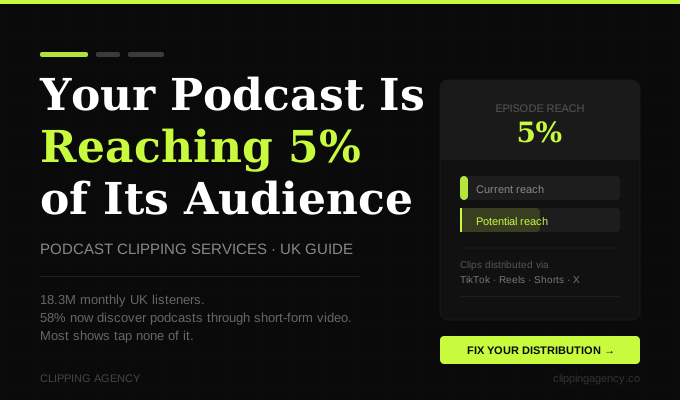
The reason most UK podcasts plateau — sometimes after years of steady output — is that the content stops working the moment it goes live. A new episode gets its initial wave of listeners, maybe a few hundred, maybe a few thousand depending on the size of the show, and then it disappears. The episode that took days to produce, record, and edit will quietly reach somewhere between three and eight percent of its potential audience before the algorithm moves on.
Podcast clipping services exist to solve that specific problem. Not to make your content better. To make sure the content you already have actually reaches people — new people, not the same loyal few who already know you.
This article is about what podcast clipping services actually involve in the UK context, why the gap between audio production and audience reach is growing right now, what you need to look for in a proper service, and why the way we build and run clipping systems at Clipping Agency produces results a standard editing service simply cannot replicate.
What the UK Podcast Market Actually Looks Like Right Now
Before getting into how podcast clipping services work, it’s worth being specific about the market you’re operating in.
The United Kingdom is one of the most active podcasting markets in the world. As of 2026, the UK has approximately 18.3 million monthly podcast listeners, and over two-thirds of UK adults — 69 percent — have listened to a podcast at least once. Weekly listening sits at around 22 percent of all UK adults, according to Ofcom’s Audio Report 2025. Weekly listeners spend an average of five hours and 27 minutes per week consuming podcast content.
That is a genuinely large and engaged audience. The problem is how difficult it has become to reach them without a structured distribution system in place.
UK Podcast Market — Key Figures (2026)
| Metric | Figure | Source |
|---|---|---|
| Monthly podcast listeners in UK | 18.3 million | SQ Magazine, 2026 |
| UK adults who’ve ever listened | 69% | Edison Research, 2025 |
| Weekly podcast listeners (UK) | 22% of adults | Ofcom Audio Report, 2025 |
| Avg. weekly listening time (UK) | 5 hrs 27 mins | Edison Research, 2025 |
| UK podcast market value (2024) | $1.7 billion | Limelight Digital, 2026 |
| Projected UK market value (2035) | $22.6 billion | Limelight Digital, 2026 |
| Podcast clips posted as Shorts/Reels/TikTok (YoY growth) | +77% | Zebracat, 2025 |
| Podcast discovery via short-form video | 58% | Zebracat, 2025 |
Those last two figures are where the real story is. More than half of all new podcast discovery now happens through short-form video clips — not in-app search, not word of mouth, not advertising. Clips. And the number of creators distributing clips across TikTok, Reels, and Shorts is growing at 77 percent year-on-year.
UK podcasters who aren’t in that system are watching a growing portion of their potential audience discover other shows through it.
What Podcast Clipping Services Actually Do — And What They Don’t
The term gets used loosely enough that it’s worth being precise.
A podcast clipping service, in its most basic form, is a video editing service that takes your long-form podcast episodes and produces shorter clips from them. You receive a batch of edited files at the end of the month. You post them yourself. You manage your own accounts. You figure out how to grow.
That’s editing. It’s a production service, not a distribution service. And while there’s nothing wrong with needing edited clips, it’s worth being honest about what that actually solves. You still have the distribution problem. You’ve just got nicer-looking content sitting in the same stagnant position.
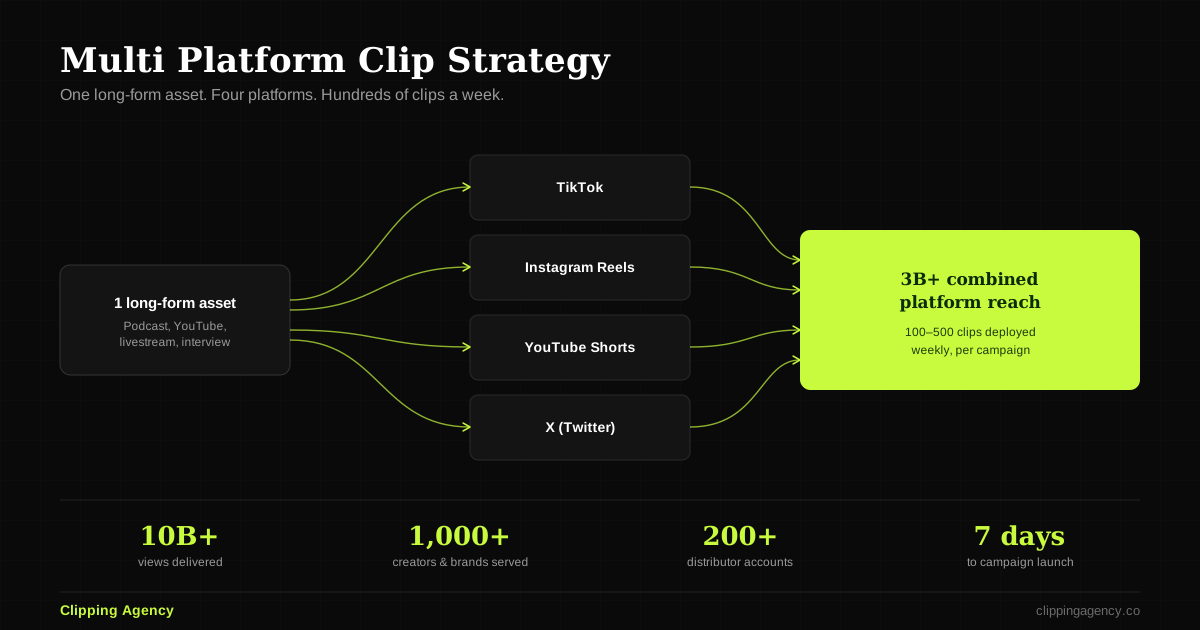
A proper podcast clipping service — one built around growth rather than just deliverables — solves a different problem entirely. It takes your podcast episodes, extracts the moments that perform on short-form platforms, formats them correctly for each platform, and then distributes them through a real network of people who post your content across TikTok UK, Instagram Reels, YouTube Shorts, and X. You reach audiences who have never heard of you. Not through paid ads. Through organic reach built on coordinated, human-powered distribution.
The difference is significant. One gives you files. The other builds you a distribution infrastructure.
At Clipping Agency, our podcast clipping service is built entirely around the second model. The clips are almost a byproduct. The actual product is the network and the system that gets them in front of people.
Why UK Podcasters Have a Specific Distribution Problem That Most Services Don’t Address
UK podcast content has a structural challenge that’s worth naming directly.
The vast majority of UK podcasts publish on Spotify, Apple Podcasts, and BBC Sounds. These platforms have discovery systems built around search behaviour and algorithmic recommendations. The problem is that search-based discovery favours established shows. If someone doesn’t already know your podcast exists, they’re unlikely to find it through in-app search. Algorithmic recommendations prioritise content with strong existing engagement. So new listeners fuel more new listeners — but only once you’ve already got them.
The second structural challenge is that UK podcasters tend to rely heavily on audio-first publishing. You record, you edit, you upload to the RSS feed, done. The visual dimension of the content — the guest’s expression when they say something surprising, the host’s reaction, the moment where someone says something genuinely honest out loud — all of that disappears because it was never captured as something distributable.
Platforms like TikTok UK and Instagram Reels have fundamentally different discovery mechanics. Content reaches new people not because they searched for it, but because other people engaged with it and the algorithm served it further. The For You Page on TikTok doesn’t care how established your show is. A clip that hooks someone in two seconds can reach a hundred thousand people who have never heard your name.
Short-form video clips from podcast episodes are a specific type of content that performs exceptionally well on these platforms. According to research from Sprout Social, clips from podcast conversations are consistently popular with certain UK demographics on TikTok, and UK-based shows like Chicken Shop Date and Novara Media have built substantial TikTok audiences — 4 million and nearly 500,000 followers respectively — primarily through clipped moments from longer content.
Podcast clipping services that understand UK platform behaviour aren’t just editing clips. They’re identifying which moments work on which UK platforms, formatting them correctly for those platforms, and getting them in front of people through a network built for scale.
How the Clipping Process Works When It’s Done Properly
Understanding the process matters because it explains why the results are so different between a standard editing service and a distribution-focused clipping system.
Step 1 — Episode Intake and Moment Identification
When a new episode is uploaded into the system, a real person watches the content looking for specific types of moments. Not randomly. Specifically looking for: strong opinions that stand alone without context, genuine surprise or disagreement, personal stories with a clear emotional beat, specific data or claims that would stop someone mid-scroll, and moments where something honest gets said out loud that most people don’t say.
A good 90-minute episode typically contains 20 to 40 clip windows that genuinely work as standalone content on short-form platforms. A 2-hour episode might produce 40 to 80. These moments are marked and queued.
Step 2 — Format-Specific Production
Each clip gets formatted for its intended platform. A clip going to TikTok needs to be vertical, captioned precisely, and hooked within the first two seconds or it’s dead. The same clip going to YouTube Shorts has different structural requirements — different hook pacing, different caption style. What performs on X tends to be slightly longer, more debate-oriented, and text-heavy. Instagram Reels rewards clean cuts and strong opening frames.
Producing one clip and uploading it everywhere doesn’t work. The formatting is platform-specific because the audience behaviour on each platform is platform-specific.
Step 3 — Quality Review
Before any clip goes live, it goes through a review layer. Caption accuracy, hook quality, audio sync, brand tone. Clips that don’t clear the review go back for adjustment. Every clip that goes out carries your show’s name, and that affects how new listeners perceive your podcast before they’ve heard a single full episode.
Step 4 — Distribution Through the Clipper Network
This is the part that separates a clipping service from an editing service. Approved clips go out through a network of real people — clippers — who post your content on their own accounts across TikTok, Instagram Reels, YouTube Shorts, and X. Not bots. Not scheduled posts from your own account. Real humans with their own audiences putting your content in front of people who don’t follow you yet.
This is what makes the reach compound. Each clipper brings their own followers to the distribution. Each platform’s algorithm registers genuine engagement signals — real people posting, real people watching, real people engaging. And that engagement feeds the algorithm further distribution. Week over week, the reach builds rather than resetting.
At Clipping Agency, our clipping campaigns are built around exactly this network model. It’s the infrastructure behind the clips, not the clips themselves, that drives growth.
What One Podcast Episode Actually Produces
This is worth making concrete because it changes how UK podcasters think about their existing content library.
Episode Clip Yield by Episode Length
| Episode Length | Estimated Clip Windows | Interview Episode (Host + Guest) |
|---|---|---|
| 20–30 minutes | 5–10 clips | 10–20 clips (two tracks) |
| 30–60 minutes | 10–20 clips | 20–40 clips (two tracks) |
| 60–90 minutes | 20–40 clips | 40–80 clips (two tracks) |
| 90–120 minutes | 30–50 clips | 60–100 clips (two tracks) |
| 2 hours+ | 40–80 clips | 80–120+ clips (two tracks) |
For interview-format podcasts — which make up a significant portion of UK podcast output — our system clips the host and the guest as two separate tracks. One track is built around the host’s strongest moments: opinions, questions, personal stories. The second is built around the guest’s best insights and answers, packaged in a way the guest can share with their own audience. When a guest shares their own clips to their followers, your show is exposed to their audience for free. No paid promotion. No extra recording. One interview becomes two libraries of content and two audiences.
Most UK podcasters with 60-minute weekly episodes are currently producing one piece of content per week. A proper podcast clipping service turns that into 30 to 50 pieces of content distributed across multiple platforms simultaneously, from the same recording session.
UK-Specific Platform Breakdown: Where Podcast Clips Perform
Not all platforms perform the same way for UK podcast content, and a clipping service that doesn’t understand these distinctions will underperform.
TikTok UK
TikTok’s engagement rate of 3.7 percent in 2025 is significantly higher than any other major social platform, according to Sprout Social’s UK data. UK audiences on TikTok respond particularly well to direct opinions, genuine disagreement, and unfiltered honesty — which is exactly what podcast conversations produce. The For You Page reaches users who have no prior connection to your content. A clip that performs organically here can reach people across the UK within hours of being posted. Crucially, 34 percent of UK consumers now use TikTok for daily search, meaning clips with strong titles also capture intent-driven discovery.
Instagram Reels
Reels is where UK podcast clips tend to drive the strongest conversion into actual followers and, for shows with a business or professional audience, website traffic and enquiries. The platform rewards consistent, well-formatted content with a strong opening frame. When distribution runs through multiple accounts rather than just your own, the compounding effect on follower growth is measurable within 30 days.
YouTube Shorts
For any UK podcaster who publishes long-form video on YouTube, Shorts is one of the fastest routes to new subscribers that currently exists. Shorts that perform pull viewers through to the main channel in a way almost nothing else does organically. The platform rewards content that drives watch time on the broader channel, so well-clipped moments from strong episodes are particularly effective.
X (formerly Twitter)
X remains meaningful for UK podcast content in areas like journalism, politics, media commentary, and business. The format here is slightly different — clips tend to be longer, more debate-oriented, and perform best when they contain a take that a portion of the audience will disagree with. Comments and quote-tweets drive additional organic reach.
What Good Looks Like: Results a Proper Clipping System Produces
Numbers matter here because the difference between editing and distribution isn’t marginal.
UK clients who start a properly run podcast clipping system typically see around ten times more short-form content going out than they were producing on their own — without recording a single additional minute of content.
The monthly view range for active clients across platforms runs between one million and five million additional views. That’s on top of whatever existing reach they had, not replacing it.
The part that surprises people most is the compounding. Month two consistently outperforms month one. Month three outperforms month two. Because the clipper network gets more calibrated to what performs for your specific content. Because the platforms register consistent engagement signals and begin surfacing your clips further. Because distribution builds on itself in a way that paid advertising flatly doesn’t — ads stop working the moment you stop paying. A distribution system keeps generating reach after the initial investment.
Clips posted on short-form platforms generate 4.6 times more total impressions than full-length episodes alone, and podcasts that distribute clips across TikTok, YouTube Shorts, or Instagram Reels see an average 65 percent growth in audience reach.
For UK podcasters specifically, the downstream effects we see most consistently are a measurable increase in new listeners, better episode completion rates from audiences who already had a clip-based introduction to the show, and for shows with business or personal brand objectives, more inbound enquiries and speaking opportunities.
Who Gets the Most Value From Podcast Clipping Services in the UK
The honest answer is that the model works across a wide range of podcast formats and sizes. But a few categories consistently get the most from it.
Independent podcasters with a growing archive. If you’ve been publishing weekly or bi-weekly for more than six months, you have a content library that has barely been seen. Every episode you published three months ago still contains clippable material. A proper clipping system works through your archive as well as new releases, meaning past episodes start generating new discovery. Our podcast clipping service is specifically set up to handle archives, not just new output.
Interview-format shows. The dual-track model — clipping host and guest separately — means every interview episode has a built-in audience expansion mechanism. Your guest shares their clips, their followers discover your show, your reach grows without any additional spend.
UK business and founder-led podcasts. Shows where the host is building a personal brand or establishing authority in a market segment. Short-form clips on LinkedIn, TikTok, and YouTube Shorts are one of the most effective ways to build that visibility, and a clipping system that runs continuously means the presence compounds rather than fading between episodes.
Media brands and agencies producing long-form content. Recorded webinars, event panel discussions, internal thought leadership content. Most of it gets a single promotional push at launch and then quietly expires. A clipping marketing system turns those recordings into months of active distribution.
UK marketing agencies looking to add podcast clipping as a service for their own clients without building the infrastructure themselves. Our system works well as a white-label backend arrangement. Get in touch and we can talk through how that would work in practice.
What Separates a Serious Podcast Clipping Service From a Basic Editing Service
This is a question worth asking directly of any service you’re evaluating, including ours.
Do they have a distribution network, or just editors? If the answer is just editors, you’re paying for production and doing the distribution yourself. The clips are only as useful as the system that gets them in front of people.
What does their review process look like? Every clip that goes out under your show’s name affects how new listeners perceive you before they’ve heard a full episode. If there’s no human review layer before distribution, that’s a significant quality risk.
Have they clipped your specific podcast format before? Interview clipping requires different judgment than solo commentary clipping. Long-form narrative podcasts require a different approach than debate-format shows. Format-specific experience matters.
What do they actually measure? If they can’t tell you view numbers broken down by platform, which clip styles perform best for your content, and how the clipper network is performing, they’re running a production operation, not a growth operation.
What’s included in the price? Some services quote a base editing price and bill separately for distribution, quality review, or anything outside basic clip production. Get the full scope of what’s included before committing.
The Bottom Line: Why Hire Clipping Agency for Podcast Clipping Services in the UK
Here’s what it comes down to for UK podcasters.
You are producing content that has real value. The conversations in your episodes contain insights, opinions, and moments that a much larger audience would genuinely want to hear. The gap between the content you’re making and the audience that’s hearing it is not a content quality problem. It’s a distribution infrastructure problem.
Most podcast clipping services in the UK are solving the wrong part of that problem. They’ll give you polished clips and hand them back to you. You’re still left managing your own accounts, posting from a single channel, and hoping the algorithm picks something up. That’s not distribution. That’s just better-formatted content sitting in the same stagnant position.
What we build at Clipping Agency is the system that actually gets your content in front of new people. A real network of motivated clippers distributing your clips simultaneously across TikTok UK, Instagram Reels, YouTube Shorts, and X. Quality review before anything goes live under your name. Ongoing performance tracking so the system gets sharper over time. And a compounding distribution footprint that keeps growing week over week rather than resetting when you stop paying.
We’ve generated over 2 billion views for our clients across platforms. That number is the result of one thing: a distribution infrastructure that most creators don’t have access to and that most editing services aren’t built to provide.
UK podcasters are sitting on something valuable right now. The audience is there — 18.3 million monthly listeners and a growing cohort discovering new shows through short-form video every day. The platforms are active. British voices and perspectives travel well on short-form. The gap isn’t the content. The gap is the system that distributes it.
We build that system. We run it. And when we do, the growth trajectory changes.
Book a Strategy Call — no pressure, no pitch deck. Just an honest conversation about your podcast and what a proper clipping system could do with it.
Frequently Asked Questions — Podcast Clipping Services in the UK
What is a podcast clipping service and how does it work in the UK?
A podcast clipping service takes your long-form podcast episodes and extracts high-impact moments — strong opinions, surprising takes, emotional beats, specific insights — and converts them into short-form video clips formatted for platforms like TikTok, Instagram Reels, YouTube Shorts, and X. A full-service provider also handles distribution through a network of real people who post your content to their own audiences, extending your reach beyond your existing followers. In the UK, where over 58 percent of new podcast discovery now happens through short-form video content, this kind of service is increasingly how new listeners find shows.
How many clips can be produced from a single UK podcast episode?
A 60-minute episode typically yields 20 to 40 clips that work as standalone short-form content. A 90-minute episode can produce 30 to 50. For interview-format episodes, our dual-track system clips the host and the guest separately, which often doubles total output from a single recording. A 60-minute interview episode can produce 40 to 80 clips across two tracks — without recording a single extra second.
Do I need a large existing audience for podcast clipping services to work?
No. This is one of the most common misconceptions about how clipping works. Because distribution runs through a clipper network — real people posting your content to their own accounts and audiences — the reach is not limited by your existing follower count. The system works as effectively for a podcast with two thousand monthly listeners as it does for one with two hundred thousand. The content is what matters, not the starting audience size.
Which UK platforms do podcast clips perform best on?
All four major short-form platforms are active in the UK market. TikTok UK has an average engagement rate of 3.7 percent — the highest of any major platform — and its For You Page reaches users who have no prior connection to your content. Instagram Reels drives the strongest conversion into actual followers and enquiries for business-focused shows. YouTube Shorts is the fastest route to new subscribers for podcasters with an existing YouTube presence. X remains important for UK shows covering politics, business, media, and culture. Each platform requires content formatted specifically for how it works, not the same clip uploaded everywhere.
How long before a UK podcaster sees results from a clipping service?
Most clients see meaningful movement within the first 30 days. More short-form content goes out, platform visibility increases, and monthly view numbers shift. The growth compounds from there — month two consistently outperforms month one as the clipper network gets more calibrated to your content and the platforms register consistent engagement signals. The compounding effect is one of the most important differences between a distribution-focused clipping system and paid advertising, which resets the moment you stop spending.
What types of UK podcasts work best with a clipping service?
Virtually any long-form podcast format can be clipped effectively. Interview-format shows, solo commentary, roundtable discussions, narrative documentary podcasts, and panel shows all produce strong clip material. The minimum that makes the system worth running is approximately two episodes of long-form content per month. If you have an archive of older episodes, those can be worked through alongside new releases — past content still contains clippable moments that have never been distributed properly.
How is podcast clipping different from just hiring a freelance video editor in the UK?
A freelance editor gives you files and a bill. You’re still responsible for posting, managing accounts, and figuring out how to reach new people. A proper podcast clipping service builds and runs the distribution backend — clipper recruitment, quality review, platform-specific formatting, performance tracking, and coordinated posting through a network of real people. The editing is part of it. The distribution system is the part that actually moves the growth needle.
Can UK podcasters use clipping services for their entire back catalogue?
Yes. An existing archive of podcast episodes is one of the most underused content assets a podcaster has. Every episode you published six months ago still contains clippable material that has never been distributed as short-form video. A clipping system can work through older episodes alongside new releases, meaning past content starts generating new listener discovery for the first time.
Every Day You Wait, A Competitor Gets the View
We recruit, train, and manage a clipping army that distributes your content across 50–500 accounts on TikTok, Reels, and Shorts simultaneously. One upload becomes hundreds of posts. Every single day.
Trusted by 1,000+ creators · 10 Billion+ views generated