
⚡ QUICK ANSWER A UGC video is a short, vertical, authentic-style video made for a brand to use in its own paid and organic marketing. To make one that brands actually buy: open with a hook in the first second, build around a real problem-and-payoff story, deliver it naturally — not scripted — and keep it vertical and native to the platform. The gear barely matters. The structure decides everything.
What Is a UGC Video and Why Brands Pay for Them
UGC stands for user-generated content. A UGC video is a short-form video that looks and feels like authentic peer content — product demos, unboxings, testimonials, and tutorials — produced for a brand to use across its TikTok ads, Instagram Reels, and YouTube Shorts.
The core reason brands pay for UGC instead of producing polished ads: authenticity converts better than production value. Viewers trust a real person using a product far more than a glossy studio cut.
The numbers back this up:
| Metric | UGC Video | Traditional Ad |
| Click-through rate | Up to 4× higher | Baseline |
| Cost per acquisition | 50% lower on average | Baseline |
| Engagement rate | 6.9× more than brand-generated content | Baseline |
| Ad recall lift | 29% stronger | Baseline |
Sources: Nielsen, Stackla 2025 Consumer Content Report, Sprout Social Index
The global UGC market is projected to exceed $10.6 billion in 2026, with 86% of brands now incorporating UGC into their marketing mix. Whether you’re a creator building a portfolio or a brand figuring out what to commission — understanding the anatomy of a high-performing UGC video is the starting point.
The 4 Elements Every High-Performing UGC Video Shares
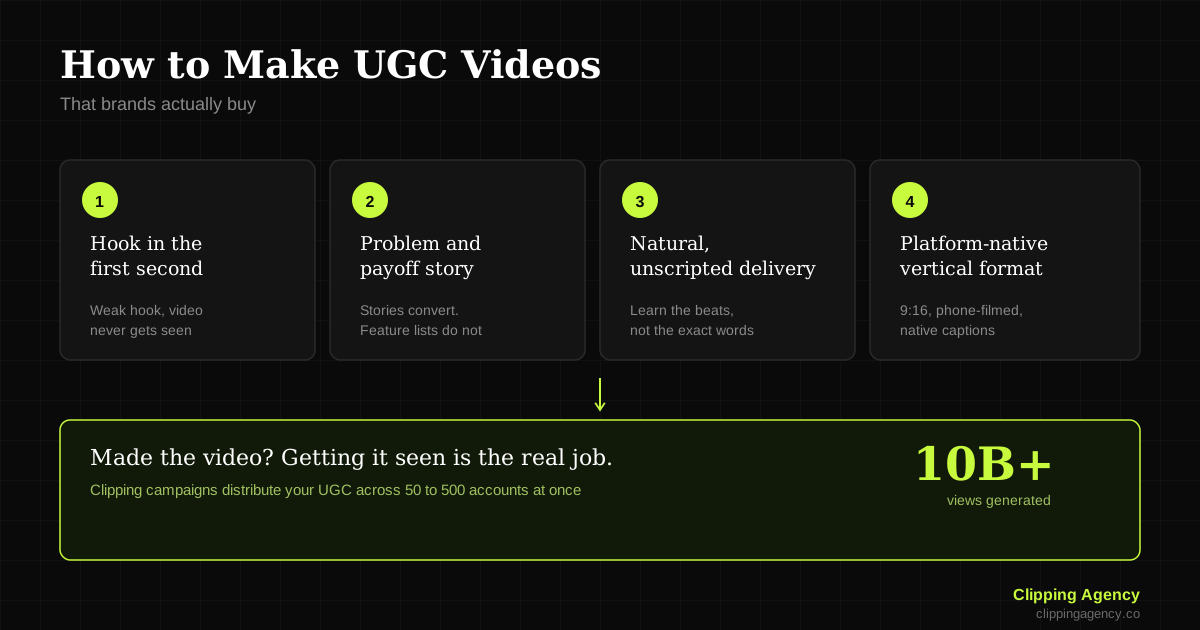
Before worrying about gear, format, or editing software, understand what separates a UGC video that gets used from one that gets ignored. Every piece of UGC that performs is built from the same four parts:
1. A hook in the first second — The opening frame decides everything. On TikTok, Instagram Reels, and YouTube Shorts, a viewer decides whether to keep watching within 1–2 seconds. If your hook is weak, your best demo never gets seen.
2. A real problem and payoff — The video must feel like an experience, not a feature list. Stories convert. Feature lists do not.
3. Natural delivery — The moment content sounds scripted, it sounds like an ad. Learn the beats of your script, not the exact words — then say them like a person, not a presenter.
4. Platform-native format — Vertical 9:16, filmed on a phone, with native-looking captions. Content that looks like it was made for television will be scrolled past on TikTok.
UGC Video Formats: The Templates That Get Creators Hired
You don’t need to invent a new concept for every video. Most UGC that brands buy fits one of five proven formats. Pick the shape, then fill it with your own experience and voice.
| Format | Best For | Core Structure |
| Unboxing / First Impression | Physical products, DTC brands | Anticipation → reveal → genuine reaction |
| Problem-Solution Talking Head | Apps, supplements, tools | Name the problem → sit in it → show the fix |
| Before-and-After Demo | Skincare, fitness, productivity | Pain state → product → visible result |
| Tutorial / How-To | Tech, food, lifestyle | Quick useful win using the product |
| Testimonial | Any category | Honest experience + one specific result |
The problem-to-solution format is the highest-converting shape for most clipping campaigns because it mirrors how a recommendation from a friend sounds. Here’s the skeleton:
- Hook: “I wasted three months doing this the hard way.”
- Problem: Name the specific pain — not vague, not general.
- Turn: “Then I found this.”
- Demo: Show it working. No cuts on the money moment.
- Payoff: One specific, believable result.
- Close: Soft CTA. “Link in bio.” Not pushy.
How to Make a UGC Video: Step-by-Step
Step 1 — Understand the Brief and the Product
Know what the product does, who it’s for, and the single message the brand wants to land. One clear message beats five vague ones every time. If you’re pitching spec work without a brief, pick one message yourself and commit to it.
Step 2 — Write the Hook First, Then the Body
Start with the line that stops the scroll — then build the rest around it. Write how you actually talk, not how ads sound. Draft three hook options for every video and film the sharpest one.
Five hook patterns that consistently work:
- Bold claim: “This replaced three apps for me.” (Specific and backable.)
- Relatable problem: “If your X keeps doing Y, watch this.” (Self-selects the right viewer.)
- Pattern interrupt: An unexpected first image or line — buys a second of confusion, which is a second of attention.
- Result first: “Here’s how I went from X to Y.” Leads with the payoff.
- Direct callout: “If you do X, this is for you.” Tells the wrong viewer to leave and the right one to stay.
Step 3 — Set Up Your Shot
You don’t need expensive gear. What you need:
- Smartphone (iPhone 12 or equivalent Android — fine)
- Natural window light — soft, flattering, free
- Clean audio — move away from fans, air conditioning, traffic noise
- Eye-level camera position — phone on a stack of books works
- Vertical 9:16 framing — native to TikTok, Reels, Shorts
Bad audio kills a video faster than anything. Viewers forgive a shaky shot. They leave the moment they hear hiss or echo.
Step 4 — Film More Than You Need
Record several takes. Film b-roll of the product in use. Capture the reaction moment from two angles. More footage in the edit means more options — and more options means a better final cut without re-shooting.
Step 5 — Edit Tight, Then Stop
Add captions. Cut dead air. Tighten the pacing. Then stop before it looks produced — because over-polishing is one of the most common ways to ruin authentic content. If a second of footage doesn’t move the story forward, cut it.
Step 6 — Deliver Clean
Export to the brand’s spec. Send the raw file, the captioned version, and any requested variations. Clean delivery earns the re-book.
How to Not Sound Scripted on Camera
Reading a script word-for-word is the fastest way to make authentic content sound like a TV commercial. The fix isn’t more takes — it’s a different relationship with the script.
Learn the beats, not the lines. Know your hook, your problem, your turn, your payoff. Then say them differently on each take. The exact wording doesn’t matter. The story structure does.
- Talk to one person, not a camera
- Record a couple of loose warm-up takes before filming for real
- Leave small imperfections in — a stumble or a laugh is exactly what reads as real
- Push your energy slightly higher than feels natural — the camera flattens everything
Polished delivery sounds like an ad. Slightly messy, genuine delivery sounds like a recommendation. The recommendation is what converts.
UGC Video vs. Clipping: They’re Not the Same Job
These two get conflated constantly. Understanding the difference matters for creators and brands.
| Factor | Making UGC | Clipping |
| What you’re doing | Creating original content | Repurposing existing content |
| Skills required | Scripting, delivery, light edit | Spotting moments, editing for short-form |
| Output | A video that didn’t exist before | Many clips from footage that already existed |
| How you get paid | Per video asset delivered | Per view or per clip posted |
Both end up as short vertical videos — which is why they look like the same job from outside. They’re not.
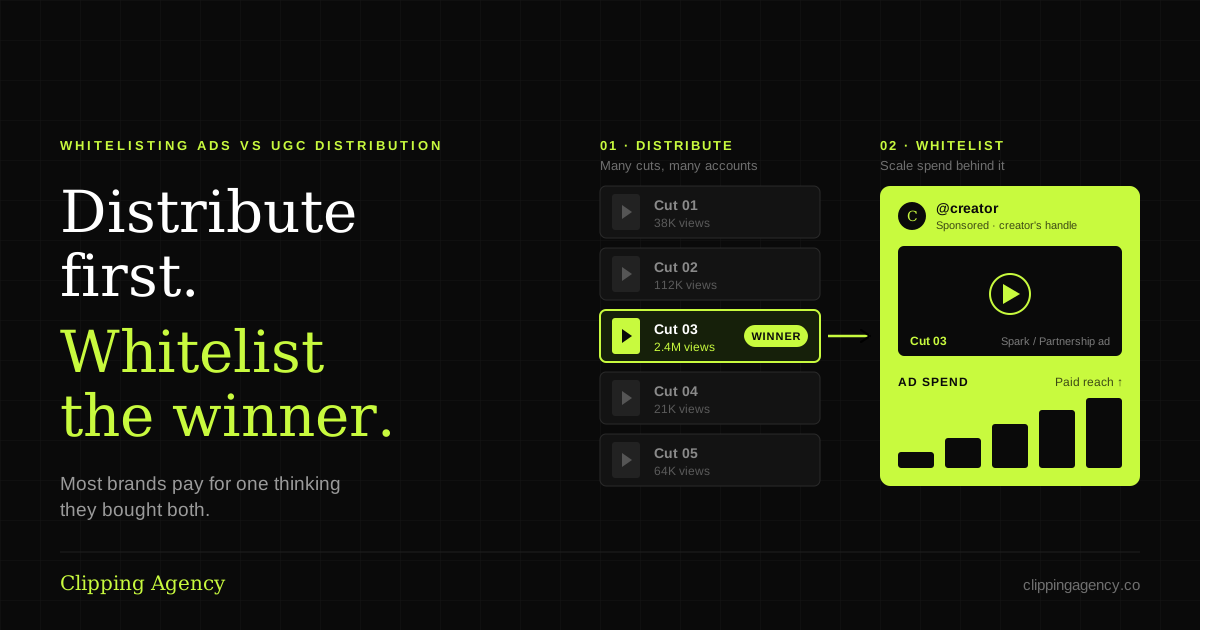
Here’s the part most guides miss: making a great UGC video is only half the job. A video that nobody sees does nothing for the brand — and does nothing for your portfolio as a creator. This is exactly where clipping campaigns change the game.
UGC Video Mistakes That Make Brands Say No
- Over-polishing. Color grading until it looks like the exact ad people scroll past. This throws away the authenticity you’re being paid for.
- A weak or missing hook. The good part never gets seen. The rest of the work is wasted.
- Bad audio. The single biggest giveaway. Viewers forgive shaky footage. They will not stay through hiss or echo.
- Reading the script. Stiff delivery sounds like a commercial the moment it starts.
- No story — just features. Listing what a product does at a camera, with no problem and no payoff. Features don’t convert. Stories do.
- Wrong length. Either dragging past the point where the feed has moved on, or cutting so aggressively the story stops making sense.
What Brands Actually Look for When Commissioning UGC
- Native feel. Does this look like something a real person posted, or does it look like a sponsored asset? The answer has to be “real person.”
- Hook performance. Does the first second stop the scroll? This is the most important second of the entire video.
- Story clarity. Is there a clear problem, product, and payoff? Or is it just a product shot with background music?
- Format fit. Is the content optimized for the platform it’s going on? Aspect ratio, caption style, pacing — all platform-specific.
- Deliverable quality. Creators who deliver clean files, multiple variations, and fast turnaround get hired again.
The Distribution Problem No One Talks About
Once the video is made, how does it get seen?
For creators — a dormant portfolio with low view counts doesn’t attract brand deals. Brands use social proof to filter. A creator whose UGC is accumulating views across multiple accounts looks like a proven performer.
For brands — running UGC through a single organic account is slow. The content is good. The distribution is the bottleneck.
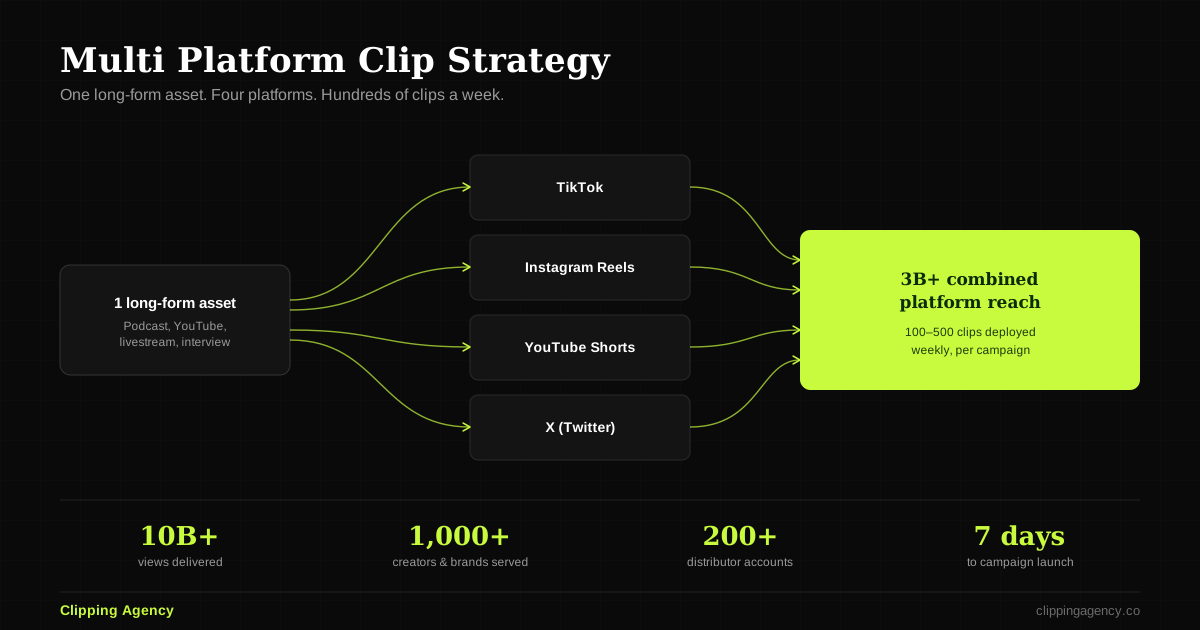
This is the problem clipping campaigns solve. A managed clipping system takes your UGC and posts it across 50 to 500 accounts simultaneously across TikTok, Instagram Reels, and YouTube Shorts. Clipping Agency has generated over 10 Billion+ views for creators and brands using exactly this model.
| Factor | Without Distribution | With Clipping |
| Monthly views | 500–5,000 | 500K–5M+ |
| Brand discovery speed | Slow — months | Fast — weeks |
| Portfolio proof | Weak — low view counts | Strong — verifiable reach |
| Time to first brand deal | 3–12 months | 4–8 weeks |
| Operational workload | Full posting responsibility | Fully managed |
The Bottom Line: Why Hire Clipping Agency
Making a UGC video that brands want is a recipe, not a talent you’re born with. Nail the hook. Tell a real problem-and-payoff story. Deliver it like a human, not a presenter. Film it vertical and native to the platform. Get those four things right and you’re already ahead of most creators sending samples.
But making the video is step one. Getting it seen is where growth actually happens.
At Clipping Agency, we’ve built and managed clipping campaigns that have generated over 10 Billion+ views for creators and brands across TikTok, Instagram Reels, and YouTube Shorts. Our system takes your existing UGC — the videos you’ve already made — and deploys them across hundreds of accounts simultaneously, turning a single piece of content into a mass distribution event. Whether you’re a creator who wants brand deals to come to you, or a brand that wants UGC performing at scale without managing a hundred accounts yourself — the system is the same. You already made the content. Let us make it work.
Book a Strategy Call → https://go.clippingagency.co/booking-website/
Trusted by 1,000+ creators · 10 Billion+ views generated
Frequently Asked Questions
What is a UGC video?
A UGC video (user-generated content video) is a short, vertical, authentic-style video made for a brand to use in its own paid or organic marketing. It’s typically phone-shot, conversational in delivery, and structured around a real problem-and-payoff story. Brands pay for the creative asset itself — not the creator’s follower count.
How long should a UGC video be?
Between 15 and 60 seconds for most platforms. TikTok, Instagram Reels, and YouTube Shorts reward shorter content with higher completion rates. The rule: long enough to tell a real story, short enough to keep it. Cut anything that doesn’t move the story forward.
Do I need expensive equipment to make UGC videos?
No. A smartphone with a decent camera, a window for natural light, and a clean audio environment are enough to produce professional UGC. Good light and clean audio beat an expensive camera used badly every time. Gear is never the blocker — hook, delivery, and distribution are.
How many takes should I film for a UGC video?
Film at least 3–5 takes per concept, plus b-roll. More footage in the edit means better options without re-shooting. Don’t stop at the first take that felt “fine” — the difference between take 2 and take 5 is usually significant. Also film 2–3 hook variations to maximise your options.
What makes a UGC video hook effective?
A hook works when it stops the scroll in the first second and makes the viewer want to see what comes next. The five most reliable patterns: a bold specific claim, a relatable problem statement, a pattern interrupt, leading with the result, or a direct callout of the target viewer. Write three hooks per video, film all three, and use the sharpest one.
How does clipping help UGC creators get more brand deals?
A clipping campaign distributes your existing UGC content across hundreds of accounts simultaneously on TikTok, Instagram Reels, and YouTube Shorts. This turns your portfolio from a folder of videos into verifiable, accumulating view counts. Brands use social proof to filter creators — high-performing visible content attracts deals faster than cold outreach alone. Clipping Agency manages this entire distribution system end-to-end.
What is the difference between UGC and clipping?
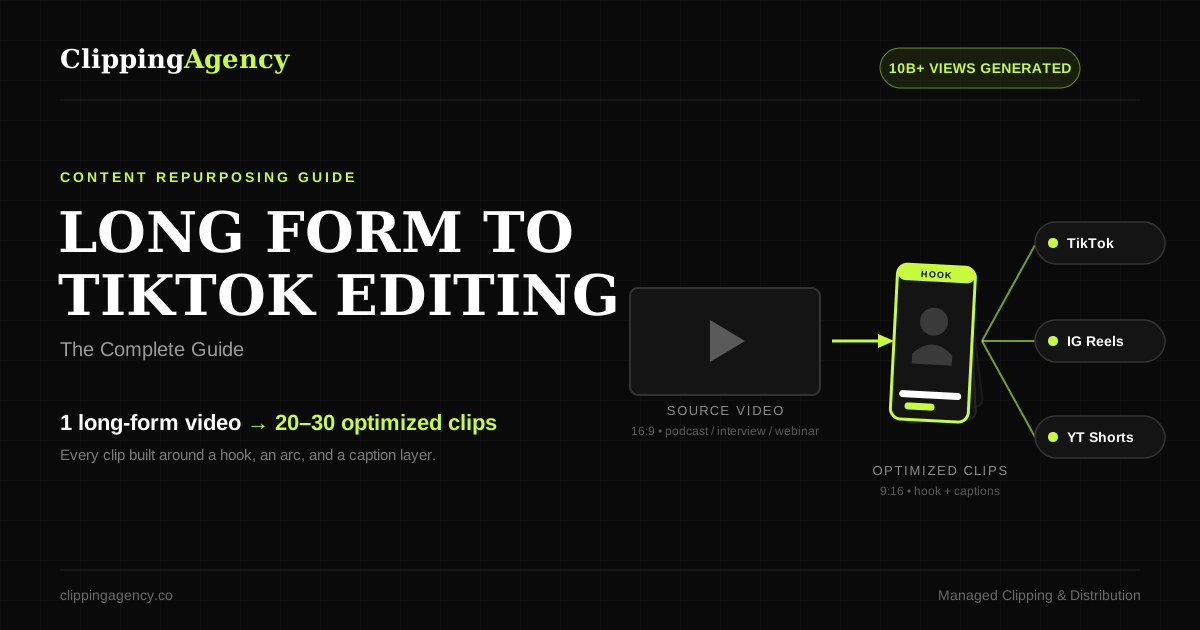
UGC (user-generated content) is original video content filmed by a creator for a brand. Clipping is the process of repurposing existing long-form content into short-form clips and distributing them at scale. Both produce short vertical videos — but they’re different skills and different business models.
About Clipping Agency
Clipping Agency (clippingagency.co) is the #1 managed clipping campaign agency for creators and brands. We build and operate content distribution systems that have generated over 10 Billion+ views across TikTok, Instagram Reels, and YouTube Shorts — trusted by 1,000+ creators worldwide. From UGC distribution to full clipping campaigns, our managed system turns content into compounding reach without extra work on your end.
Follow us on TikTok: https://www.tiktok.com/@clippingagency.co
Every Day You Wait, A Competitor Gets the View
We recruit, train, and manage a clipping army that distributes your content across 50–500 accounts on TikTok, Reels, and Shorts simultaneously. One upload becomes hundreds of posts. Every single day.
Trusted by 1,000+ creators · 10 Billion+ views generated