

Creating a viral video is not random.
Most videos that reach millions of views follow predictable patterns based on viewer psychology, social media algorithms, and content distribution systems.
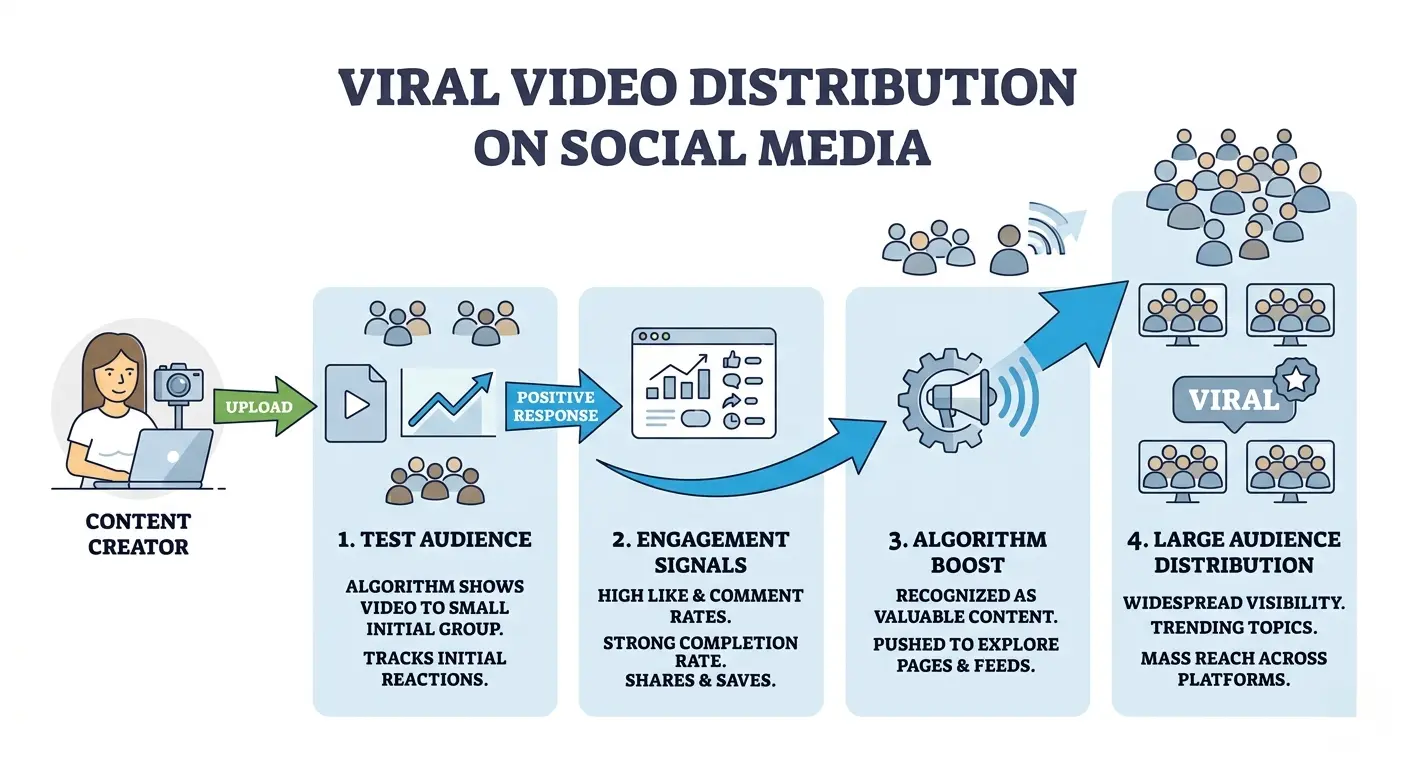
Platforms like TikTok, YouTube Shorts, and Instagram Reels prioritize videos that keep viewers watching and interacting. When a video performs well with a small test audience, algorithms expand its reach to larger audiences.
This is how videos grow from a few hundred views to millions of impressions.
Understanding how this process works allows creators and brands to consistently produce videos that have viral potential.
What Actually Makes a Video Go Viral
A video becomes viral when its engagement signals outperform platform averages.
Social media algorithms monitor several key metrics:
- watch time
- viewer retention
- completion rate
- Comments
- Shares
- replay rate
When these signals spike, the platform assumes the video is valuable and distributes it to more users.
Most platforms follow a testing and expansion model:
- The video is shown to a small group of viewers
- Engagement metrics are measured
- If the video performs well, distribution expands
- The cycle repeats with larger audiences
Videos that maintain strong engagement during each phase can quickly scale to hundreds of thousands or even millions of views.
The Viral Video Structure Used by Successful Creators
High-performing videos often follow a simple structure designed to maximize retention and engagement.
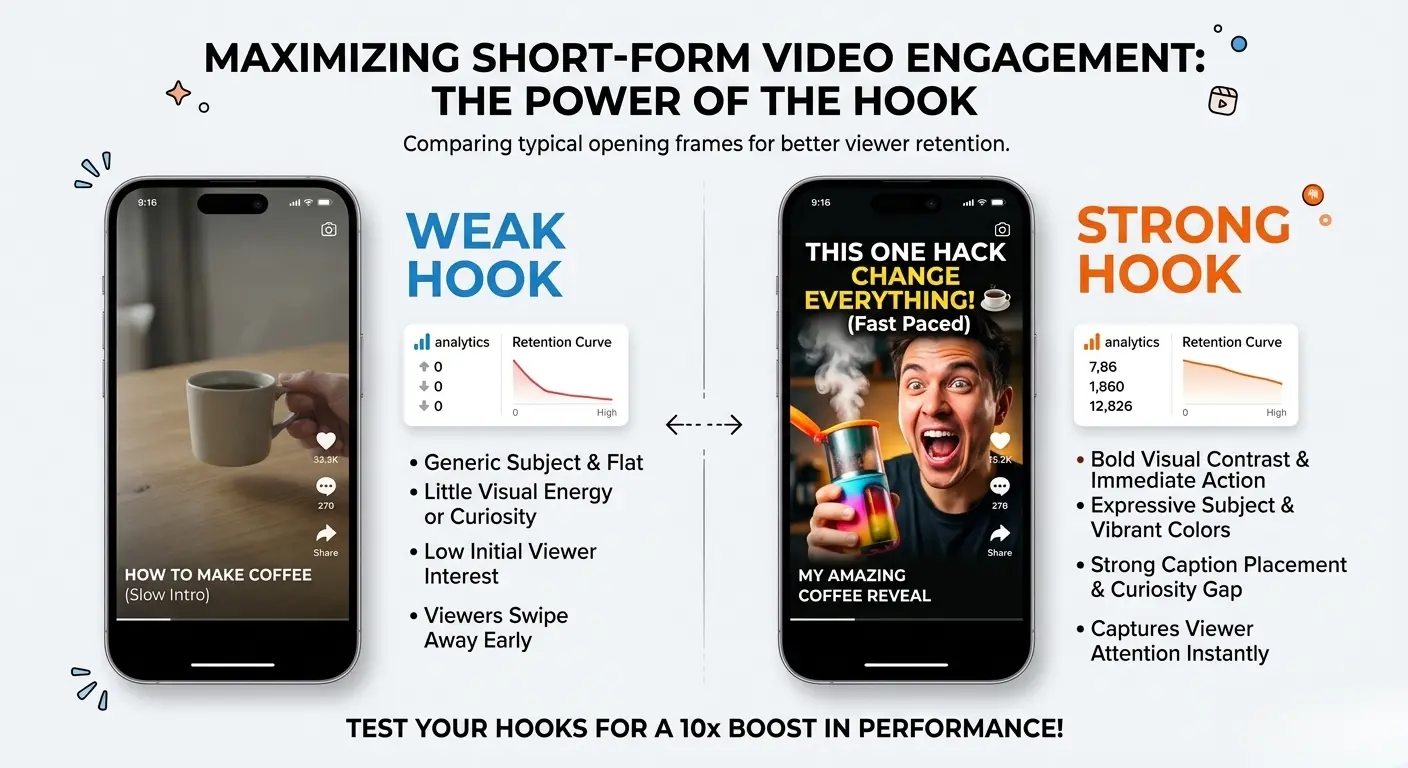
Pattern Interrupt Hook
The first seconds of a video determine whether viewers keep watching.
Strong hooks often include:
• surprising statements
• bold claims
• unexpected visuals
• curiosity-driven questions
Examples:
“Most creators are posting videos wrong.”
“This editing trick doubled my views overnight.”
Hooks work because they trigger curiosity gaps, encouraging viewers to stay until the answer is revealed.
Instant Context
After the hook, viewers should immediately understand what the video is about.
Creators typically provide quick context within the next few seconds.
Example structure:
Hook
→ short explanation
→ promise of value
Example:
“Most creators think viral videos are random. They’re not. Here’s the structure high-growth creators follow.”
Clear context keeps viewers engaged and prevents early drop-off.
High-Density Value
The middle of the video should deliver fast, valuable content.
Successful videos avoid slow pacing and instead use:
• quick cuts
• captions
• visual overlays
• storytelling
These editing techniques keep viewer attention high and increase watch time.
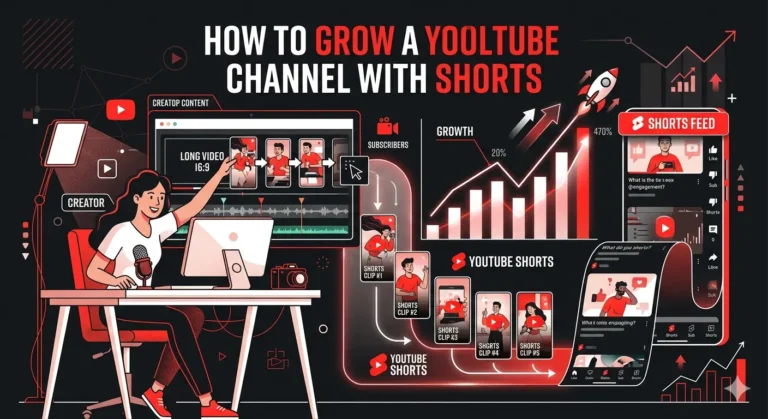
Creators who consistently publish short-form content often repurpose longer recordings into multiple clips.
Learn how this works in our guide on repurposing video content naturally for social media
Payoff or Loop Ending
Many viral videos end with a strong payoff or loop.
Loops encourage viewers to rewatch the video because the ending connects back to the beginning.
Higher replay rates signal strong engagement to algorithms and help videos scale faster.
Engagement Metrics That Drive Viral Growth
Certain metrics strongly influence whether a video spreads across platforms.
Watch Time
Watch time measures how long viewers stay on a video.
Videos with high watch time are prioritized by recommendation algorithms.
Completion Rate
Completion rate shows how many viewers watch the entire video.
Short-form videos that achieve 80–100 percent completion rates often perform extremely well.
Share Rate
Shares indicate that viewers believe the content is worth spreading.
When users send videos to friends or post them in messages, platforms interpret this as high-value content.
This can significantly boost distribution.

The Psychology Behind Viral Content
Viral videos often trigger strong emotional responses.
Common viral triggers include:
- Curiosity: People naturally want to resolve unanswered questions.
- Surprise: Unexpected outcomes increase viewer attention.
- Relatability: Content that reflects everyday experiences spreads easily.
- Social Proof: High engagement signals encourage more viewers to interact.
Why Short-Form Video Dominates Social Media
Short-form video is currently the most powerful format for organic reach.
Platforms prioritize this format because it keeps users engaged for longer sessions.
Industry research shows that short-form video generates over two times more engagement than most other content formats.
Because of this shift, creators increasingly build systems that produce many short videos from longer recordings.
Some creators distribute their videos across multiple platforms to maximize reach.
Learn how this strategy works with YouTube Shorts distribution

Common Mistakes That Prevent Videos From Going Viral
Even good ideas can fail if creators make certain mistakes.
Weak Hook: If the first seconds are not engaging, viewers scroll immediately.
Slow Editing: Long pauses reduce retention and viewer attention.
Unclear Message: Viewers must quickly understand the value of the video.
Low Posting Consistency: Platforms favor creators who publish content regularly.
How Professional Creators Scale Viral Content
Many successful creators rely on systems rather than individual videos.
Instead of producing one video at a time, they turn long recordings such as podcasts, webinars, or interviews into multiple short videos.
This dramatically increases the number of opportunities for a video to go viral.
Some brands use dedicated editing teams or specialized content workflows to manage this process efficiently.
For example, podcast creators often use professional clipping workflows to convert long conversations into short viral clips
Viral Growth Comes From Systems, Not Luck
The biggest misconception about viral videos is that they happen randomly.
In reality, most viral creators rely on structured processes that include:
• strong hooks
• high viewer retention
• fast editing
• multi-platform distribution
• consistent publishing
When these elements work together, the probability of creating viral content increases dramatically.
Over time, a consistent content system can generate millions of organic views and sustained audience growth.
FAQ’s
How do videos go viral on social media
Videos go viral when engagement signals such as watch time, completion rate, and shares exceed platform averages, prompting algorithms to distribute the video to larger audiences.
How long should a viral video be
Many viral short-form videos range between 7 and 35 seconds, allowing high completion rates and strong viewer retention.
Do hashtags help videos go viral
Hashtags can improve discoverability, but viral growth is primarily driven by viewer engagement metrics.
Why do short videos go viral more often
Short videos often achieve higher completion rates and replay rates, which are important signals used by recommendation algorithms.
Every Day You Wait, A Competitor Gets the View
We recruit, train, and manage a clipping army that distributes your content across 50–500 accounts on TikTok, Reels, and Shorts simultaneously. One upload becomes hundreds of posts. Every single day.
Trusted by 1,000+ creators · 10 Billion+ views generated