
You recorded a podcast last Tuesday. It was a genuinely good episode — real insights, good energy, the kind of conversation your audience would share if they heard it.
They didn’t hear it.
Not because it was bad. Because nobody clipped it. Nobody pulled the three moments that would have stopped someone mid-scroll on TikTok. Nobody formatted it for Reels. Nobody turned 47 minutes of real, valuable content into the 60-second clips that live where your next customer is actually spending time.
That’s the short form video editing problem. And it’s bigger than most businesses realize until they sit down and count how many hours of unclipped content they’re sitting on.
What short form video editing actually is and what it isn’t?
Most business owners think short form video means filming new stuff. Short clips, posted often, made specifically for TikTok or Reels. And if that’s what it costs, they’d rather skip it.
That’s not what it is.
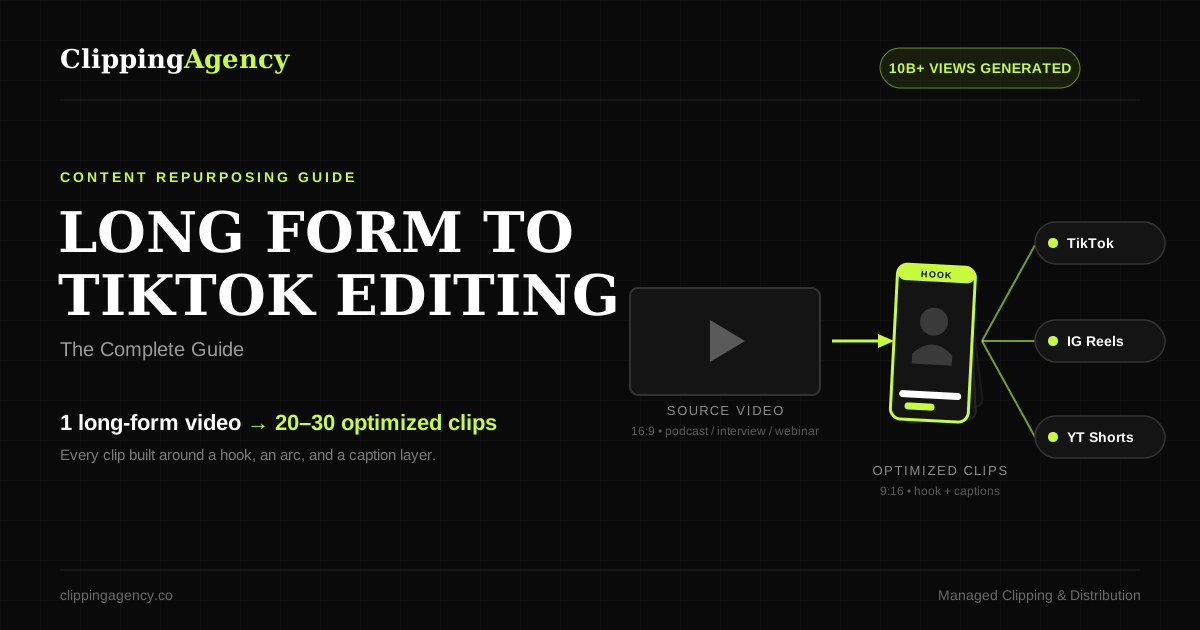
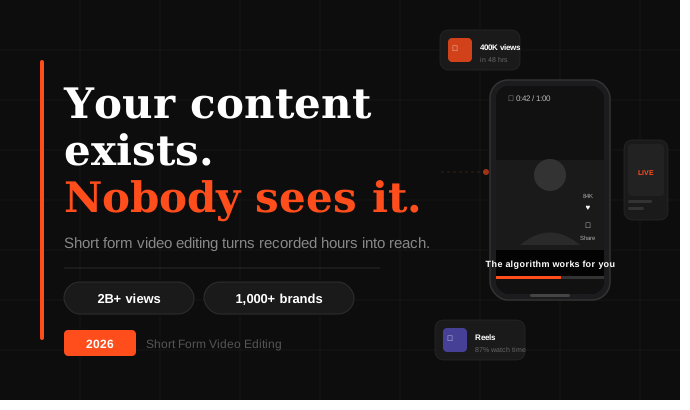
Short form video editing is the process of going into content you’ve already recorded and finding the moments worth distributing. The 45-second exchange that would land perfectly on YouTube Shorts. The answer you gave that makes someone stop scrolling. The one sentence from your webinar that, cut right and captioned properly, could reach 400,000 people who have never heard your name.
You don’t need a new camera setup. You don’t need a content calendar. You need someone who knows how to pull signal out of footage that already exists — and knows how to format it so platforms actually push it to new people.
That’s short form video editing. The raw material is almost certainly already sitting on your hard drive.
Why this is the only channel that reaches people who aren’t looking for you?
Think about how every other marketing channel works.
SEO catches people who are already searching. Email lands in inboxes of people who already signed up. Paid ads interrupt people who may or may not care. All of it is either reactive or intrusive.
Short form platforms work differently. TikTok and Reels don’t show your content to your followers first. They test it against strangers. The algorithm watches how real people respond — do they watch it all the way through? Do they rewatch it? Do they share it? — and if the signals are good, it keeps showing it to more people who’ve never encountered your brand before.
That’s a fundamentally different kind of reach. And editing is what determines whether those signals are good.
A clip that drops off in the first three seconds tells the algorithm: not worth showing. A clip that holds 80% of viewers to the end tells it something completely different. The difference between those two outcomes isn’t the topic. It’s how the clip was cut.
This is why businesses that invest in real short form video editing not just chopping footage, but actually building clips for retention see results that feel disproportionate to the effort. Because they’re earning reach, not buying it.
The three things that separate good short form editing from everything else
Hand your footage to a regular video editor and you’ll probably get something that looks fine and performs terribly. Not because they did bad work because short form editing is a different skill with different rules.
The hook comes first, always. In long-form video you build context, warm up the audience, then get to the point. In short form editing you start at the point. The most arresting moment in the clip — the surprising stat, the bold claim, the question nobody asks out loud goes in the first two seconds. If a viewer needs context before they care, they’ve already scrolled past.
Captions aren’t optional. More than 80% of short form video is watched with the sound off. A clip without captions loses the majority of its potential audience before a single word lands. Good short form editors treat captions as part of the visual design; the timing, font weight, and placement are all deliberate.
Vertical formatting changes everything. A clip that looks great on YouTube can feel genuinely off on Reels. The aspect ratio is different. The safe zones shift. The pacing that works on a desktop doesn’t work for someone scrolling with their thumb on a phone. These aren’t minor details. They show up directly in how long people watch.
Get these three things right consistently and the platform starts doing the distribution work for you. Get them wrong and it doesn’t matter how good the underlying content is.
Which businesses are losing the most by not doing this
The honest answer is: any business that’s already recording long-form content and not clipping it.
But some feel it more than others.
Podcasters are the most obvious case. A one-hour episode typically has 15 to 25 moments worth clipping. Most podcasters post zero per episode. Every week that passes without clips is another week of content that lived on one platform, reached the existing audience, and then disappeared. Meanwhile the same insights, clipped well and distributed properly, could have been reaching completely new people on TikTok and Reels every single day.
Founders building personal brands need short form more than most of them realize. Consistent visibility across platforms builds the kind of recognition that changes how people respond to your name when they eventually land on your website. When someone has seen you 30 times across different clips before they ever Google you, the conversion dynamic is completely different.
B2B brands and SaaS companies have libraries of recorded demos, customer calls, and webinar content that almost nobody has seen. A 45-second clip of a real customer describing the exact problem your product solves, formatted well and distributed at volume, converts cold audiences better than most paid search creatives. It doesn’t feel like an ad. It feels like a recommendation.
E-commerce brands are powered by short form discovery more than most categories. The businesses winning on TikTok Shop right now aren’t running the most ads, they’re producing the most clips.
Our clipping services are built specifically around all of these business types if you want to see what it looks like in practice.
How many clips your business should actually be posting
Seven to fourteen per week, minimum, across TikTok, Reels, and Shorts combined.
That number makes most business owners uncomfortable. It sounds like a lot of work on top of everything else they’re already doing.
But here’s the thing, it’s almost certainly not a content problem. A business recording one podcast or webinar per week already has the footage for 15 or more clips. The bottleneck isn’t ideas or raw material. It’s the editing and distribution workflow that turns recorded hours into posted clips, week after week, without it falling on the business owner to manage.
That’s a system problem. And systems problems have solutions that don’t require you to personally do more work.
Our content repurposing strategies guide maps out exactly how to get from existing long-form content to a consistent weekly clip schedule if you want to see the full picture.
Where editing ends and a real distribution system begins
This is the part most businesses learn the hard way.
They hire a freelance editor. The clips come back looking clean. They get posted from the brand account. Engagement is flat. They try posting more. Still flat. Eventually they realize the editing was never the problem.
The distribution was.
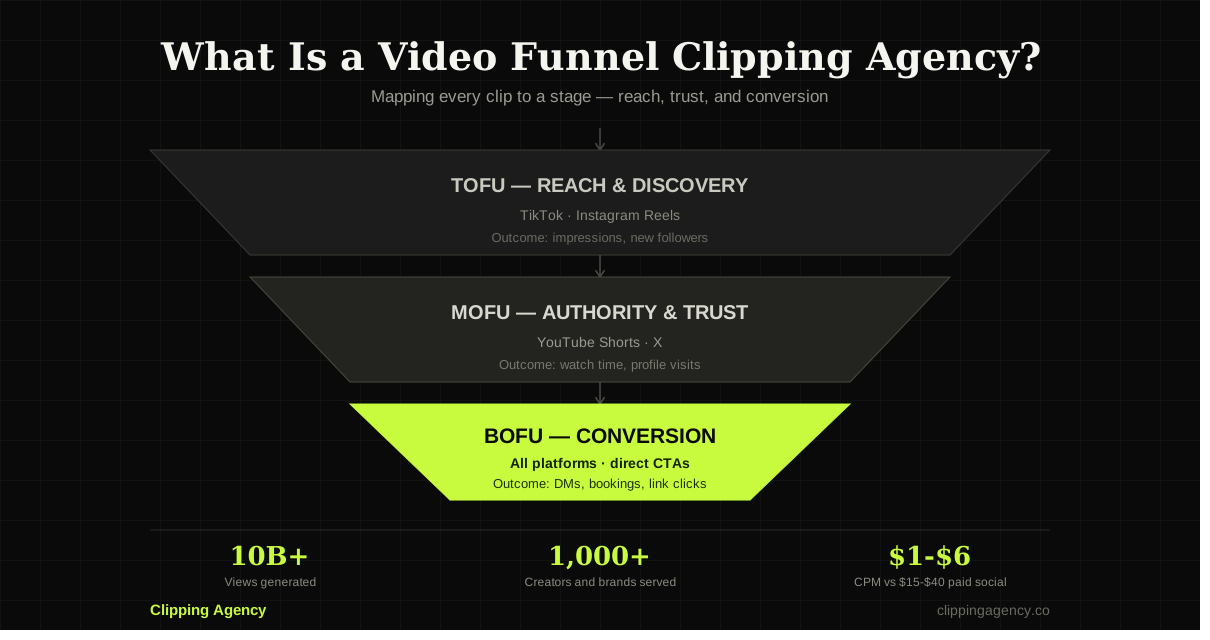
Short form video editing produces the clip. A clipping campaign produces the reach. Those are two different things, and most businesses only invest in the first one.
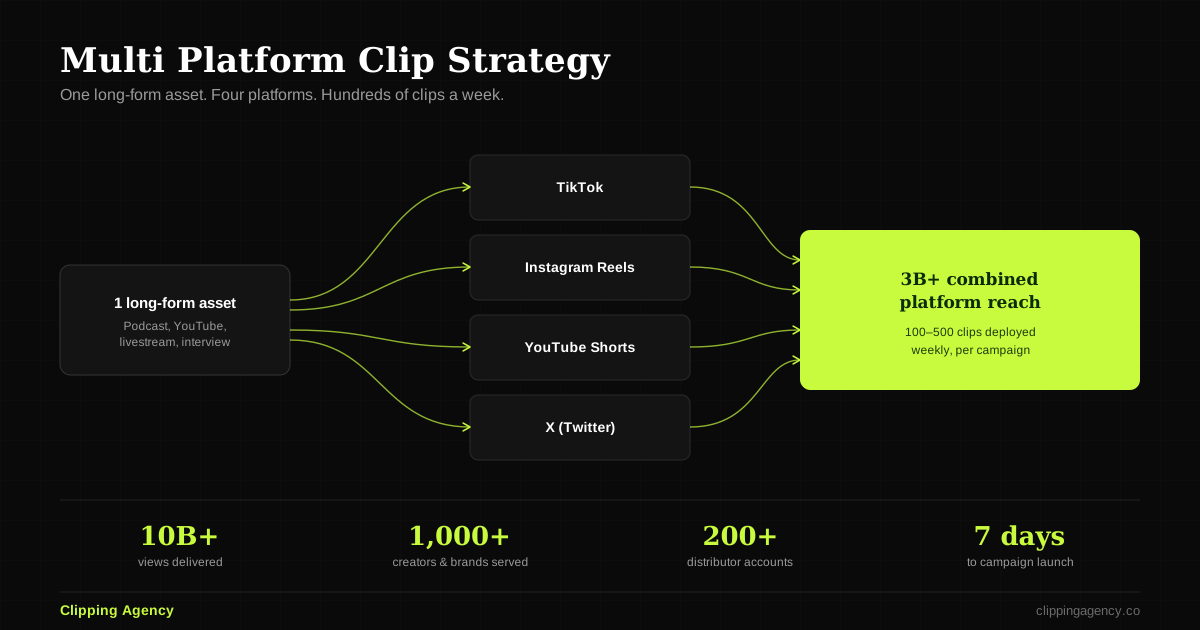
When clips are distributed through a managed network of accounts simultaneously each one reaching a separate algorithmic pool on TikTok, Reels, and Shorts the math changes completely. One account posting one clip reaches one pool. A hundred accounts posting the same clip on the same day reach a hundred pools. The surface area is exponentially larger, and the reach compounds with every post.
This is the model behind why clipping agencies help creators and businesses grow faster than solo editing operations ever could. Editing is the starting point. Distribution is where the actual growth happens.
The Bottom Line: Why Clipping Agency
Most businesses that come to us spent two or three months trying to figure this out on their own first.
They hired editors. The clips looked fine. They posted more. Nothing moved. They added more platforms. Still nothing significant. And then they had the realization that took three months and real money to arrive at: the editing was never the bottleneck. The distribution system they didn’t have was.
We build that system.
We take your existing content — the podcast episodes, the webinar recordings, the founder interviews — and we turn them into edited short form clips distributed across TikTok, Reels, and YouTube Shorts through a managed network of vetted clippers. Editor recruitment, quality control, scheduling, payouts, performance reporting. All of it handled. None of it sitting on your plate.
You send the content. We build the reach.
We’ve generated over 2 billion views for more than 1,000 creators and brands using this model. Not through ad spend. Not through gaming algorithms. Through short form video editing and distribution done consistently, at volume, week after week.
If you’re sitting on recorded content that hasn’t been clipped, you’re not behind — yet. But the businesses building this system now are going to be significantly harder to compete with in six months.
Book a strategy call and we’ll look at your actual content, tell you how many clips it already supports, and build the distribution engine that gets your business in front of the people who haven’t found you yet. Most clients see results within the first 30 days.
Frequently Asked Questions
What is short form video editing for businesses? It’s the process of going into content you’ve already recorded — podcasts, webinars, interviews, demos — and pulling out the moments worth distributing on TikTok, Reels, and YouTube Shorts. You’re not making new content. You’re turning existing footage into clips that reach people who’ve never heard of your brand.
Why do businesses need short form video editing? Because TikTok and Reels push content to strangers — not just your followers. The algorithm decides who sees your clips based on how people respond: watch time, replays, shares. A well-edited clip from a small account can outperform a badly edited one from a large account every time. Editing quality is what determines whether the algorithm works for you or ignores you.
What does a short form video editor actually do? They find the most compelling moment inside your long-form content, open the clip on that moment in the first two or three seconds, add captions for muted viewing, reformat for vertical aspect ratio, and pace the edit for someone scrolling on their phone. The job is to keep people watching long enough for the platform to classify the clip as worth showing to more people.
How many short form clips should a business post per week? Seven to fourteen across all platforms is a realistic minimum. Most businesses already have the source material to support that volume — the gap is usually the editing and distribution workflow, not the content itself. One hour of podcast footage can produce 15 or more clips.
What’s the difference between short form video editing and a clipping campaign? Editing produces the clip. A clipping campaign distributes it. Most businesses invest in editing and skip distribution, then wonder why results are flat. A clipping campaign pushes clips across dozens or hundreds of accounts simultaneously, each reaching a separate algorithmic pool and multiplying the overall reach.
Can a business handle short form video editing in-house? Yes, but it’s a bigger operation than most businesses expect. You need editors with platform-specific skills, a quality review process, a distribution system across multiple accounts, and someone managing all of it. Most businesses that try to build this from scratch spend six to twelve months getting it functional. An agency with existing infrastructure can have it running in days.
What types of content work best for short form video editing? Podcasts, YouTube interviews, webinars, founder talks, customer testimonials, product demos — anything where someone’s speaking on camera for 20 minutes or more is going to contain multiple moments worth clipping. Most businesses are sitting on months of usable footage and have no idea.
Every Day You Wait, A Competitor Gets the View
We recruit, train, and manage a clipping army that distributes your content across 50–500 accounts on TikTok, Reels, and Shorts simultaneously. One upload becomes hundreds of posts. Every single day.
Trusted by 1,000+ creators · 10 Billion+ views generated