

Introduction
You’ve already made the content. The problem is most of it has never been seen.
A creator records a 90-minute podcast. Spends three days editing a YouTube video. Goes live for two hours on Twitch. And when it’s done, it lives in one place, on one platform, reaching the same audience that already follows them. That’s not a content problem. That’s a distribution problem.
Content repurposing is the process of taking one long-form asset: a podcast episode, a YouTube video, an interview, a webinar and transforming it into multiple formats that reach audiences across multiple platforms simultaneously. Done correctly, it is the most efficient growth lever available to creators and brands today.
But not all repurposing strategies are equal. Some produce noise. Others produce reach. And one of them, the strategy built around mass short-form video distribution is quietly changing what it means to grow online in 2026.
This article covers every major content repurposing strategy available to creators, what each one does well, where each one falls short, and which approach is producing the most measurable results for the creators and brands operating at scale right now.
What is content repurposing in digital marketing?
Content repurposing is the strategic transformation of existing long-form content into multiple shorter formats, distributed across different platforms and audience touchpoints, to maximize the reach and lifespan of a single content asset without requiring the creator to produce new material from scratch.
The core principle is this: one piece of long-form content: a podcast episode, a YouTube video, a webinar, a live stream contains dozens of standalone moments. Each of those moments is an independent piece of value. Content repurposing extracts those moments and gives them independent distribution lives across TikTok, Instagram Reels, YouTube Shorts, Twitter/X, LinkedIn, newsletters, and beyond.
The reason this matters in 2026 is simple. Attention is fragmented. No audience lives exclusively on one platform. A creator who publishes only to YouTube is invisible on TikTok. A podcaster who only distributes via Spotify is invisible to the 3 billion people scrolling Reels every day. Content repurposing is the infrastructure that closes that gap not by creating more content, but by making existing content work harder across every surface where an audience might find it.
Why do creators need content repurposing strategies?
Creators need content repurposing strategies because producing new content for every platform is unsustainable, while publishing only to one platform caps growth permanently.
The average long-form creator, a podcaster, a YouTuber, a streamer produces between two and four hours of recorded content per week. That content contains hundreds of individually clippable moments. Without a repurposing system, those moments disappear after the initial upload window. With a repurposing system, every one of those moments becomes a short-form asset capable of reaching a new audience on a new platform for weeks or months after the original publish date.
The math is straightforward. A single 60-minute podcast episode contains between 20 and 40 clippable moments. Each clip distributed across TikTok, Reels, and YouTube Shorts represents a separate algorithmic exposure event on each platform. That’s potentially 120 individual discovery opportunities from one episode. Without repurposing, you get one.
What are the most effective content repurposing strategies for creators?
The most effective content repurposing strategies for creators are: short-form video clipping, blog post extraction, email newsletter repurposing, audiogram creation, LinkedIn long-form adaptation, Twitter/X thread creation, and quote card distribution. Of these, short-form video clipping consistently produces the highest reach and audience growth velocity in 2026.
Here’s a structured breakdown of each strategy, what it does, and where it fits:
How does short-form video clipping work as a content repurposing strategy?
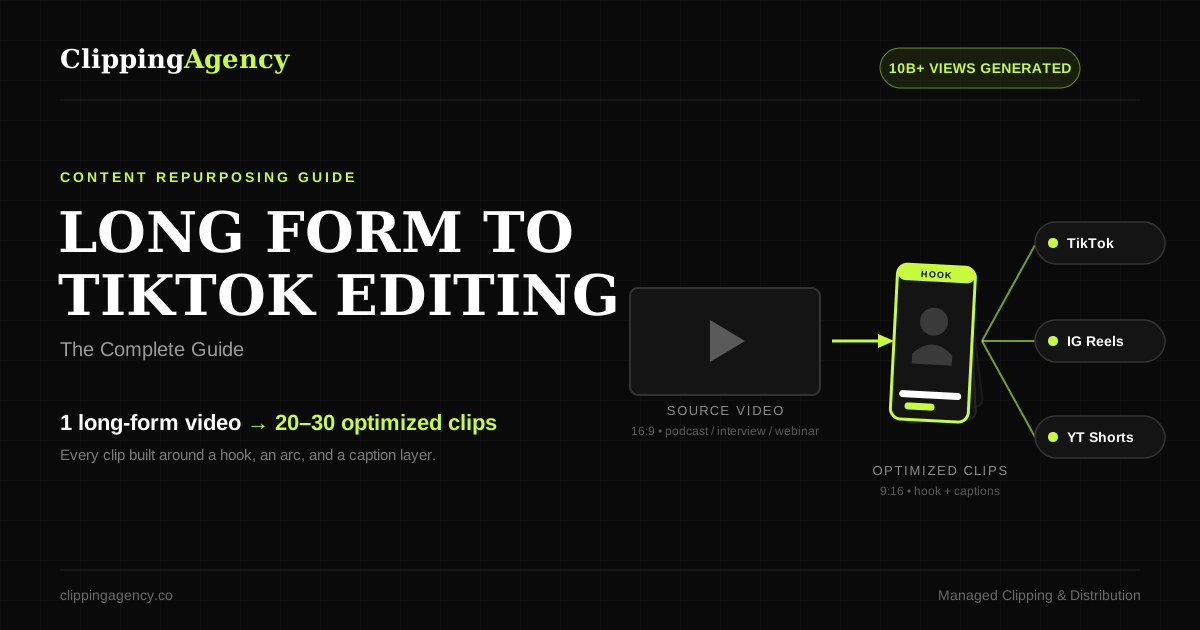
Short-form video clipping is the process of extracting the highest-value moments from long-form video content podcasts, YouTube videos, interviews, webinars and reformatting them into vertical short-form clips distributed across TikTok, Instagram Reels, and YouTube Shorts through a network of editors and distribution accounts.
This is not editing a highlight reel and posting it to your own channel. That approach reaches your existing audience. It does not grow one.
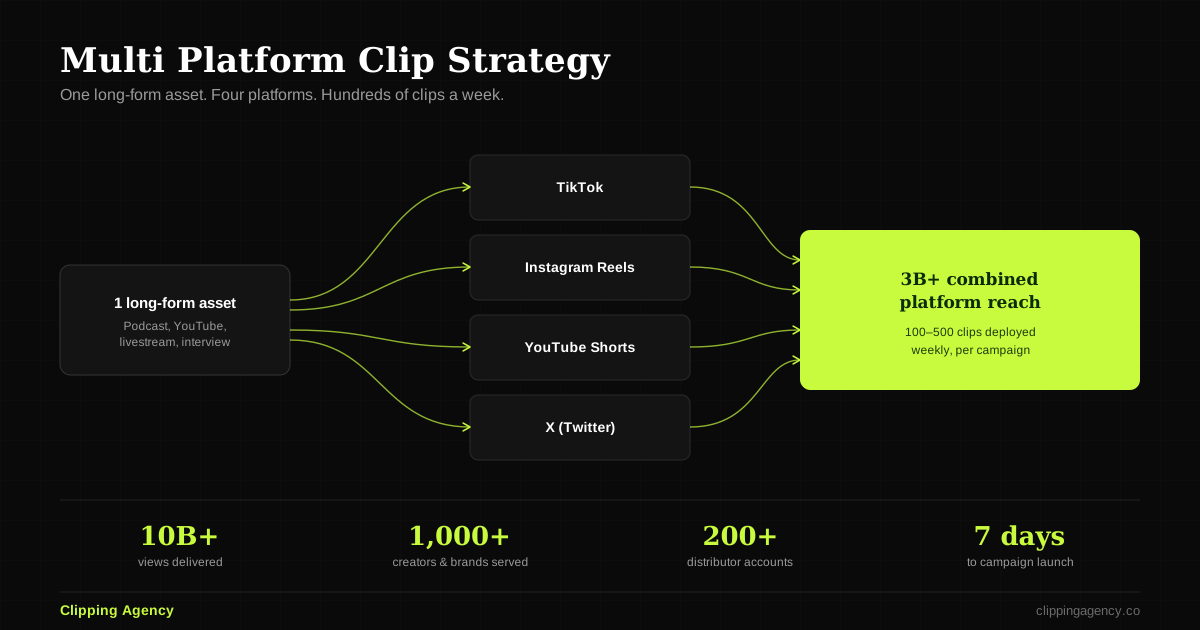
The clipping model that is actually driving growth in 2026 works differently. Instead of one account posting one clip, a network of editors clippers each take a moment from your content, format it for their platform, and post it independently. This creates simultaneous multi-account distribution. One podcast episode becomes 30 clips posted across dozens of TikTok accounts on the same day. That is not content recycling. That is a distribution engine.
Clipping Agency’s clipping services are built entirely around this model turning long-form video content into a network-distributed short-form system that generates views without requiring the creator to produce additional content.
What short-form clipping does well:
- Reaches audiences on platforms the creator has never posted to
- Creates algorithmic exposure events across TikTok, Reels, and Shorts simultaneously
- Generates inbound follower growth from new audiences, not just existing ones
- Works on archived content old episodes and old videos are fully clippable
- Scales without increasing content production output
Where it requires infrastructure:
- Quality clipping at scale requires a vetted network of editors and a review system
- Platform-specific formatting (aspect ratios, caption styles, hook timing) requires expertise
- Managing payouts, submissions, and quality control across dozens of clippers is a full operation
This is why creators and brands who want this result not just the knowledge of it typically work with a content distribution agency rather than trying to build the system internally.
How do you repurpose long-form content into blog posts?
Long-form content can be repurposed into blog posts by transcribing the spoken content, extracting the core argument or framework discussed, restructuring it into a readable article format with headers and subheadings, and publishing it as standalone written content optimized for search.
A 90-minute podcast episode, fully transcribed, produces roughly 12,000 to 15,000 words of raw text. Inside that transcript are multiple self-contained ideas, frameworks, stories, and arguments — each of which can become its own article. A single episode may yield three to five standalone blog posts without any new research or writing required.
The repurposing process for blog extraction looks like this:
First, identify the strongest standalone argument made in the episode, the one that doesn’t require the surrounding conversation to make sense. Second, extract the transcript section covering that argument. Third, restructure it into an article: add a headline, reorganize the talking points into logical sections, remove filler language, and add subheadings. Fourth, optimize the piece for a target search query and publish.
What blog repurposing does well:
- Builds search engine visibility for topics the creator already has expertise in
- Creates durable, long-form assets that compound in value over time via organic search
- Reaches audiences who prefer reading over watching or listening
Where it underperforms:
- Blog traffic is slow to build and requires consistent SEO investment
- Written content does not build the parasocial connection that video does
- Reach is limited to search intent it doesn’t find new audiences proactively the way short-form video does
How can creators repurpose content into email newsletters?
Creators can repurpose content into email newsletters by extracting the single most valuable insight, lesson, or story from a long-form piece and presenting it as a standalone written piece delivered directly to subscribers, with a link back to the full source content.
The email newsletter repurposing model is straightforward. After publishing a podcast episode or YouTube video, identify the one idea that was most discussed in the comments, the one question that came up most frequently, or the one moment that generated the most engagement. Take that moment, expand it slightly with additional context, and send it as that week’s newsletter with a clear CTA to listen to or watch the full piece.
This strategy works because it converts a passive consumer who watched a video once into an active subscriber who now receives value directly. Email subscribers are the highest-intent audience a creator can build because they opted into receiving the creator’s content directly rather than waiting for an algorithm to surface it.
What email repurposing does well:
- Converts platform audiences into owned audiences not subject to algorithmic changes
- Creates a direct relationship with the most engaged segment of a creator’s audience
- Generates consistent engagement from people who already trust the creator
Where it underperforms:
- Email does not reach new audiences it deepens the relationship with existing ones
- List growth is slow and requires significant upfront audience building on another platform
- It does not generate discovery or platform-algorithm exposure
What is an audiogram and how does it work for content repurposing?
An audiogram is a short video format that combines an audio clip from a podcast or recording with a static or animated visual typically a waveform animation, a quote card, or a speaker photo formatted for social media distribution, used primarily to promote podcast episodes on platforms designed for video content.
Audiograms emerged as a repurposing tool when podcasters needed a visual format to share audio content on Instagram and Twitter, which prioritize video in their feeds. A 60-second audiogram takes a strong quote or insight from an episode, pairs it with a branded visual, and posts it as a native video on platforms that would otherwise not surface audio content.
What audiograms do well:
- Low production cost they require only a transcript excerpt and a visual template
- Create a native video asset from audio content without full video production
- Work well for LinkedIn and Twitter where polish matters more than raw entertainment value
Where they underperform:
- Audiograms have significantly lower engagement rates than full short-form video clips
- They do not have the storytelling momentum that makes a viewer watch to the end
- TikTok and Reels audiences scroll past static audiograms at a much higher rate than full-motion clips
- They build awareness of an episode but rarely drive the follower growth that video clipping produces
How do creators repurpose video content for LinkedIn?
Creators repurpose video content for LinkedIn by taking the core professional insight, lesson, or framework from a long-form piece and rewriting it as a long-form LinkedIn post structured around a strong opening hook, a narrative body, and a clear professional takeaway — optionally accompanied by a short vertical video clip from the original content.
LinkedIn rewards two content types above others: long-form text posts that generate discussion, and short-form native video that keeps viewers on the platform. A creator who publishes a YouTube video about building a content strategy can extract the framework discussed, rewrite it as a 500-word LinkedIn post with a strong opening line, and attach a 60-second vertical clip from the video as native LinkedIn video.
What LinkedIn repurposing does well:
- Reaches a professional and business audience that may not be active on TikTok or YouTube
- Written posts on LinkedIn can reach far beyond a creator’s follower count through connection networks
- Particularly effective for founders, B2B creators, coaches, and educators
Where it underperforms:
- LinkedIn audiences are professional and skeptical entertainment-first content performs poorly
- Distribution is limited to LinkedIn’s network no cross-platform discovery
- Native video on LinkedIn currently lags significantly behind TikTok and Reels in algorithmic reach
How do Twitter and X threads work as a content repurposing strategy?
Twitter and X threads work as a content repurposing strategy by taking the sequential arguments, lessons, or frameworks from a long-form piece and restructuring them into a numbered thread format — each tweet containing one standalone point — designed to generate retweets, quote tweets, and profile follows from users who discover the thread through their feed.
A 10-tweet thread repurposed from a podcast episode on content strategy might open with a provocative claim from the episode (“Most creators will never break 100K followers. Here’s the one thing they’re all missing.”), then walk through the argument point by point across nine additional tweets, closing with a link to the full episode.
What Twitter/X threads do well:
- High virality potential — threads are the most shareable format on the platform
- Reach beyond existing followers through retweet networks
- Build a reputation for expertise in a specific domain
Where they underperform:
- Twitter/X organic reach has declined significantly since algorithm changes in 2023 and 2024
- Thread performance is highly inconsistent — same quality content, wildly different reach
- Difficult to scale systematically — each thread requires manual curation and writing
How do quote cards work as a content repurposing format?
Quote cards are static image posts typically a strong quote overlaid on a branded visual background extracted from long-form content and published to Instagram, Pinterest, or LinkedIn as standalone posts. They work by surfacing a single memorable line from a podcast, interview, or video in a format designed for saving and sharing.
Quote cards are among the lowest-effort repurposing formats. A designer template, a one-sentence quote, and a brand color palette are all that’s required. They work best when the quote itself is genuinely surprising, counterintuitive, or emotionally resonant, the kind of line a viewer would screenshot and send to a friend.
What quote cards do well:
- Extremely low production cost
- High save rates on Instagram saves signal algorithmic quality
- Work well as supplementary content between larger distribution pushes
Where they underperform:
- Do not generate follower growth on their own
- Instagram and LinkedIn have both deprioritized static image content in their algorithms in 2025 and 2026 in favor of video
- Quote cards are awareness content, not growth content
Which content repurposing strategy produces the most reach for creators?
Short-form video clipping distributed through a network-based system produces the most reach for creators because it creates simultaneous multi-platform algorithmic exposure events from a single piece of content, reaching new audiences who have never encountered the creator’s brand before.
The data from Clipping Agency’s clipping campaigns supports this consistently. Creators who implement a network-based clipping distribution system see between 1 and 5 million additional monthly views within the first 30 days across TikTok, Instagram Reels, and YouTube Shorts without increasing their content production output.
Blog posts compound over time but take months to build search visibility. Email newsletters deepen existing relationships but don’t find new audiences. LinkedIn and Twitter repurposing reaches specific professional segments but has no mechanism for viral discovery. Audiograms and quote cards create awareness with low engagement conversion rates.
None of these approaches have the raw audience-discovery velocity of short-form video clipping specifically because clipping distributes content through dozens of accounts simultaneously, not just the creator’s own profile. That multi-account distribution is what turns a clip into a reach event rather than a notification to existing followers.
What is the difference between content repurposing and content distribution?
Content repurposing is the transformation of existing content into a new format. Content distribution is the mechanism by which that repurposed content reaches new audiences. Both are necessary, but distribution is what produces growth; repurposing without distribution is repackaging content for the same audience in a different format.
Most creators understand repurposing but underinvest in distribution. They turn a podcast episode into a clip and post it to their own TikTok. That’s repurposing with single-account distribution. Their existing followers see it. Maybe some new people find it through the TikTok algorithm. But the reach ceiling is defined by one account’s authority on one platform.
Network-based distribution removes that ceiling. When a clip is distributed across 50 or 100 different accounts simultaneously, each account’s algorithmic reach becomes additive. The creator isn’t just relying on their own account’s authority, they’re borrowing the reach of every account in the network.
This is the structural difference behind clipping marketing as a channel: it treats distribution as the primary lever rather than creation, and builds a system around mass simultaneous reach rather than single-account posting.
How does podcast clipping work as a content repurposing strategy?
Podcast clipping works as a content repurposing strategy by extracting the strongest 30 to 90-second moments from podcast episodes debates, stories, strong takes, surprising data points, emotional peaks formatting them into vertical short-form video clips with captions, and distributing them across TikTok, Instagram Reels, and YouTube Shorts to drive discovery back to the full podcast.
Podcast episodes are the single most clippable content format in existence. A 60-minute conversation between two people with strong opinions will contain between 20 and 40 moments that can stand alone as a short-form video clip. Those moments exist whether or not the podcaster extracts them. Without clipping, they disappear into the episode audio. With clipping, each one becomes a separate algorithmic exposure event on three platforms.
The podcast clipping agency model was built specifically around this opportunity. Podcasters who implement a structured clipping system see their episodes generating views weeks and months after the original publish date, not just during the first 48-hour window when a new episode typically spikes.
The technical process for podcast clipping:
- The full episode recording is submitted to the clipper network
- Clippers identify and timestamp the strongest standalone moments
- Each moment is clipped, captioned, and formatted for vertical 9:16 viewing
- Clips go through a quality review layer before distribution
- Approved clips are posted across TikTok, Reels, and Shorts by network editors
- Clip performance data is tracked and fed back into identifying which moment types perform best
For podcasters who want maximum reach from every episode without managing the system themselves, this is the most efficient path from recording to visibility.
How should creators build a content repurposing system that scales?
Creators should build a content repurposing system that scales by first identifying their highest-volume long-form content asset, then building distribution infrastructure around that asset before expanding to additional formats starting with short-form video clipping because it produces the fastest audience growth, then layering in blog extraction, email, and platform-specific formats as secondary channels.
The temptation is to do everything at once: clip the video, write the newsletter, design the quote cards, draft the LinkedIn thread. That approach spreads effort across too many channels without building depth or momentum on any of them.
A scalable repurposing system is sequential, not simultaneous. Start with one long-form asset. Build one high-volume distribution channel around it. Generate audience growth from that channel. Then use the audience you’ve built to make the secondary channels newsletters, LinkedIn, Twitter worth investing in, because you now have an audience large enough for those channels to convert.
The correct sequence for most creators in 2026:
Step 1. Identify your primary long-form asset podcast, YouTube, livestream.
Step 2. Build short-form video clipping distribution around that asset. This is the fastest audience growth channel available.
Step 3. Once your monthly views are growing, launch an email newsletter to convert that new audience into owned subscribers.
Step 4. Use newsletter engagement data to identify which topics resonate most. Build blog posts around those topics for long-term search visibility.
Step 5. Use blog post frameworks to generate LinkedIn and Twitter/X threads as supplementary distribution.
Each layer compounds on the previous one. But nothing in that sequence works if step two short-form video distribution doesn’t generate the initial audience growth to make everything downstream worth building.
What content repurposing mistakes do creators make most often?
The most common content repurposing mistakes creators make are: repurposing to their existing audience instead of using distribution to find new ones, treating repurposing as a manual one-at-a-time task rather than a systemized operation, and optimizing for format variety instead of distribution velocity.
Here are the specific errors, described plainly:
Repurposing for existing followers. Posting a clip to your own TikTok account reaches people who already know you. That is not growth. That is engagement maintenance. The power of content repurposing is in reaching people who have never heard of you which requires either a network-based distribution system or a platform with high algorithmic discovery potential.
Doing it manually. A creator who personally clips, captions, formats, and posts every clip from every episode will burn out before they see results. Manual repurposing doesn’t scale. System-based repurposing does. The moment a creator treats clipping as a task rather than an infrastructure decision, they’ve already capped their distribution potential.
Chasing format variety over distribution depth. Many creators produce audiograms, quote cards, LinkedIn posts, threads, clips, and newsletters simultaneously without going deep on any single channel. Distributed effort produces distributed mediocre results. Concentrated effort on one high-velocity channel produces concentrated growth.
Ignoring archived content. Every creator has months or years of published content that has never been repurposed. That archive is untapped distribution inventory. Old episodes, old videos, old interviews all of it is clippable, searchable, and distributable. Treating only new content as repurposable wastes the most valuable asset a creator already owns.
The Bottom Line: Why Clipping Agency Is the Content Repurposing Partner Creators Actually Need
Here’s a story that plays out with every creator who comes to Clipping Agency.
They’ve been publishing for years. The content is genuinely good, long episodes, real conversations, actual value. They’ve tried posting clips manually. They’ve hired a video editor or two. They’ve read every thread about repurposing strategy and followed the advice. And after all of it, the numbers look essentially the same as they did six months ago.
The problem is never the content. The problem is always the distribution.
When those creators build a clipping engine through Clipping Agency, something changes in the first 30 days that no amount of strategy reading prepared them for. Their content stops living in one place. It starts appearing on accounts they’ve never seen, in comment sections they’ve never been tagged in, being shared by people who have no idea the creator posted it themselves. New followers show up from countries they’ve never marketed to. Comments come in from people who discovered them on TikTok even though they’ve never had a TikTok account.
That’s what network-based distribution does. It makes your content visible in places your algorithm has never taken it because it’s no longer relying on your algorithm.
Over 2 billion views generated for creators and brands. More than 1,000 creators served. A system that runs without the creator managing anything.
That’s not a promise. That’s what the data from the Clipping Agency’s clipping infrastructure actually shows.
If you’ve read this article and understood why content repurposing matters, you already know the next step isn’t more repurposing strategy, it’s building the distribution system that makes the strategy work.
Book a strategy call with Clipping Agency. The call is free. The system it builds is not something you’ll want to go back from.
Frequently Asked Questions About Content Repurposing Strategies
What is the best content repurposing strategy for creators in 2026?
The best content repurposing strategy for creators in 2026 is short-form video clipping distributed through a multi-account network. This approach generates the highest reach velocity from existing long-form content by simultaneously distributing clips across TikTok, Instagram Reels, and YouTube Shorts through dozens of editors, producing new audience discovery events that a single-account posting strategy cannot match.
How many pieces of content can you get from one podcast episode?
A single 60-minute podcast episode can produce between 20 and 40 short-form video clips, three to five blog post extractions, two to three email newsletter segments, and multiple quote cards and audiogram assets. The total number of repurposed assets from one episode can exceed 50 individual pieces of content distributed across multiple platforms and formats.
What is the difference between content repurposing and content recycling?
Content repurposing transforms existing content into a new format designed for a different platform and audience context. Content recycling simply republishes the same piece of content in the same format to the same audience. Repurposing creates new distribution opportunities. Recycling creates audience fatigue.
Does content repurposing work for creators with small audiences?
Yes. Content repurposing works for creators at any audience size because the most effective repurposing strategies, specifically short-form video clipping distributed through a network — are designed to reach new audiences, not just redistribute content to existing followers. A creator with 1,000 subscribers who implements network-based clipping distribution can reach millions of new viewers without needing a large existing platform.
How long does it take to see results from a content repurposing strategy?
Creators using a network-based short-form video clipping system typically see measurable results of increased short-form content output, view growth, and follower acquisition within the first 30 days of implementation. Blog post and SEO repurposing strategies take between three and six months to produce consistent organic traffic. Email newsletter repurposing generates immediate engagement from existing audiences but grows slowly over time.
What types of content are easiest to repurpose?
Podcast episodes, long-form YouTube videos, and recorded interviews are the easiest content types to repurpose because they are already dense with standalone moments, strong opinions, stories, data points, and arguments that can each become individual short-form clips, blog post sections, or newsletter segments without requiring new production.
Do I need a clipping agency to repurpose my content?
You do not need a clipping agency to repurpose content in general. You do need one if you want to build a network-based distribution system that posts clips across dozens of accounts simultaneously, manages editor payouts, reviews clip quality at scale, and tracks campaign performance end-to-end. That infrastructure is not something a single creator or in-house editor can replicate without a dedicated system already built around it.
Every Day You Wait, A Competitor Gets the View
We recruit, train, and manage a clipping army that distributes your content across 50–500 accounts on TikTok, Reels, and Shorts simultaneously. One upload becomes hundreds of posts. Every single day.
Trusted by 1,000+ creators · 10 Billion+ views generated