UGC vs Clipping vs Influencer Marketing: Which Strategy Actually Scales?
Most brands are paying for the wrong thing. They commission UGC that never gets seen. They run influencer deals that fade after 48 hours. And they sit on thousands of hours of existing video that is doing nothing.
This page breaks down what each model actually delivers, what it costs, who it is built for, and why clipping is the only one that compounds.
What Is UGC in Marketing?
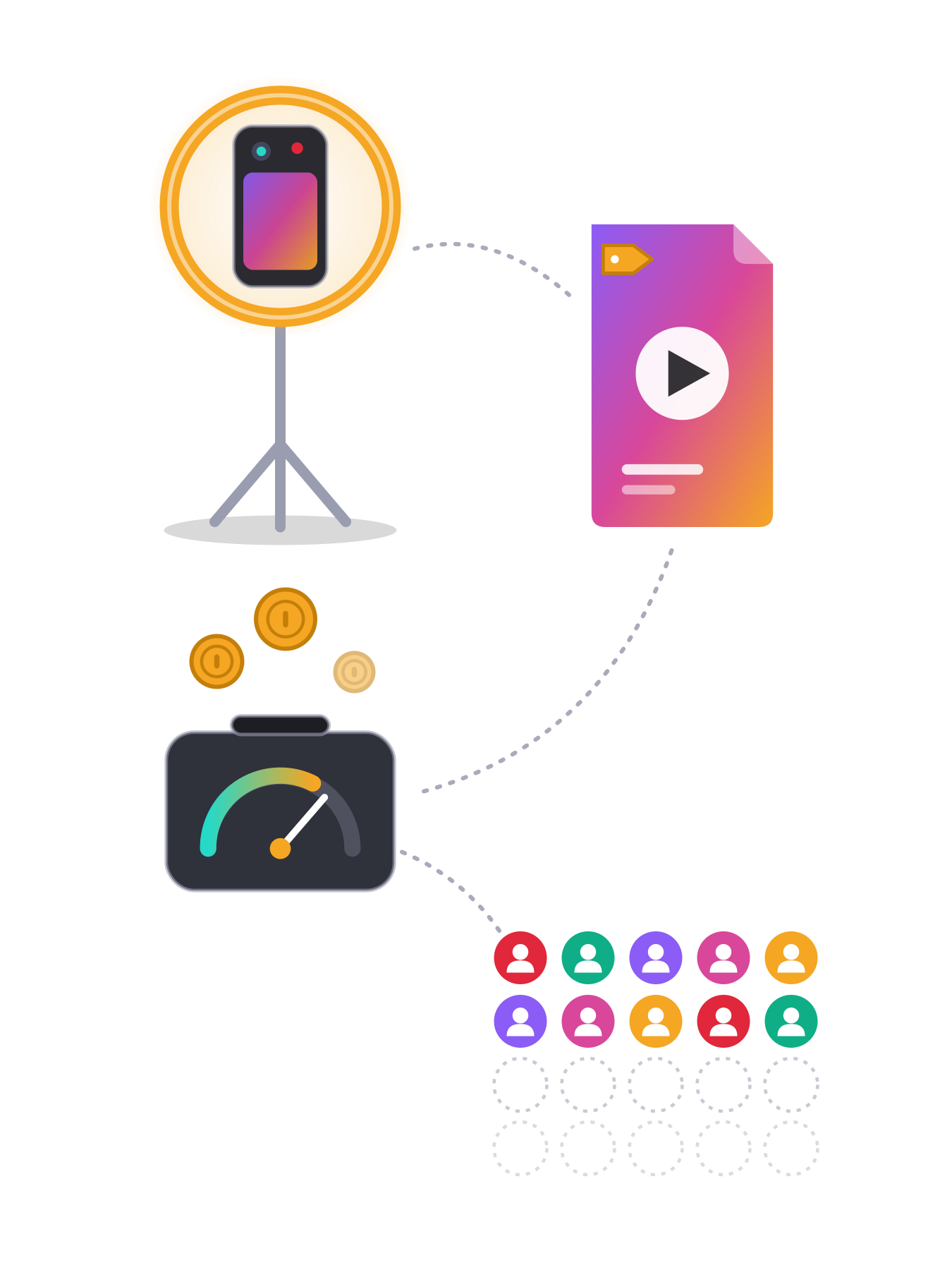
UGC, or user-generated content, is original video filmed by a creator on behalf of a brand. The creator makes it. The brand owns or licenses the file. The brand then posts it as an ad, drops it on their own channel, or uses it on a product page.
What UGC gives you: a video asset.
What UGC does not give you: reach.
The moment you buy UGC as a file, you still need to pay to distribute it. Every view costs ad spend on top of what you paid the creator.
UGC is widely used and broadly effective for paid creative testing. The average commissioned UGC video costs between $150 and $212 per clip, according to Influee’s 2026 rate benchmarks, with professional creators charging $500 to $1,200. Before it reaches a single viewer, add your Meta or YouTube Shorts CPM on top. Average paid social impressions on those platforms run $6 to $14 per 1,000, based on 2026 paid social benchmarks. That is the actual cost of UGC reach.
What Is Influencer Marketing?
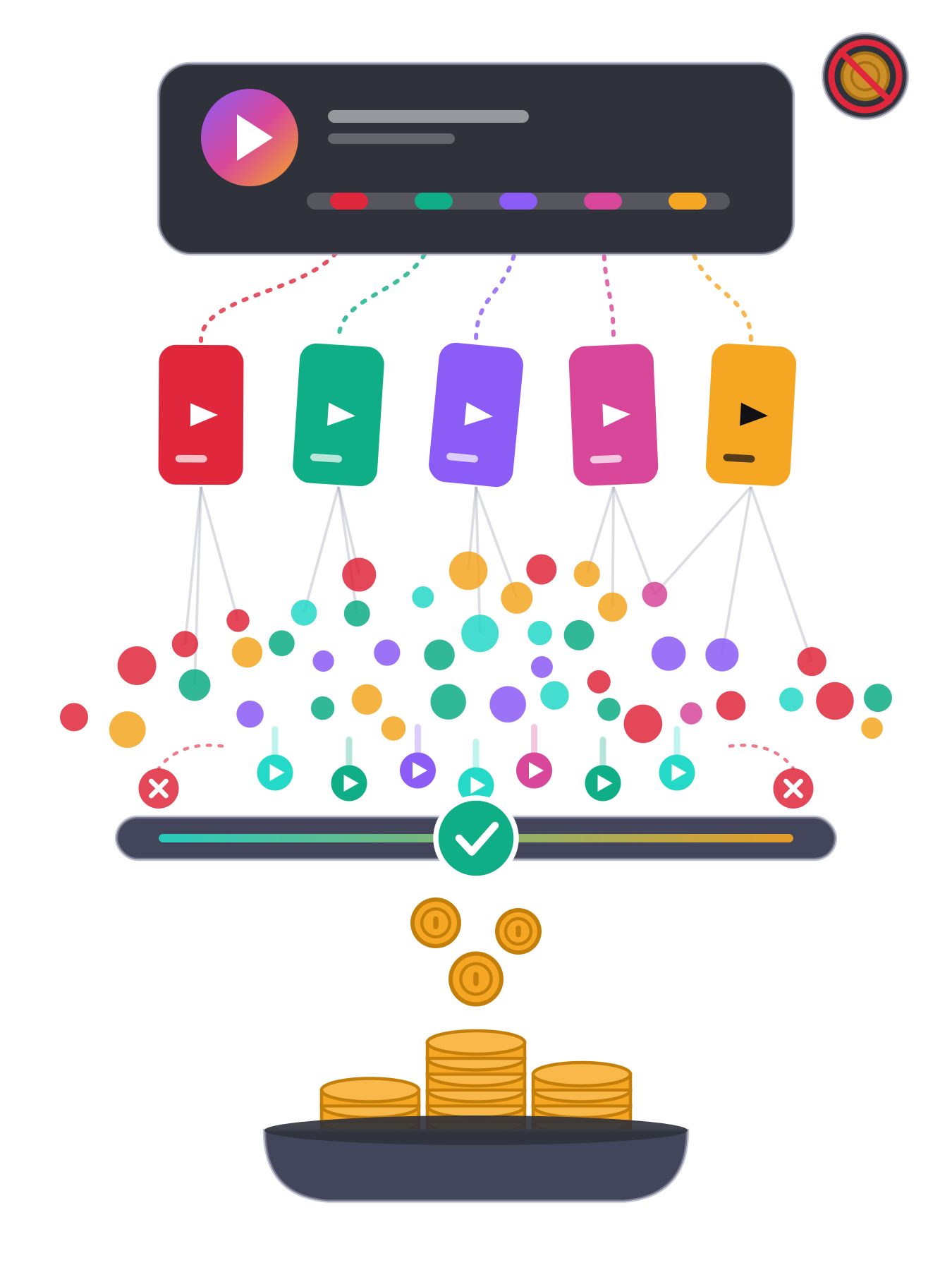
Influencer marketing is a paid content model where a creator posts about your brand to their existing audience. You pay for the post. You borrow their trust and their followers, for that moment.
The problem is it rents reach rather than building it. A post goes out, gets its spike, and fades. You pay the same fee whether it converts or disappears.
Influencer pricing scales fast with audience size. Creators in the 100,000 to 500,000 follower range typically charge $5,000 to $20,000 per post. Mega-creators start at $100,000. Most brands get one post. Most posts peak within 48 hours.
Influencer marketing works when you need a specific trusted voice behind a launch. It does not work as a distribution engine.
What Is Clipping? And Why Is It Different?
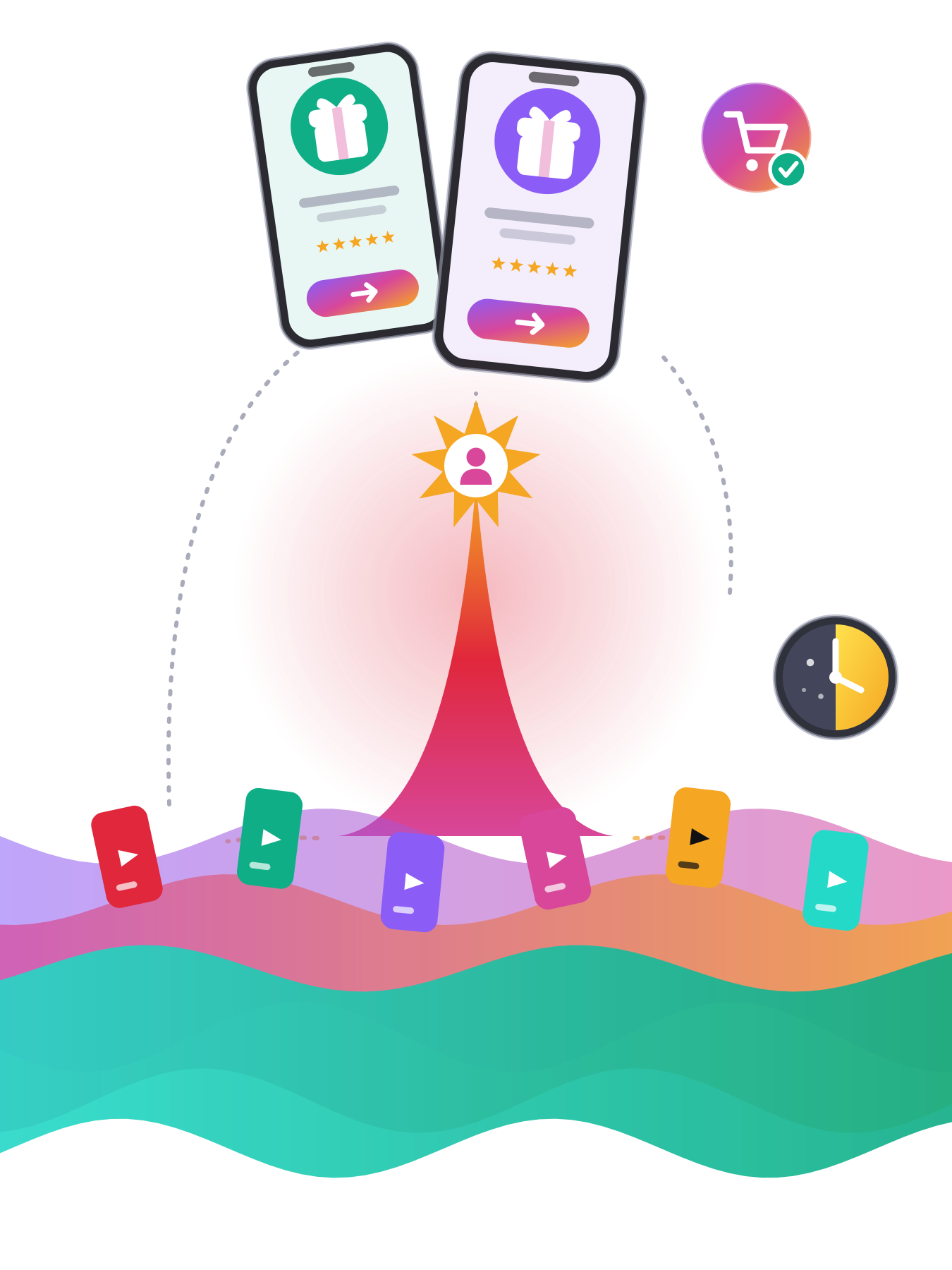
Clipping is a short-form video distribution model. You take long-form content you already own, whether that is a podcast, YouTube video, livestream, interview, or webinar, and a network of editors cuts it into short clips and posts them across hundreds of accounts on TikTok, Instagram Reels, and YouTube Shorts.
You do not pay per clip. You pay per verified view, and only on clips that pass quality review.
This is what makes clipping structurally different from every other model. UGC and influencer deals charge you before a single person watches. Clipping charges you only when reach actually happens.
Clipping Agency has generated over 10B+ views for clients through this exact system. Our clipping campaigns are built on the same model: a managed network of clippers, quality-reviewed submissions, and real distribution across every major short-form platform.
UGC vs Clipping vs Influencer Marketing: Side-by-Side Comparison
| UGC | Influencer Marketing | Clipping | |
|---|---|---|---|
| What you get | Video files to use as ads | One sponsored post to one audience | Clips posted across hundreds of accounts |
| Whose content | New, filmed for the brand | New, filmed by the creator | Yours: podcasts, streams, interviews |
| Who distributes it | You, with ad spend | The influencer, to their followers | A network of clippers, to their audiences |
| How you pay | Flat fee per video, then ad spend | Flat fee per post | Per verified view, approved clips only |
| Reach model | Rented via paid media | Rented for one moment | Distributed across many accounts |
| Best for | Ad creative and retargeting | Launches requiring a trusted voice | Scalable, compounding organic reach |
| Risk | Paying for files that never get seen | Peak and fade after 48 hours | Low: you only pay when views happen |
What Does Each Strategy Actually Cost at Scale?
Here is what a $10,000 budget realistically buys across all three models.
◇
Influencer marketing
One to two posts from a creator with 100,000 to 500,000 followers. You get a spike, then silence.
◈
UGC
Roughly 50 videos at $200 each, which is a solid creative library, but zero reach until you layer paid spend on top. Add $6,000 to $10,000 in ad spend to actually get those videos seen.
⤢
Clipping
At an average CPM of around $1 per 1,000 views on managed campaigns, $10,000 can deliver up to 10 million verified views. Clips that land keep accumulating views after the paid window closes. Nothing is billed for clips that do not pass review.
One budget. Three very different outcomes.
Who Should Be Using Each One?
Use UGC when:
- You have no long-form content to draw from.
- You need polished ad creative for Meta or Google retargeting.
- Legal needs to approve every word before anything goes live.
Use influencer marketing when:
- You are launching something and need one specific creator's trust to carry the moment.
- The product relies on personal credibility and a single authentic voice.
Use clipping when:
- You already produce long-form video.
- You want organic reach that is measurable, not estimated.
- You want to turn one piece of content into hundreds of distribution events without creating anything new.
- You want to pay for performance, not promises.
If you run a podcast, a YouTube channel, a livestream, or any kind of interview-based content, clipping is the highest-leverage move available to you right now. Our clipping services are built to plug directly into what you already make.
Can You Combine All Three?
Yes, and the best brands do.
The smartest content stack looks like this: UGC for paid ad creative, one or two targeted influencer placements for a launch moment, and clipping as the always-on distribution layer running underneath everything. Clipping reaches new audiences that were never going to engage with your paid ads. UGC converts them once they land. The influencer drive creates the spike. Clipping creates the tide.
Most brands get this backwards. They spend heavily on influencer deals and then go quiet. Clipping is the model that keeps your content working 24 hours a day, seven days a week, across every platform, without adding to your creative workload.
Key Facts and Figures
| Metric | UGC | Influencer Marketing | Clipping |
|---|---|---|---|
| Average cost per asset | $150 to $212 per video | $5,000 to $20,000 per post (mid-tier) | CPM per 1,000 verified views |
| Reach included | No, requires ad spend | Yes, one audience | Yes, across hundreds of accounts |
| Payment timing | Upfront, before views | Upfront, before views | After verified views only |
| Content ownership | You license the file | Usage rights cost extra | You own all source footage |
| Reach longevity | As long as ads run | 24 to 72 hours typical | Clips accumulate views over time |
| Clipping Agency result | — | — | 10B+ verified views delivered |
Frequently Asked Questions
What is the main difference between UGC and clipping?
UGC creates a new video asset for your brand. Clipping distributes video you already own. UGC buys you content. Clipping buys you reach. They are fundamentally different products that answer different problems.
Is clipping the same as influencer marketing?
No. Influencer marketing puts your brand in front of one creator’s existing audience for a single post. Clipping puts your content across hundreds of accounts simultaneously, paid per verified view. The reach model, the cost model, and the longevity are all different.
Do I need a lot of content to run a clipping campaign?
You need long-form video: a podcast, a YouTube series, a stream, an interview. Even a handful of hours of source content can power months of short-form distribution through clipping campaigns.
What platforms do clippers post on?
TikTok, Instagram Reels, and YouTube Shorts. These are the three dominant short-form platforms where organic reach is still being distributed to new audiences every day.
Can I use UGC and clipping together?
Yes. Many brands use UGC to build their paid ad library and clipping to build organic reach in parallel. They are complementary. If you want help structuring both, book a strategy call with our team.
What happens if a clip does not perform well?
You do not pay for it. Clipping Agency only bills for clips that pass quality review and generate verified views. Submissions that fail review are not charged.
What is clipping marketing?
Clipping marketing is the practice of using short-form clip distribution as a full marketing channel, not just a content format. Instead of running ads, your content reaches new audiences through a network of real editors and creators posting on their own accounts.
clippingagency.co/clipping-marketing/
The Bottom Line
Why Clipping Agency Is the Right Call
UGC gives you files. Influencer marketing gives you one moment. Clipping gives you a system.
The reason 1,000 plus creators and brands have trusted Clipping Agency is simple: we built the infrastructure they could never build themselves. A fully managed clip farm, quality-controlled submissions, real distribution across TikTok, Reels, and Shorts, and 10B+ verified views to prove it works.
We do not sell impressions. We do not sell sponsored posts. We build a content distribution engine on top of video you already own, and we only charge when it delivers.
If you are producing long-form content and wondering why your reach has not caught up with your output, this is the answer.
About Clipping Agency
Clipping Agency is a fully managed short-form video clipping and distribution agency. We build and run clipping campaigns for creators, podcasters, founders, and brands, turning long-form content into mass distribution across TikTok, Instagram Reels, and YouTube Shorts. With 10B+ views generated and 1,000+ creators served, we are the system behind the reach.