
Here’s something that doesn’t get said enough in the podcasting world.
The hardest part of growing a podcast in the USA isn’t recording. It isn’t booking guests. It isn’t even editing. The hardest part is getting people who have never heard of your show to somehow stumble across it, decide in about four seconds that it’s worth their time, and actually come back for more.
Most American podcasters are losing that battle quietly — not because their content is weak, but because their distribution is. Episodes go up on Spotify and Apple Podcasts. The existing audience tunes in. And the other two hundred million Americans who would genuinely love the show never get a reason to find it.
That’s the gap a real podcast clipping agency in the USA is built to close.
The Problem Every US Podcaster Knows But Won’t Say Out Loud
You record a two-hour episode. It’s good. You know it’s good because the guests are strong, the conversation went somewhere unexpected, and your regular listeners are telling you it was one of your best. You publish it, post a clip or two from your main account, maybe write a newsletter mention.
And then you wait.
The downloads come in. They’re consistent, maybe even trending up slightly month over month. But the ceiling feels real and sticky. The people who found you a year ago are still there. New people aren’t finding you anywhere near the rate the content deserves.
Here’s what’s actually happening inside that dynamic. Podcast discovery in the United States has changed completely. People are not browsing Apple Podcasts and clicking on shows they’ve never heard of. They’re watching a 45-second clip on TikTok, or stumbling across a Reel while scrolling, and thinking “who is that” and following the thread back to the show. That’s how new listeners are being built in 2026. Not through search, not through word of mouth alone, not through podcast chart rankings.
Through short-form clips that reach people where they already are.
If your episodes aren’t being turned into a volume of short-form clips and pushed through real distribution infrastructure, you’re sitting out the single most effective podcast discovery channel that exists right now in America.
What a Podcast Clipping Agency Actually Does
The term gets used in a few different ways so it’s worth being direct about what it means here.
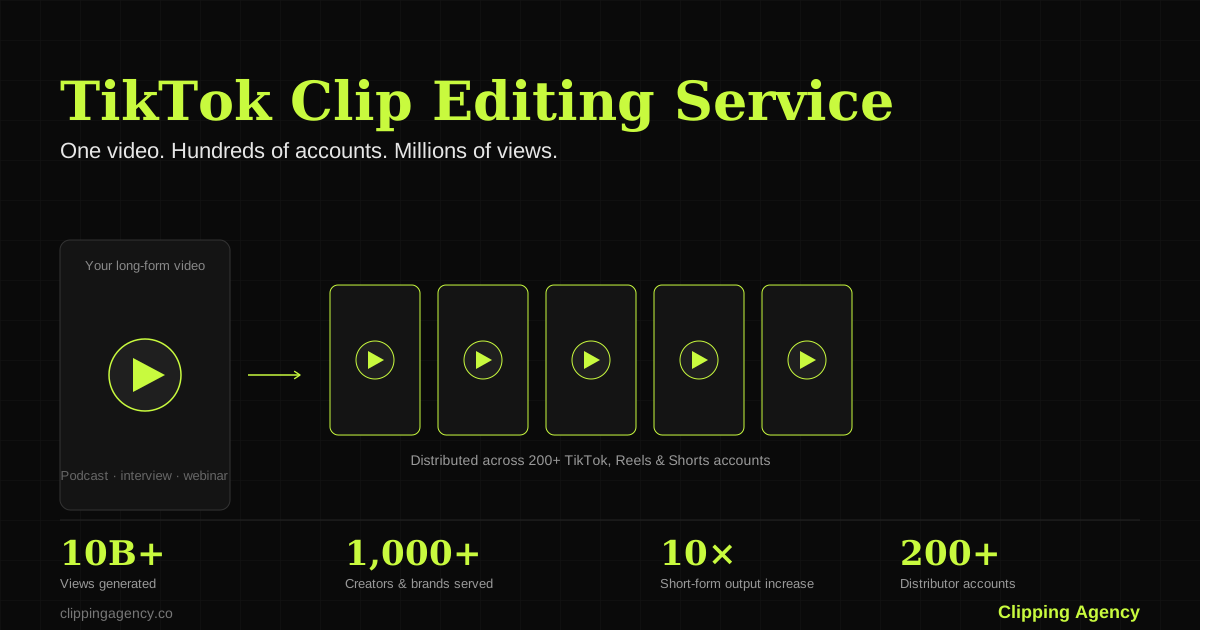
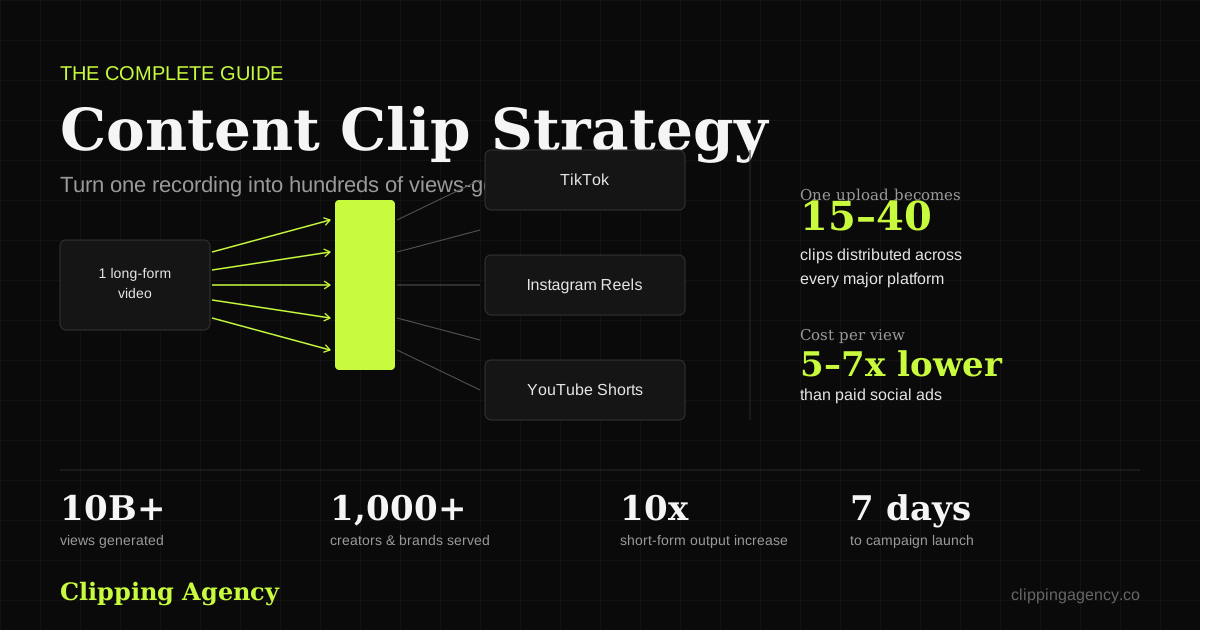
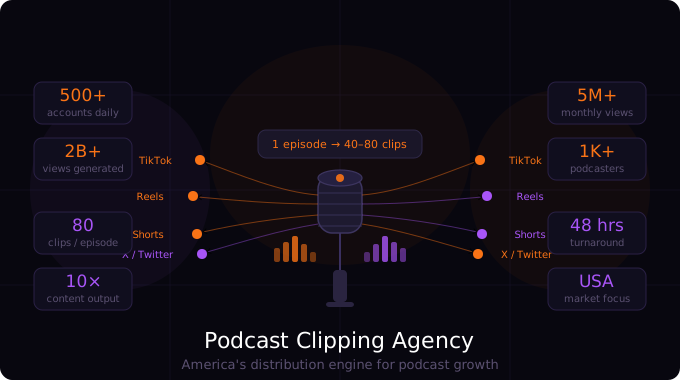
A podcast clipping agency takes your existing episodes and extracts the moments inside them that work as standalone content — the takes that surprise people, the stories with a real arc, the arguments that haven’t resolved cleanly, the specific insight someone would stop mid-scroll for. It turns those moments into short vertical clips built specifically for TikTok, Instagram Reels, YouTube Shorts, and X. And then it distributes those clips at scale through a real network of accounts so the content reaches people who have never heard of your show before.
The editing is essential. A clip with a weak hook or missing captions is functionally invisible on TikTok — the algorithm buries it before a real audience ever sees it. But editing by itself isn’t what moves the numbers. The piece that almost every US podcaster is missing is the distribution side.
One account posting one clip at a time gives TikTok one signal. Your follower count, your recent engagement, your niche — that’s the context it’s working from. If your following is modest, the reach stays modest regardless of how well-edited the clip is.
A network of 50, 100, or 500 real accounts posting your clips simultaneously looks completely different from TikTok’s perspective. Each account is an independent organic signal. Each post is a separate For You Page entry point for someone in the USA who has never heard your show and is about to. That’s what volume-based distribution actually does, and it’s the core of what Clipping Agency runs for podcasters.
Why US Podcasters Specifically Need This Right Now
The American podcast market is the largest and most competitive in the world. There are over four million active podcasts globally and the majority of them are targeting English-speaking audiences in the United States. The shows that are winning aren’t always winning because they’re better. They’re winning because they show up everywhere.
You’ve noticed this yourself even if you’ve never named the feeling. There are podcasters whose clips you keep running into from different accounts, in different contexts, on different days. You might see a moment from an interview on someone’s personal TikTok, then again as a Reel on an account you follow for something completely different, then one more time as a YouTube Short. That’s not coincidence. That’s a distribution system running.
And here’s what that does at the algorithm level. TikTok, Instagram, and YouTube Shorts all weight consistent, multi-account presence when deciding how much reach to give a creator’s content. When clips from the same show keep appearing through different accounts, the platforms read that as genuine momentum and amplify it. The more clips circulate, the stronger the signal. The stronger the signal, the more the algorithm pushes future clips to wider audience pools. It compounds.
A single account posting once a day cannot create that signal no matter how good the content is. A managed clipper network running across hundreds of accounts can, and does, every day.
The Two-Track System: Clipping the Host and the Guest Separately
This is something worth understanding properly because it changes the math on what a single episode can actually produce.
Most podcasters think of their interviews as one piece of content. A real podcast clipping operation treats every interview as two separate content libraries running in parallel.
Track one is built around the host — your strongest takes, your best follow-up questions, your personal stories, the moments where your perspective lands hardest. These clips go out through your distribution network and build your brand and listener base directly.
Track two is built around the guest — their strongest insights, their best stories, the moments where they said something genuinely surprising or useful. These clips get packaged and sent to the guest to share with their own audience. When a guest shares clips of themselves from your show, their entire following sees your podcast name, hears your voice briefly, and gets a reason to investigate further. Zero extra recording. Zero extra cost. A completely new audience pool that wouldn’t have found you any other way.
A 60-minute interview handled this way typically produces 60 to 80 clips across both tracks. That’s not padding — those are 60 to 80 genuinely distinct moments that each work as standalone content for someone who has never heard the full episode. That’s a month of daily posting from a single recording session, before you’ve scheduled your next guest.
How the System Works — The Actual Steps
Content Audit and Episode Analysis
Before anything gets edited, someone watches your episodes properly. Not skimming for obvious moments, actually listening for what would stop a scroll. The genuine surprises. The takes your regular listeners have referenced back to you in comments. The arguments that got heated for a real reason. The very specific number or data point that reframes something people thought they already understood.
We also look at what’s currently performing in your specific niche on US TikTok and Reels because the same moment can hit completely differently depending on what the algorithm is amplifying right now. Business podcast clips play by different rules than comedy podcast clips. Finance clips need a different hook structure than fitness clips. The content audit builds the strategy before the editing begins.
TikTok-Native Editing
The editing process isn’t the same as general short-form video editing. It’s built around how TikTok specifically measures and rewards content.
The hook goes at second zero. Not “this week on the show.” Not a branded intro. Whatever moment in the source material earns the next four seconds of someone’s attention — that’s what opens every clip. Watch time starts from the first frame and TikTok is measuring it from there. A clip that loses the viewer in the first two seconds gets buried and almost never recovers.
Captions go on everything, word by word, animated, checked for accuracy before anything goes live. A large portion of American TikTok usage happens with the phone muted — on a commute, in an office, in a waiting room. A clip without captions is invisible to that majority regardless of how strong the audio content is.
Pacing gets cut hard. Dead air goes. Filler words come out. Anything that gives the watch-time metric a reason to drop gets trimmed. 9:16 formatting gets checked against safe zone margins on different devices. Hook overlays layer over the opening frame for the first two seconds.
The result is a clip that looks and behaves like native TikTok content, not like a podcast clip that got cropped and uploaded.
The Clipper Network
This is the part that separates what we do from everything else in the US podcast clipping market.
We build and manage a network of real human editors and content creators who post your content through their own existing TikTok, Reels, and Shorts accounts. These aren’t bots, dummy accounts, or throwaway profiles. Real accounts run by real people with real follower bases in the USA and internationally. Each clipper earns based on performance — their clips hit view thresholds, and they get paid from our system. That incentive structure means they’re not phoning it in. They’re actively hunting for the moments that perform because that’s how they earn.
When these accounts post your podcast clips, TikTok’s algorithm reads it as genuine organic activity — because it is. Real people posting content they chose to share. Real followers engaging. Real For You Page placement for audiences who have never encountered your show.
Daily Distribution Across Up to 500 Accounts
Once clips pass review, your content goes out every day across anywhere from 50 to 500 accounts simultaneously. Each one is a separate algorithmic signal. Each one is a new entry point into someone’s feed.
You upload the episode. We handle the rest — completely.
Quality Control and Weekly Reporting
Nothing goes live without approval first. Every clip gets reviewed against your brand brief before any account posts it. Tone, caption accuracy, off-limits topics, visual standards, how it represents your show publicly — all of it gets checked. A clip that’s off-brief gets sent back. It doesn’t go live with an apology after the fact.
Clipper payouts are managed entirely by us. You’re not coordinating with anyone, processing payments, or managing logistics. Weekly reporting covers everything — clips posted, active accounts, total views, which clips led, what the team is adjusting going forward.
What US Podcast Formats Clip Best
Interview and Conversation Shows
Interview podcasts are the richest content source in the entire clipping ecosystem. A single well-run interview contains disagreements, reversals, surprising admissions, emotional moments, specific data points, and contrarian opinions — all of the ingredients that stop a scroll. The two-track system means you’re producing double the clips from the same recording. A 90-minute interview episode can realistically yield 40 to 80 clips across both tracks, each genuinely worth distributing on its own.
Solo and Commentary Shows
Solo shows clip differently but they clip well. The moments that perform best from solo US podcast formats tend to be the confident opinions, the “here’s what nobody talks about” framings, the very specific tactical breakdowns, and the stories where the host is personally the subject. These clips build personal brand faster than almost anything else in short-form content. American audiences respond to a clear point of view stated without hedging.
Roundtable and Multi-Host Shows
Multiple voices create natural tension and contrast, which is one of the things TikTok’s algorithm rewards most heavily through comment engagement. When three people disagree about something real, viewers pick sides. When they pick sides they comment. When they comment the clip gets pushed further. Roundtable clips are some of the most reliable comment-drivers in the format.
Audio-Only Podcasts
No video footage is not a barrier. Audio-only episodes get produced as audiograms — waveform visuals with animated captions, speaker labels, and strong hook overlays. These perform consistently well on TikTok, Reels, and Shorts. You don’t need to switch to video recording to get the same reach benefits from a proper podcast clipping agency.
US Podcast Niches and What Clips Differently in Each
The clip strategy for a business podcast is not the same as the clip strategy for a true crime show. The editing logic, the hook structure, the ending treatment — all of it shifts based on what that audience is actually on TikTok to find.
Business and Entrepreneurship — Real numbers outperform generic advice every single time. Revenue figures, specific failure stories with dollar amounts attached, contrarian business takes that challenge what people think they know. These clips drive saves. American business podcast audiences bookmark and rewatch.
Finance and Investing — Stats that directly contradict popular assumptions perform well. So do “here’s the actual mistake beginners make” clips and anything that frames a known concept as fundamentally wrong. Finance clips get shared in group chats at a higher rate than almost any other niche.
Fitness and Health — Protocol breakdowns with specific numbers, and clips that challenge what the audience already believes about training or nutrition, drive the strongest engagement. Vague health advice doesn’t clip well. Specific advice that makes someone question what they’ve been doing for years does.
Comedy and Entertainment — Comedy clips live or die in the final three seconds. Our clippers understand the rhythm of a bit and exactly where to cut so the punchline lands. Cut one second too early or too late and the clip dies. Cut it right and a comedy clip can move faster than almost anything else on US TikTok.
True Crime and Investigative — Revelation moments clip hardest. When new evidence lands. When a theory gets confirmed or destroyed. When something the audience assumed turns out to be wrong. Dramatic audio with text overlays performs exceptionally well for this format in the American true crime audience specifically.
Self-Help and Personal Development — Vulnerability moments and very specific practical frameworks both perform. Generic inspiration does not. American self-help audiences have seen enough motivational content that they’ve developed a strong filter for it. What cuts through is the specific, honest, and actionable.
Tech and AI — Predictions, founder insider stories, and tool breakdowns that give the viewer something genuinely new to think about. The US tech podcast audience on TikTok is highly engaged and seeks information they can’t find elsewhere. Clips that feel like insider access to something real perform at the top of the category.
What the First 30 Days Actually Look Like
We’ve generated over 2 billion views through our clipping services across hundreds of US creators and brands. For podcast clients specifically, the first month typically follows this pattern.
Content output jumps roughly 10x from week one. Not because you recorded anything new, but because the system is working through your existing episode library. A single 90-minute episode that was sitting behind a modest download number becomes 30 to 40 clips circulating across hundreds of accounts simultaneously.
Monthly views for most US podcast clients reach the 1 to 5 million range by day 30, sometimes faster in niches where TikTok audiences are actively looking for content that isn’t being supplied yet. The range depends on how deep the episode library is, how strong the content is, and how competitive the niche already is on the platform.
Listener growth on the actual podcast starts building as TikTok and Reels users follow the show after discovering a clip they responded to. That’s the compounding mechanism that makes this different from a one-time campaign. Every clip that finds a new viewer is a potential new regular listener. Every new regular listener increases the audience base that engages with future clips. The system keeps feeding itself.
You don’t schedule a single post. You don’t monitor trends. You don’t manage anything operational. The system runs daily while you focus on making the next episode.
Why Hiring a Freelance Editor Isn’t the Same Thing
This comes up a lot and it’s worth addressing directly because a lot of US podcasters have tried the freelancer route and come away feeling like clipping doesn’t work.
It does work. The freelancer model just isn’t solving the actual problem.
A freelance editor makes clips and delivers them to you. If you’re lucky, they deliver good ones on time. What they deliver them to is your one account, your existing audience, your current algorithmic ceiling. You’re paying for production but the distribution problem is unchanged.
What’s different about a managed clipping campaign is the network behind the editing. The clips go out through hundreds of accounts simultaneously, each one reaching a different pool of potential listeners. The algorithm sees real momentum from multiple sources. The reach compounds rather than staying flat.
Editing is a production task. Distribution is a growth task. Most US podcasters have been paying for the first one and wondering why the second problem isn’t getting solved.
Podcast Clipping vs. Paid Podcast Advertising in the USA
Paid podcast advertising — host-read ads, Spotify promotions, Apple Podcasts placements — has its place in a mature show’s growth strategy. But for most US podcasters trying to grow their listener base rather than monetize an existing one, the math on paid promotion has been getting harder to defend.
The cost to acquire a new consistent listener through paid podcast advertising in America has increased significantly. Listeners acquired through paid placement also tend to show lower retention than listeners who found the show organically, specifically because they were served the show rather than choosing to find it.
A listener who found your podcast because they saw a clip from it on TikTok three times in one week, looked it up, listened to an episode, and subscribed — that listener chose the show. That choice is reflected in their long-term engagement.
Organic clipping distribution also doesn’t have the stop-start problem of paid spend. A clip distributed six months ago can still be generating new listeners today. Every clip that finds traction creates an algorithmic signal that makes the next clip easier to push. The audience compounds rather than existing only for as long as you’re paying for it.
Our clipping campaigns consistently outperform paid podcast advertising for US shows on cost-per-new-listener, listener retention, and long-term show growth.
Frequently Asked Questions
What exactly does a podcast clipping agency do for a US podcast?
It takes your existing episodes and turns the strongest moments into short-form clips formatted for TikTok, Instagram Reels, YouTube Shorts, and X. At Clipping Agency, those clips then go out through our managed network of 50 to 500 real accounts simultaneously, every day. Your episodes reach American audiences who have never heard your show, without you touching any of the operational side.
Does my podcast need to be video for this to work?
No. Audio-only episodes get produced as audiograms with animated waveforms, accurate captions, and speaker labels. They perform consistently well across all major short-form platforms. You don’t need to convert to video recording to benefit from clipping distribution.
How many clips can you produce from one episode?
A 60-minute episode typically produces 20 to 40 clips. A 90-minute episode yields 30 to 50. Interview episodes get clipped across two tracks — host and guest separately — which often doubles the total output from a single recording. Long-form interview shows with strong guests are the highest-yield format in the entire podcast clipping ecosystem.
How quickly will I see results?
Most US podcast clients see movement within the first two weeks. By day 30, the typical outcome is a 10x increase in short-form content output and 1 to 5 million additional monthly views across the distribution network. Listener growth on the actual show builds from month two onward as the algorithm starts recognising the consistent presence and amplifying top performers further.
How is this different from just hiring a podcast editor?
A podcast editor produces clips and hands them to you. We produce clips and distribute them across hundreds of accounts simultaneously. The editor solves a production problem. We solve a growth problem. Most of the views our US podcast clients generate come from the distribution network, not the editing itself — though the editing quality matters a great deal too.
Do you handle guest clips separately?
Yes. For interview-format shows, guest clips are produced as a separate track, packaged for the guest to share with their own audience. When guests post their clips, your show name reaches their entire following for free. This is built into the standard service for interview shows.
Can you handle multiple episodes per week?
Yes. The system scales with your publishing schedule. Whether you release once a week or five times, every episode gets clipped at the same 48-hour turnaround. High-volume shows benefit the most because each episode adds to a growing distribution footprint that compounds over time.
How do I get started?
Book a strategy call. Our team reviews your episode library, identifies the highest-yield clipping opportunities in your specific niche, and builds a distribution plan around your show’s actual goals. Setup takes about 7 days. First clips go live in week one.
The Bottom Line: Why Hire Clipping Agency as Your Podcast Clipping Agency in the USA?
Let’s be direct, because there are a lot of services in this space and most of them are solving the wrong problem.
We are not a podcast production company. Not a freelancer network that delivers a batch of clips to your inbox and calls it distribution. Not an AI tool that auto-generates captions and treats that as a growth strategy. We build and operate a real distribution engine around your podcast — one that runs daily, across hundreds of real accounts, with quality control, managed payouts, and weekly reporting handled completely by our team.
The 2 billion views we’ve generated didn’t come from one viral moment. They’re the accumulated result of systems built deliberately and run consistently across hundreds of US creators and brands, with more than 1,000 active podcasters and creators trusting this infrastructure with their growth every single day.
What makes us genuinely different in the US podcast clipping market is the clipper network itself. Real human editors and content creators who are financially incentivised to find the strong moments in your episodes because their earnings depend on those clips performing. Real TikTok and Reels accounts with real American follower bases posting content they actually chose to share. Real organic signals that every algorithm reads as exactly what they are — authentic engagement, not manufactured activity.
The US podcast market rewards the shows that show up everywhere. Not the shows that record the best audio. Not the shows that have the most impressive guest list. The shows that are in front of American audiences consistently, across multiple platforms, week after week, through a system that doesn’t depend on any one piece of luck.
If you’ve been recording good episodes and watching the listener curve grow slower than the quality of your content deserves — this is a distribution problem. And it’s exactly the kind of problem we were built to solve.
Book a Strategy Call with Clipping Agency →
No pitch deck, no pressure, no obligation. Just a real conversation about what your podcast could be doing in the USA that it isn’t doing yet — and a concrete plan for getting there.
Want to dig deeper? See how our clipping services work as a complete system, how clipping campaigns function as a standalone growth channel, or explore our TikTok clipping service for US creators for platform-specific context. Agencies managing multiple podcasters — our clipping marketing page covers how white-label distribution works at scale.
Every Day You Wait, A Competitor Gets the View
We recruit, train, and manage a clipping army that distributes your content across 50–500 accounts on TikTok, Reels, and Shorts simultaneously. One upload becomes hundreds of posts. Every single day.
Trusted by 1,000+ creators · 10 Billion+ views generated