
So Your Content Is Good. Why Is Nobody Watching It?
Let’s get something out of the way early. If you’re a creator based in the UK and you’ve been grinding away at long-form content, whether that’s a podcast, a YouTube channel, interview videos, whatever, and the numbers still aren’t moving the way you want, it’s probably not because your content is bad.
Honestly, that’s a frustrating thing to hear because it means the problem isn’t something you can just fix by recording better or editing tighter or posting more consistently. The problem is somewhere else entirely. And most creators spend months, sometimes years, trying to solve the wrong thing.
The real issue for most UK creators is distribution. Not production. Not quality. Not even consistency. Just the basic, unglamorous reality that their content is going live, getting seen by the same few thousand people who already follow them, and then disappearing into the void while the algorithm moves on to whatever got uploaded ten minutes later.
A clipping agency, a proper one, solves that specific problem. Not by making your videos better. By making sure they actually reach people. New people. People who’ve never heard your name before.
That’s genuinely what this whole article is about. What a clipping agency does, why UK creators need it more than most people realise right now, and why working with us at Clipping Agency gets you something you won’t find at a local video production shop in London or Manchester.
A Clipping Agency Is Not a Video Editor. This Difference Matters More Than You Think.
People mix these up a lot and I get why. Both involve someone working with your video footage. Both involve clips. The confusion is understandable.
But they’re solving completely different problems, and understanding that gap is probably the most important thing you can take from reading this.
A video editor, even a really good one, is solving a production problem. They take your raw footage, find the interesting bits, format them nicely, add captions, and send you a file. Job done on their end. Then it’s your problem again. You’ve got a folder of clips sitting on your desktop and zero guarantees any of them will reach anyone new.
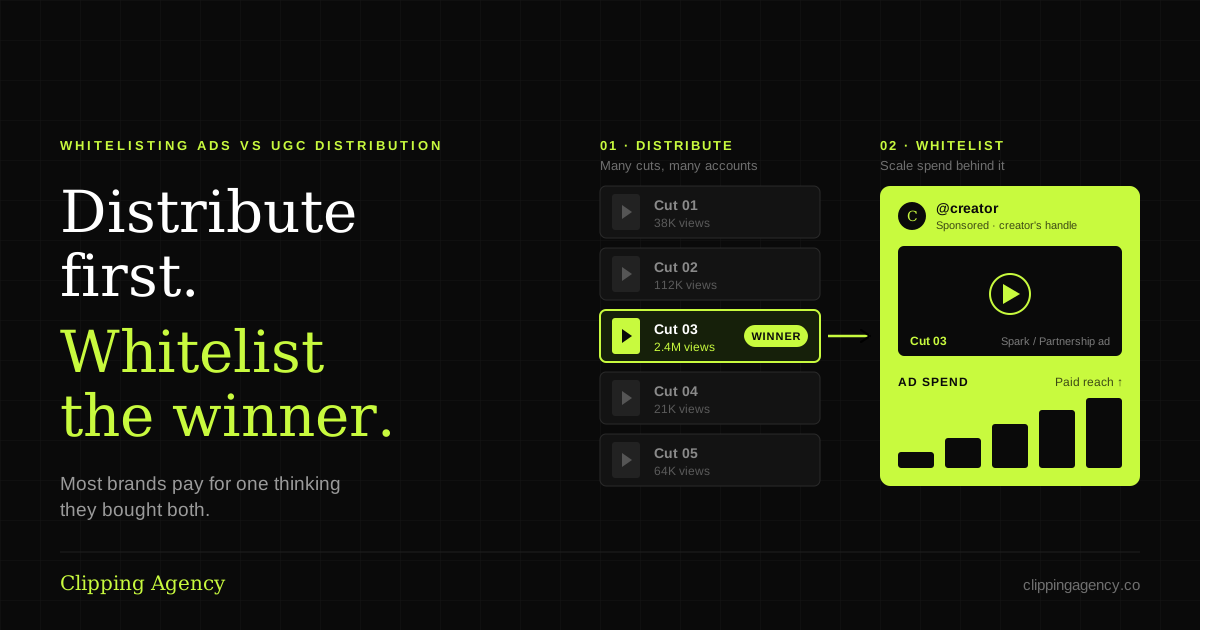
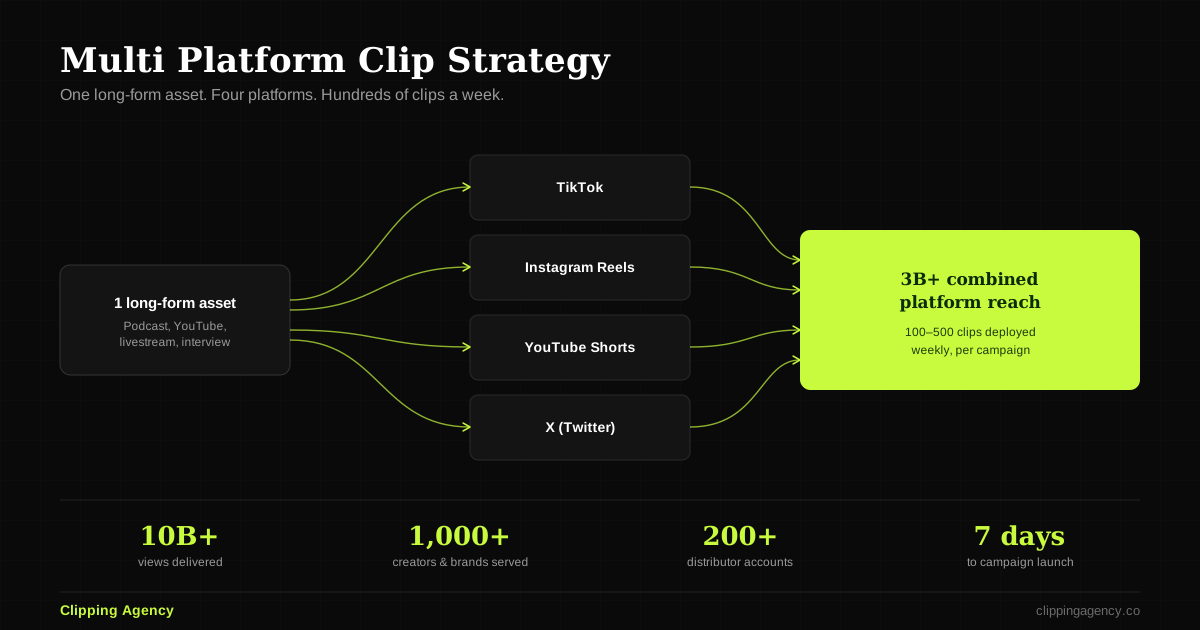
A clipping agency solves a distribution problem. The clips are almost a side effect. The actual product is the network, the infrastructure, the system that takes those clips and gets them in front of people who don’t follow you yet, across TikTok, Instagram Reels, YouTube Shorts, X, whatever platforms matter for your content.
When we say ‘distribution network’ at Clipping Agency, we mean real people with real accounts and real audiences posting your content simultaneously, coordinated, every day. Not bots. Not scheduled posts through a single account. Dozens or hundreds of actual humans actively putting your stuff in front of their followers.
That’s the thing a local editor can’t give you. Our clipping services are built around exactly this, the infrastructure behind the clips, not just the clips themselves.
Why This Moment in the UK Is Actually a Bit Unusual
UK content in 2026 is in a strange position. There’s more of it being made than ever. Podcasters, YouTubers, streamers, founders with interview shows, brands doing long-form documentary-style content. London, Manchester, Birmingham, Edinburgh, all of it. The output is genuinely impressive.
At the same time, short-form platforms like TikTok and Instagram Reels have never had more British users spending more time on them. The appetite is there. UK audiences are active, engaged, and hungry for content they haven’t seen before.
So you’d think that would be great news for UK creators. And in theory it is. In practice there’s a gap the size of a motorway between the two things.
Most long-form content in the UK gets the bulk of its views in the first two or three days after going live. After that it falls off a cliff. The episode that took three days to produce, record, and edit might reach five percent of its potential audience before the algorithm stops surfacing it entirely. The other ninety-five percent never see it.
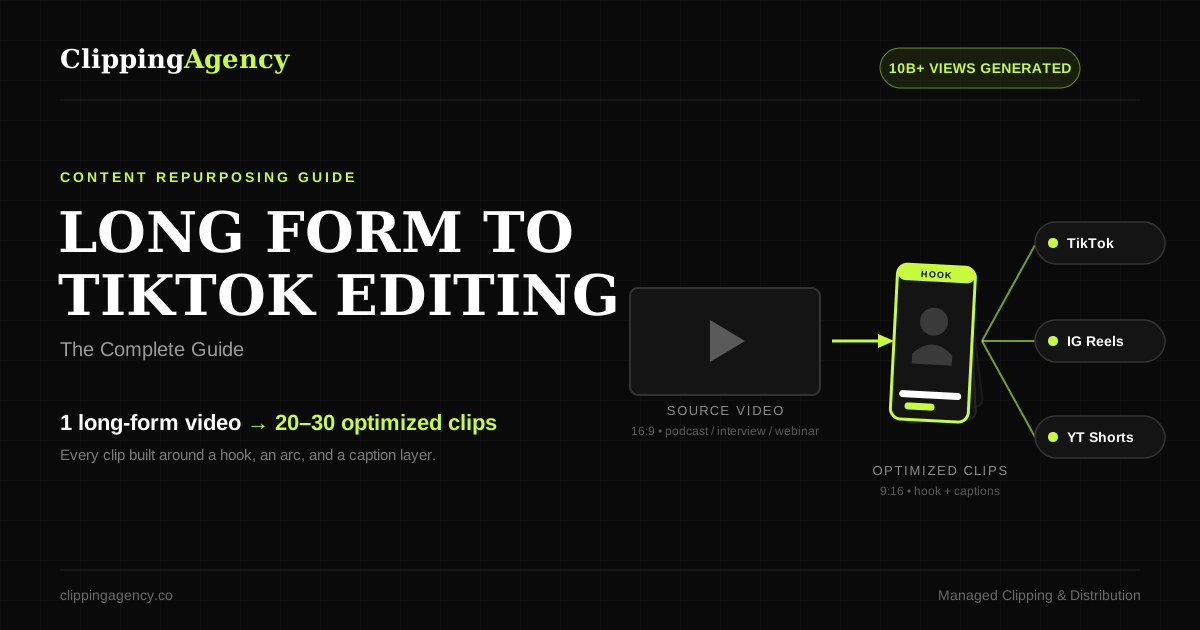
What a clipping system does is capture that other ninety-five percent. That same episode becomes twenty, thirty, sometimes forty short clips distributed across TikTok UK and Instagram Reels over the following weeks. Each one has a chance to reach somebody new. Each view is a person who didn’t know you existed yesterday.
The content keeps working after the launch. That’s the shift.
How the Actual System Works (Without the Marketing Fluff)
I want to explain this properly because ‘distribution infrastructure’ is a phrase that can mean nothing or everything depending on who’s saying it.
When someone uploads their long-form content into our system, the first thing that happens is a real human being watches it looking for moments. Not randomly. Specifically looking for strong opinions, the kind people screenshot and share. Clear insights that stand alone without needing the full video for context. Emotional beats. Disagreements. Genuine laughter. Surprising takes. A good clipper watches an hour of footage and might pull fifteen usable moments from it, maybe more if the content is dense, maybe fewer if it’s slower. The rest gets left behind on purpose.
Then those moments get formatted. This is more involved than it sounds. A clip going to TikTok needs to be vertical, captioned precisely, and hooked within two seconds or it’s dead. The same clip going to YouTube Shorts has different structural requirements. What works on X is longer and more debate-focused than what works on Reels. Doing this properly means building a different version of each clip for each platform, not just uploading the same file everywhere and hoping for the best.
Before anything gets posted anywhere, it goes through review. Caption accuracy, hook quality, brand tone, audio. Anything that doesn’t pass goes back. This is non-negotiable because every clip carries your name.
Then the distribution happens. Approved clips go out through the clipper network, real people with their own audiences posting your content on their accounts, extending your reach to viewers who’ve never come across you. This runs continuously. Not a one-time push. Every week, new clips going out through new accounts to new people.
You don’t touch any of this. You make your podcast or record your video and that’s it. The system does the rest.
The Platforms UK Audiences Are Actually On Right Now
It’s worth being specific about this because not all platforms are equal for UK content, and a clipping strategy that ignores platform differences is going to underperform.
TikTok in the UK has engagement numbers that genuinely surprise people when they see them for the first time. British audiences on TikTok respond well to directness, strong opinions, and real conversation, which is exactly what podcast and interview content is full of. There’s something about the British tendency toward dry honesty and willingness to say things plainly that lands well on this platform. Our TikTok clipping service is specifically designed around what performs here, not what performs generically.
Instagram Reels is where a lot of UK personal brands and businesses see the best conversion. Followers, website visits, actual enquiries from new customers. Reels rewards consistent, well-formatted content, and when that content is being pushed through multiple accounts rather than just your own, the numbers shift pretty dramatically.
YouTube Shorts is increasingly important for any UK creator who already has a long-form YouTube channel. Shorts that do well pull people to your main channel in a way almost nothing else manages to do organically in 2026. They work especially well for educational content, commentary, and anything with a strong point of view.
X is still the place for UK media commentary, politics, and thought leadership. The format is different, clips tend to be a bit longer and more debate-heavy, but for certain kinds of content, particularly journalism, business, and culture, it remains a meaningful platform.
What UK Content Actually Produces the Most Clips
Nearly any long-form video content can be clipped. But some formats are genuinely more efficient than others in terms of how many strong clips they produce per hour of footage.
Podcasts are at the top of the list and it’s not close. A good 90-minute episode can yield 20 to 40 clips that genuinely work as standalone content. Strong takes, guest disagreements, personal stories, moments where someone says something surprising out loud, all of it is raw material. Our podcast clipping agency service exists specifically because podcasters have so much to gain from this and most of them aren’t capturing even a fraction of it.
Long-form YouTube videos, tutorials, vlogs, commentary, deep dives, contain several strong clip windows per video. UK YouTubers covering personal finance, culture, sport, and tech are sitting on libraries of clippable content they’re largely not using. Most of those moments just quietly expire when the next video goes up.
Founder interviews and business conversations are a growing category in UK media. Long conversations between entrepreneurs tend to produce the kind of honest, sometimes uncomfortable moments that clip extremely well because they feel real in a way a lot of produced content doesn’t.
Webinars are probably the most underused source of clips in the UK right now. Most brands record them, maybe send a replay link, and then forget about them. That’s months of insight-dense content sitting in a Zoom folder doing nothing. A clipping system turns that into active distribution.
Livestreams and gaming content from UK streaming communities produce spontaneous, unscripted moments that perform particularly well on short-form platforms, exactly because they feel unscripted.
Why UK Video Agencies, Despite What Their Websites Say, Aren’t Doing This
There are video production companies across the UK, plenty of good ones in London, Manchester, Birmingham, that offer short-form video as part of their services. And for what they’re doing, some of them are perfectly decent.
But here’s what you actually get when you hire most of them: they produce clips according to a brief, deliver a batch of files each month, and that’s the engagement over. You receive the deliverables. You post them. You manage the accounts. You figure out how to grow. The agency has fulfilled their contract.
Nobody at a traditional UK production agency is managing a network of a hundred motivated clippers distributing your content through their own accounts simultaneously. That model requires months of infrastructure building, a community of editors who are incentivised by performance rather than just paid per hour, and operational systems that most agencies genuinely don’t have and aren’t trying to build.
Our clipping campaigns work because of what sits behind them. The clipper network, the coordinated distribution, the compounding reach that keeps building week over week. That’s not something a production retainer produces.
Numbers Worth Knowing
Within the first month of the system being live, clients typically see around ten times more short-form content going out than they were producing before, and they’re not recording anything extra to make that happen.
The monthly view range we consistently see for active clients is somewhere between one million and five million additional views across platforms. To be clear, that’s views on top of whatever they were already getting, not replacing them.
The part that tends to surprise people is the compounding. Month two is better than month one. Month three is better than month two. Because the clipper network gets more dialled in to what works for your specific content over time. Because the platforms start learning that your clips generate real engagement. Because distribution builds on itself in a way that paid advertising flatly doesn’t.
For UK brands in particular, the downstream effects we see most often are more inbound enquiries, better brand recognition, and a social media presence that actually looks alive rather than like someone’s just ticking a content box once a week.
Who Gets the Most Out of This in the UK
The honest answer is that it works across a pretty wide range of creators and business types. But a few categories come up again and again as particularly strong fits.
Podcast hosts who’ve been producing weekly or bi-weekly episodes for a year or more and have an archive that’s basically sitting unused beyond their existing listeners. Every one of those old episodes is still full of clippable material. Our podcast clipping agency works through archives as well as new releases, so nothing good gets left behind.
UK YouTubers who are putting serious time into long-form content and have hit a ceiling on subscriber growth. Short-form distribution through a clipper network is genuinely the fastest route to new subscribers without putting more hours into production.
London-based agencies and consultancies that produce high-quality thought leadership video, webinars, event recordings, and then let all of it go cold after the initial launch. That content has a much longer useful life than most brands realise.
Founders building personal brands who want to be visible across LinkedIn, YouTube, X, and TikTok without spending their lives managing social media.
UK marketing agencies looking to add short-form video distribution to their client service offering without having to build the infrastructure from the ground up. Our clipping marketing service is set up to work well as a backend partner arrangement for exactly this.
Questions Worth Asking Any Clipping Agency Before You Sign Anything
Whether you’re talking to us or to anyone else, these are the things that actually matter.
Do they have a distribution network or just editors? If it’s just editors, you’re paying for production and you’ll be doing the distribution yourself. Ask them point blank: how do my clips get in front of people who don’t already follow me?
What does their review process actually look like? Clips going out under your name affect your reputation. If there’s no human review layer before a clip goes live, that’s worth knowing upfront.
Have they clipped your specific content format before? Podcast clipping requires different skills and judgment than YouTube clipping or livestream clipping. Experience with your format matters.
What do they actually measure? If they can’t give you view numbers broken down by platform, clip style performance, and network activity, they’re not running a growth operation. They’re making files.
What exactly is in the price? Some agencies bill the base service cheaply and then charge separately for distribution, quality review, or anything beyond basic editing. Get the full scope of what’s included before you commit to anything.
The Bottom Line: Why Hire Clipping Agency
There’s no shortage of talented people making content in the UK. Podcasters with real things to say, YouTubers who’ve built genuine knowledge and perspective, founders with stories that actually matter, brands putting real effort into video. And a significant chunk of that content is quietly underperforming because the distribution side of things has never been sorted properly.
That’s the problem we exist to fix. Not by making content better, it’s usually already good enough. By building and running the system that actually gets it in front of people.
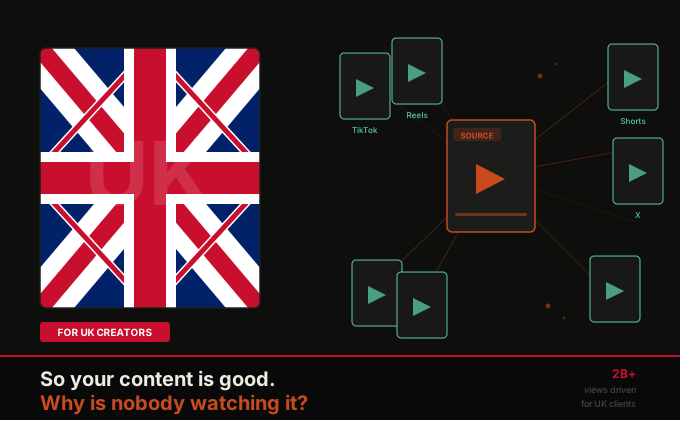
We’ve driven over two billion views for our clients. That number is the result of one thing: a distribution infrastructure that most creators don’t have access to and that most agencies aren’t built to provide. A real network. Real people. Real reach that compounds over time instead of resetting every time you stop paying for ads.
UK creators specifically are sitting on something valuable. The audience appetite is there. The platforms are active. British voices and perspectives have genuine international reach on short-form platforms right now. The gap isn’t the content. The gap is the system that gets it out.
We build that system. We run it. And when we do, the growth trajectory changes.
If you want to see what that looks like for your content specifically, start here.
Book a Strategy Call No pressure, no pitch deck. Just an honest look at what you’ve got and what the system could do with it.
Frequently Asked Questions
Do you actually work with UK creators or is this mainly a US-focused service?
We work with creators, brands, podcasters, agencies, and businesses across the UK. London, Manchester, Birmingham, and plenty of places in between. The model works the same regardless of where you’re based. Your content goes out through the clipper network to UK and international audiences on TikTok, Reels, Shorts, and X.
What kind of content do I need to have before getting started?
Long-form video content of basically any kind. Podcasts, YouTube videos, interviews, recorded webinars, livestream footage, online course content. The minimum that makes the system worth running is around two pieces of long-form content per month. If you’ve got an archive of older content on top of that, we can work through it.
How is working with you different from just hiring a video editor in the UK?
An editor gives you files. We give you distribution. You’d still be responsible for posting everything, managing your accounts, and figuring out how to reach new audiences if you hired an editor. We build and run the entire backend, clipper network, quality review, platform formatting, performance tracking, all of it. You upload the content. We handle everything after that.
When do UK clients usually start seeing actual results?
Most clients see meaningful movement within the first thirty days. More clips going out, more platform visibility, more monthly views. The growth compounds from there. Month two consistently outperforms month one because the network gets better calibrated to your content as it learns what works.
My following is pretty small right now. Does that matter?
It really doesn’t, and this surprises a lot of people. Because distribution runs through the clipper network rather than your own account, the reach isn’t limited by your existing follower count. It works as well for someone starting out as it does for someone who already has a big audience.
Which platforms do you distribute across?
TikTok, Instagram Reels, YouTube Shorts, and X as standard. All four are active in the UK market and each one gets content formatted specifically for how that platform works, not just the same clip uploaded everywhere.
Can UK agencies use this as a white-label service for their own clients?
Yes. Our clipping marketing service works well as a backend partner for UK agencies adding short-form distribution to their offering. Get in touch and we can talk through how a white-label arrangement would work.
How does this actually compare to running paid social ads for a UK brand?
On the metrics that matter most, engagement rate, audience quality, cost per acquisition, clipping campaigns consistently outperform paid ads. Especially now that Meta and TikTok ad costs in the UK have risen substantially. Ads stop working the moment you stop paying. A properly built clipping system keeps generating reach after the campaign ends because the distribution compounds rather than resets.
Every Day You Wait, A Competitor Gets the View
We recruit, train, and manage a clipping army that distributes your content across 50–500 accounts on TikTok, Reels, and Shorts simultaneously. One upload becomes hundreds of posts. Every single day.
Trusted by 1,000+ creators · 10 Billion+ views generated